Brazilian Cuisine quiz
3 questions. No signup. Your move.
Which Amazon fruit has seeds with more caffeine than coffee?
Now make it a duel.
Play more questions on Brazilian Cuisine in LearnClash. Challenge friends in a new quiz duel.
Play more in the appA tap copies this page’s link so the app can pick up where you left off.
That was every question in this preview. Pick another topic or keep going in the app.
A new quiz every day: Today’s quiz
The video couldn’t load. You can watch it on YouTube.
Choose a topic, answer questions and challenge a friend in LearnClash.
Watch on YouTubeA tap copies this page’s link so the app can pick up where you left off.
More questions about Brazilian Cuisine
These visible examples show the question style. LearnClash turns the full topic into ranked duels and spaced repetition.
-
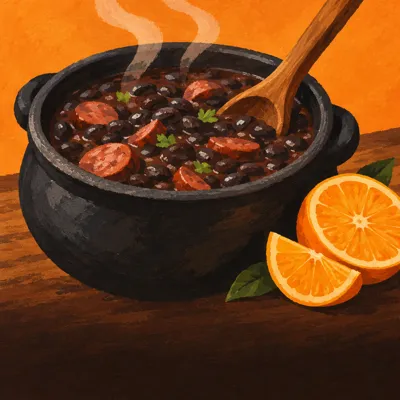
Which beans go into a classic feijoada?
Answer: Black beans
Why: Portugal's feijoada is cooked with white or red beans; Brazil's uses black beans, which are native to the Americas.
-
What are acarajé fritters made from?
Answer: Black-eyed peas
Why: Acarajé descends from akara, a bean fritter from Yorubaland in West Africa, brought to Brazil by enslaved Yoruba people.
-
What tree gives pinhão, a winter snack in southern Brazil?
Answer: Paraná pine
Why: A single Paraná pine cone can measure up to 25 cm across and hold about 100 to 150 of these seeds.
-
Why is quindim so bright yellow?
Answer: Egg yolks
Why: Quindim takes its name from dikende, a word in Kikongo, a Bantu language of Central Africa.
-
Which grain is cuscuz made from in Brazil's Northeast?
Answer: Corn
Why: It is steamed in a cuscuzeira, a two-part pot with boiling water below and the moistened corn flakes above.
-
How many days must maniçoba boil before eating?
Answer: Seven days
Why: Maniçoba, eaten at Pará's Círio de Nazaré festival, needs about a week of boiling to purge cyanide from its manioc leaves.
Keep going in the app
A tap copies this page’s link so the app can pick up where you left off.