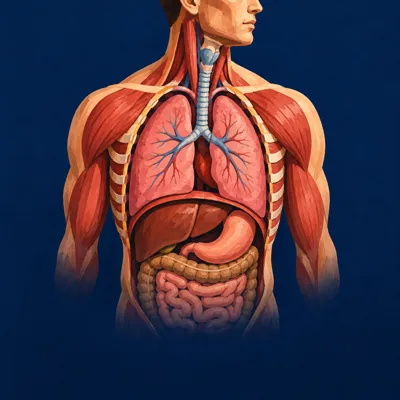
Anatomy quiz
3 questions. No signup. Your move.
Which tough structural protein forms human hair and fingernails?
Now make it a duel.
Play more questions on Anatomy in LearnClash. Challenge friends in a new quiz duel.
Play more in the appA tap copies this page’s link so the app can pick up where you left off.
That was every question in this preview. Pick another topic or keep going in the app.
A new quiz every day: Today’s quiz
The video couldn’t load. You can watch it on YouTube.
Choose a topic, answer questions and challenge a friend in LearnClash.
Watch on YouTubeA tap copies this page’s link so the app can pick up where you left off.
More questions about Anatomy
These visible examples show the question style. LearnClash turns the full topic into ranked duels and spaced repetition.
-
Known as the kneecap, which bone shields the front of the knee joint?
Answer: Patella
Why: Babies are born without a hard bony patella, having only soft cartilage that gradually ossifies around age three.
-
Which retinal cells detect dim light?
Answer: Rods
Why: Rods can detect individual photons in darkness, but unlike cones, they contain only one photopigment and cannot differentiate colors.
-
What retinal area gives the sharpest vision?
Answer: Fovea
Why: The fovea provides peak visual sharpness because it is packed exclusively with cone photoreceptors.
-
What prevents food from entering your trachea when swallowing?
Answer: Epiglottis
Why: The epiglottis is a leaf-shaped flap of elastic cartilage that flips back to cover the top of your voice box whenever you swallow.
-
Which fibrous cords anchor heart valves to prevent backflow?
Answer: Chordae tendineae
Why: Often called heart strings, these fibrous cords keep valve flaps from flipping backward during powerful ventricular contractions.
-
Which vocal muscle does superior laryngeal nerve feed?
Answer: Cricothyroid
Why: While the recurrent laryngeal nerve controls all other vocal muscles, cricothyroid alone gets superior innervation.
Keep going in the app
A tap copies this page’s link so the app can pick up where you left off.