
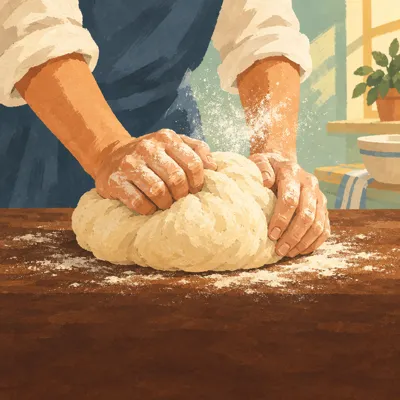
Baking quiz
3 questions. No signup. Your move.
What is the rest period where yeast dough rises right before baking called?
Now make it a duel.
Play more questions on Baking in LearnClash. Challenge friends in a new quiz duel.
Play more in the appA tap copies this page’s link so the app can pick up where you left off.
That was every question in this preview. Pick another topic or keep going in the app.
A new quiz every day: Today’s quiz
The video couldn’t load. You can watch it on YouTube.
Choose a topic, answer questions and challenge a friend in LearnClash.
Watch on YouTubeA tap copies this page’s link so the app can pick up where you left off.
More questions about Baking
These visible examples show the question style. LearnClash turns the full topic into ranked duels and spaced repetition.
-
What rich mixture of chopped chocolate and warm cream glazes cakes?
Answer: Ganache
Why: Altering the ratio of cream to chocolate allows ganache to work as either a glossy glaze or firm truffle filling.
-
What ingredient slows down yeast fermentation by dehydrating the cells?
Answer: salt
Why: It also tightens the gluten, which is why saltless dough turns slack and the shaped loaf spreads flat.
-
Three single folds give a classic croissant how many layers of butter?
Answer: 27
Why: Twenty-eight dough layers wrap the twenty-seven of butter, which bakers add up to the classic fifty-five.
-
What is the result of heating sugar until it breaks down?
Answer: caramelization
Why: It starts at roughly 160 to 170 degrees Celsius and creates hundreds of new aroma compounds as the sugar breaks apart.
-
Which classic meringue style whips uncooked egg whites directly with granulated sugar?
Answer: French meringue
Why: French meringue whips sugar straight into raw whites, whereas Italian and Swiss methods use heat to dissolve the sugar.
-
What is the ideal temperature range for proofing yeast dough?
Answer: 75-85°F
Why: Yeast dough proofs at 75 to 85°F; the bloom water for dry yeast is 100 to 110°F, much hotter than the dough itself.
Keep going in the app
A tap copies this page’s link so the app can pick up where you left off.

