
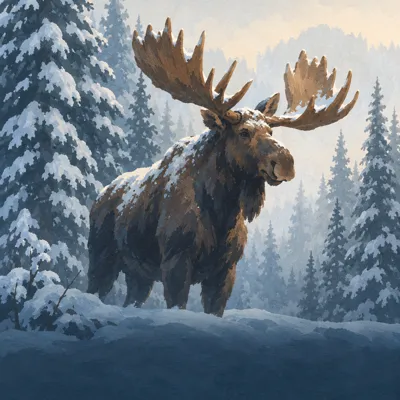
Boreal Forests quiz
3 questions. No signup. Your move.
Which animal is the largest land-dwelling weasel in the boreal forest?
Now make it a duel.
Play more questions on Boreal Forests in LearnClash. Challenge friends in a new quiz duel.
Play more in the appA tap copies this page’s link so the app can pick up where you left off.
That was every question in this preview. Pick another topic or keep going in the app.
A new quiz every day: Today’s quiz
The video couldn’t load. You can watch it on YouTube.
Choose a topic, answer questions and challenge a friend in LearnClash.
Watch on YouTubeA tap copies this page’s link so the app can pick up where you left off.
More questions about Boreal Forests
These visible examples show the question style. LearnClash turns the full topic into ranked duels and spaced repetition.
-
What is 24-hour daylight in boreal summers called?
Answer: Midnight sun
Why: Earth's axial tilt points the northern boreal zone toward the Sun, keeping the sky lit even at midnight.
-
Why are mycorrhizal fungi vital for tree survival across boreal forests?
Answer: They supply scarce soil nutrients
Why: Mycorrhizal fungi can supply up to 80 percent of a plant's nitrogen, which matters in cold boreal soil where nitrogen is scarce.
-
Which bird hides tens of thousands of stone pine seeds each autumn?
Answer: Spotted nutcracker
Why: A sublingual pouch beneath the bird's tongue carries dozens of pine seeds at a time to distant cache sites.
-
Which quilled mammal strips and eats woody bark during harsh boreal winters?
Answer: Porcupine
Why: Porcupines ferment bark in an enlarged cecum, where gut microbes digest its cellulose; the lignin around it stays indigestible.
-
Which animal's ten-year cycle drives Canada lynx numbers?
Answer: Snowshoe hare
Why: Extra food never stopped the crash: it is chronic stress from predator chases, not hunger, that collapses snowshoe hare breeding.
-
What are the wet hollows between raised peat ridges in a fen called?
Answer: Flarks
Why: Flarks and raised strings align perpendicular to downslope water movement, creating distinct striped patterns from the air.
Keep going in the app
A tap copies this page’s link so the app can pick up where you left off.

