
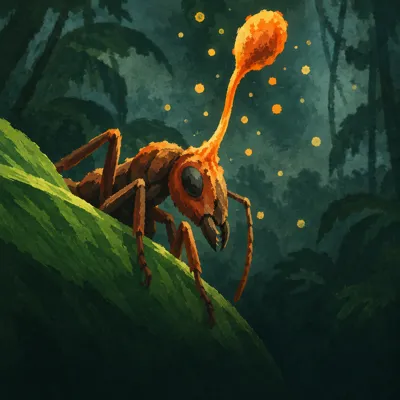
Cordyceps quiz
3 questions. No signup. Your move.
How does Cordyceps affect the host's central nervous system?
Now make it a duel.
Play more questions on Cordyceps in LearnClash. Challenge friends in a new quiz duel.
Play more in the appA tap copies this page’s link so the app can pick up where you left off.
That was every question in this preview. Pick another topic or keep going in the app.
A new quiz every day: Today’s quiz
The video couldn’t load. You can watch it on YouTube.
Choose a topic, answer questions and challenge a friend in LearnClash.
Watch on YouTubeA tap copies this page’s link so the app can pick up where you left off.
More questions about Cordyceps
These visible examples show the question style. LearnClash turns the full topic into ranked duels and spaced repetition.
-
Why does Cordyceps usually only infect one kind of insect?
Answer: Strict species requirements
Why: Lab work found the fungus answers each host species' brain with its own chemical mix, so only its natural host is fully manipulated.
-
Which survival video game series was inspired by real Cordyceps fungi?
Answer: The Last of Us
Why: Neil Druckmann got the idea from a 2006 Planet Earth segment showing Cordyceps steer an ant to its death, then sprout from its head.
-
Which season marks the start of the Himalayan Cordyceps harvesting period?
Answer: Late spring
Why: Snowmelt sets the start, mostly May into June, for what Tibetans call yartsa gunbu, summer grass, winter worm.
-
What led to the discovery of Cordyceps in ancient medicine?
Answer: Observing healthy livestock
Why: Its Tibetan name, yartsa gunbu, means 'summer grass, winter worm', for the grass-like stalk that sprouts from a dead larva.
-
Why does Cordyceps sinensis grow only at high altitudes?
Answer: Its moth host lives only there
Why: Its ghost moth host lives only in alpine meadow, and the fungus itself stalls above about 21 degrees.
-
Why does the Cordyceps fungus utilize molecular mimicry?
Answer: Evading host immunity
Why: Camouflage is only half of it: Cordyceps militaris also releases cordycepin, which damps down the insect's own immune genes.
Keep going in the app
A tap copies this page’s link so the app can pick up where you left off.

