
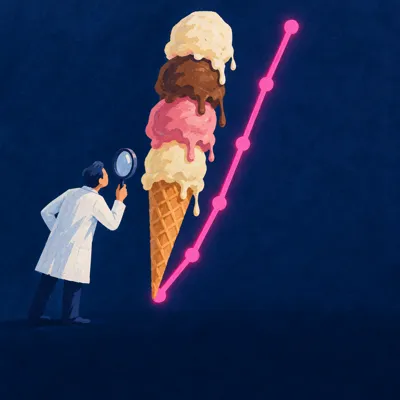
Correlation and Causation quiz
3 questions. No signup. Your move.
Fires with more firefighters see more damage. Why?
Now make it a duel.
Play more questions on Correlation and Causation in LearnClash. Challenge friends in a new quiz duel.
Play more in the appA tap copies this page’s link so the app can pick up where you left off.
That was every question in this preview. Pick another topic or keep going in the app.
A new quiz every day: Today’s quiz
The video couldn’t load. You can watch it on YouTube.
Choose a topic, answer questions and challenge a friend in LearnClash.
Watch on YouTubeA tap copies this page’s link so the app can pick up where you left off.
More questions about Correlation and Causation
These visible examples show the question style. LearnClash turns the full topic into ranked duels and spaced repetition.
-
Whose yearly movie count tracks US pool drownings?
Answer: Nicolas Cage
Why: With only 11 yearly data points, two unrelated lines can easily match by chance.
-
Anscombe's four datasets show which step can't be skipped?
Answer: Plotting the data
Why: One set is a noisy line, one a curve, one a line with an outlier, and one a vertical stack with one distant point.
-
Which university's 1973 admissions data shows Simpson's paradox?
Answer: UC Berkeley
Why: More women applied to the hardest departments to enter, which dragged down their overall rate even though most departments admitted women at equal or higher rates.
-
What do trials call hiding who got the real treatment?
Answer: Blinding
Why: Hiding the assignment from the researchers too makes it less likely that their expectations colour the results.
-
A 1964 report from which US office said smoking causes lung cancer?
Answer: Surgeon General
Why: The committee reviewed more than 7,000 scientific articles before it called smoking a cause of lung cancer in men.
-
Smokers taking which supplement had more lung cancer in 1990s trials?
Answer: Beta-carotene
Why: CARET was stopped 21 months early when the supplement group showed 28% more lung cancers than the placebo group.
Keep going in the app
A tap copies this page’s link so the app can pick up where you left off.

