
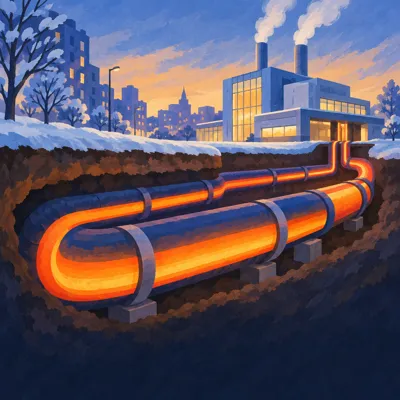
District Heating quiz
3 questions. No signup. Your move.
How is heat consumption usually measured for billing?
Now make it a duel.
Play more questions on District Heating in LearnClash. Challenge friends in a new quiz duel.
Play more in the appA tap copies this page’s link so the app can pick up where you left off.
That was every question in this preview. Pick another topic or keep going in the app.
A new quiz every day: Today’s quiz
The video couldn’t load. You can watch it on YouTube.
Choose a topic, answer questions and challenge a friend in LearnClash.
Watch on YouTubeA tap copies this page’s link so the app can pick up where you left off.
More questions about District Heating
These visible examples show the question style. LearnClash turns the full topic into ranked duels and spaced repetition.
-
What does the Danish capital burn for about a quarter of its district heat?
Answer: Garbage
Why: Waste covered 26.3 percent of the capital region's district heat in 2024, biofuels like wood and straw 67.3 percent, and coal exactly zero.
-
Which physical factor causes the highest pressure drop in heating networks?
Answer: Pipe friction
Why: Elbows and tees add more pressure drop than straight pipe, so planners count each fitting as an extra length of straight pipe.
-
Which pipe configuration suffers the lowest thermal heat loss per meter?
Answer: Twin pipes
Why: A twin pipe holds supply and return in one casing, and a 2023 study found twin pipes pay back against single pre-insulated pipes after about five years.
-
Which country heats 90% of households via geothermal energy?
Answer: Iceland
Why: It sits on a volcanic ridge where two plates pull apart, so the heat is close enough to the surface to pipe straight into homes.
-
Which part of a district heating system usually costs the most to build?
Answer: Pipe network
Why: District heating needs high initial capital spending and financing, and the investment per household is considerably higher in low density areas.
-
Why did early district heating systems use steam instead of water?
Answer: Natural pressure driving
Why: Steam moves itself without pumps, which mattered before reliable electric pumping, and a few old city systems still run on it.
Keep going in the app
A tap copies this page’s link so the app can pick up where you left off.

