
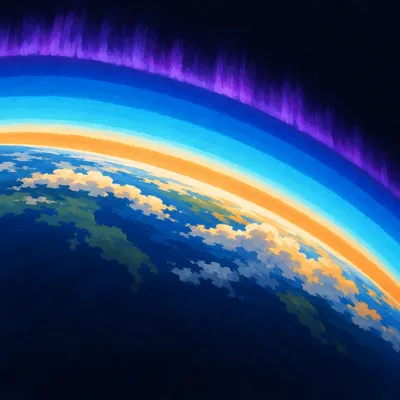
Earth's Atmosphere quiz
3 questions. No signup. Your move.
Why is the daytime sky blue?
Now make it a duel.
Play more questions on Earth's Atmosphere in LearnClash. Challenge friends in a new quiz duel.
Play more in the appA tap copies this page’s link so the app can pick up where you left off.
That was every question in this preview. Pick another topic or keep going in the app.
A new quiz every day: Today’s quiz
The video couldn’t load. You can watch it on YouTube.
Choose a topic, answer questions and challenge a friend in LearnClash.
Watch on YouTubeA tap copies this page’s link so the app can pick up where you left off.
More questions about Earth's Atmosphere
These visible examples show the question style. LearnClash turns the full topic into ranked duels and spaced repetition.
-
Which gas makes up most of the air?
Answer: Nitrogen
Why: Nitrogen fills about 78% of dry air, nearly four times the share of oxygen.
-
Which gas gives most auroras their green glow?
Answer: Oxygen
Why: Blue and purple tints in an aurora come from nitrogen instead.
-
On average, how much does air cool per km up in the troposphere?
Answer: About 6.5 °C
Why: Using this rate, the standard atmosphere puts air 11 km up at -56.5 °C, against 15 °C at sea level.
-
How long would driving straight up to space take at 100 km/h?
Answer: About an hour
Why: The usual edge of space is the 100 km Kármán line, though NASA and the US Air Force draw it lower, at about 80 km.
-
Where do most meteors burn up?
Answer: Mesosphere
Why: At around -90 °C, the top of the mesosphere is the coldest part of Earth's whole atmosphere.
-
How much does the air above a square metre at sea level weigh?
Answer: About 10 tonnes
Why: We are not crushed because air presses from every side at once and the pressure inside our bodies pushes back.
Keep going in the app
A tap copies this page’s link so the app can pick up where you left off.

