
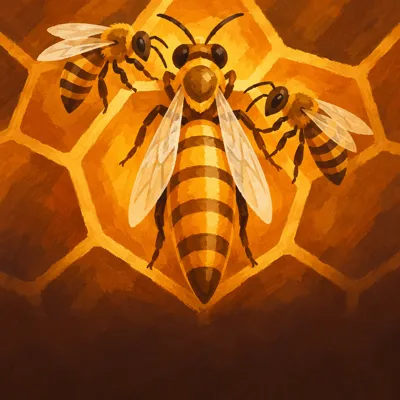
Eusociality quiz
3 questions. No signup. Your move.
How do army ant columns cross wide gaps or stream obstacles?
Now make it a duel.
Play more questions on Eusociality in LearnClash. Challenge friends in a new quiz duel.
Play more in the appA tap copies this page’s link so the app can pick up where you left off.
That was every question in this preview. Pick another topic or keep going in the app.
A new quiz every day: Today’s quiz
The video couldn’t load. You can watch it on YouTube.
Choose a topic, answer questions and challenge a friend in LearnClash.
Watch on YouTubeA tap copies this page’s link so the app can pick up where you left off.
More questions about Eusociality
These visible examples show the question style. LearnClash turns the full topic into ranked duels and spaced repetition.
-
How do specialized soldier aphids protect their plant galls from predators?
Answer: Piercing intruders with sharp horns
Why: Soldier aphids give up their reproduction entirely to guard their siblings, using frontal head horns to puncture ladybug larvae.
-
What environmental factor typically determines the caste of an ant larva?
Answer: Nutrition
Why: Nurse workers portion out every larval meal, so the colony, not the grub itself, decides which larvae grow into queens.
-
Which spider genus has the most social species?
Answer: Anelosimus
Why: Colonies of Anelosimus eximius can hold several thousand spiders, and 30 to 50 will gang up to subdue one large insect.
-
Which trait helps define a eusocial animal community?
Answer: Cooperative care of offspring
Why: In eusocial societies, individuals care for young that are not their own, often foregoing their own reproduction to help the colony.
-
Which insects are social cockroaches?
Answer: termites
Why: Their closest living relatives are Cryptocercus wood roaches, and amber 100 million years old already preserves termites with distinct castes.
-
In Hamilton's Rule ($rB > C$), what does the variable $r$ represent?
Answer: Genetic relatedness
Why: W. D. Hamilton published this inequality in 1964; r is 0.5 between full siblings and 0.125 between first cousins.
Keep going in the app
A tap copies this page’s link so the app can pick up where you left off.

