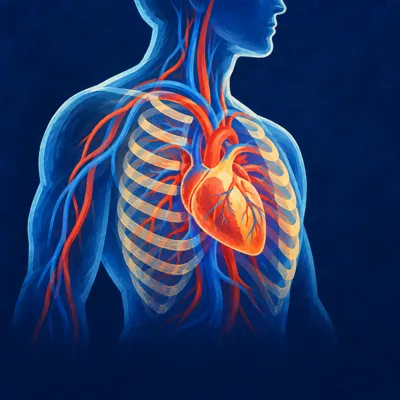
Human Anatomy quiz
3 questions. No signup. Your move.
Where are new red blood cells normally produced in adults?
Now make it a duel.
Play more questions on Human Anatomy in LearnClash. Challenge friends in a new quiz duel.
Play more in the appA tap copies this page’s link so the app can pick up where you left off.
That was every question in this preview. Pick another topic or keep going in the app.
A new quiz every day: Today’s quiz
The video couldn’t load. You can watch it on YouTube.
Choose a topic, answer questions and challenge a friend in LearnClash.
Watch on YouTubeA tap copies this page’s link so the app can pick up where you left off.
More questions about Human Anatomy
These visible examples show the question style. LearnClash turns the full topic into ranked duels and spaced repetition.
-
What is the hardest substance produced in the human body?
Answer: Tooth enamel
Why: Composed of 96% minerals, enamel is tougher than bone but cannot regenerate once destroyed by decay.
-
Which finger or toe nail typically grows the fastest on humans?
Answer: middle finger
Why: Fingernails grow about 3.5 mm a month on average, while toenails manage only about 1.6 mm, roughly half the pace.
-
Which muscles in the human body react the fastest?
Answer: extraocular muscles
Why: A reading saccade takes only 20 to 30 milliseconds, helped by MYH13, a superfast myosin found only in eye and voice-box muscles.
-
Where is the smallest bone in the human body located?
Answer: Middle ear
Why: The stapes is just 2.6 to 3.4 mm long and weighs about 3 mg, yet it hands every sound you hear on to the inner ear.
-
Counting inner surfaces too, which organ has the largest surface area?
Answer: lungs
Why: Textbooks gave the gut 250 square metres, but a 2014 remeasurement cut it to about 30; the lung's air sacs still spread over 50 to 140.
-
Which tongue papillae lack taste buds?
Answer: Filiform
Why: Filiform papillae are the most abundant papillae on the tongue, but they provide abrasive friction rather than taste.
Keep going in the app
A tap copies this page’s link so the app can pick up where you left off.