
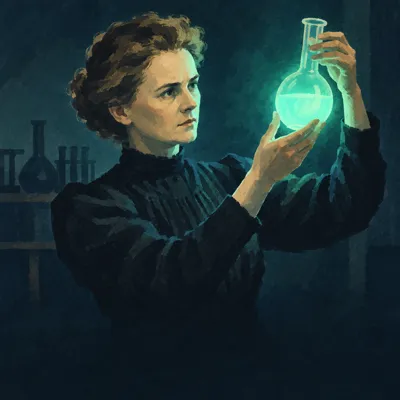
Marie Curie quiz
3 questions. No signup. Your move.
In which grand Parisian monument is Marie Curie buried today?
Now make it a duel.
Play more questions on Marie Curie in LearnClash. Challenge friends in a new quiz duel.
Play more in the appA tap copies this page’s link so the app can pick up where you left off.
That was every question in this preview. Pick another topic or keep going in the app.
A new quiz every day: Today’s quiz
The video couldn’t load. You can watch it on YouTube.
Choose a topic, answer questions and challenge a friend in LearnClash.
Watch on YouTubeA tap copies this page’s link so the app can pick up where you left off.
More questions about Marie Curie
These visible examples show the question style. LearnClash turns the full topic into ranked duels and spaced repetition.
-
Where are Marie Curie's radioactive notebooks kept today?
Answer: Lead-lined boxes
Why: Anyone who wants to read them must first sign a liability waiver and put on protective clothing; the contaminant's half life is 1,600 years.
-
What color did radium glow in Marie Curie's dark lab?
Answer: Faint blue
Why: Radium naturally glows faint blue, while the famous radioactive green color comes from added phosphors like zinc sulfide.
-
Why did Marie Curie refuse to patent her radium isolation process?
Answer: To allow unhindered research
Why: Because she never patented the process, she later could not afford radium; American women raised funds in 1921 to buy her a gram.
-
What nationality did Marie Curie gain through her marriage?
Answer: French
Why: She chose a simple dark blue wedding outfit instead of a traditional dress so she could wear it later in the lab.
-
Which chemical element did Marie Curie discover first?
Answer: polonium
Why: Curie named polonium after Poland, then partitioned between three empires, to publicize her homeland's lack of independence.
-
Where did Marie Curie get higher education while living in Warsaw?
Answer: An underground "Flying University"
Why: Its classes moved between private flats to dodge tsarist police, and in 1906 it went legal as the Society for Scientific Courses.
Keep going in the app
A tap copies this page’s link so the app can pick up where you left off.

