
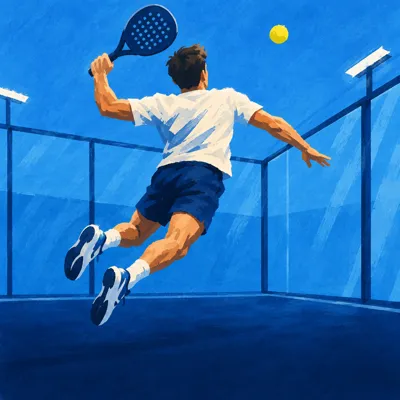
Padel quiz
3 questions. No signup. Your move.
What structural feature distinguishes a Padel court from a tennis court?
Now make it a duel.
Play more questions on Padel in LearnClash. Challenge friends in a new quiz duel.
Play more in the appA tap copies this page’s link so the app can pick up where you left off.
That was every question in this preview. Pick another topic or keep going in the app.
A new quiz every day: Today’s quiz
The video couldn’t load. You can watch it on YouTube.
Choose a topic, answer questions and challenge a friend in LearnClash.
Watch on YouTubeA tap copies this page’s link so the app can pick up where you left off.
More questions about Padel
These visible examples show the question style. LearnClash turns the full topic into ranked duels and spaced repetition.
-
Why is Padel considered a very social sport to play?
Answer: Players are physically close
Why: A padel court is only 10 by 20 metres and the game is usually doubles, so four players share one glass box.
-
What is the primary goal of the soft Chiquita shot?
Answer: Hitting to opponents' feet
Why: Chiquita is Spanish for little one: hit from the back of the court, it dies at the net players' feet and forces them to volley upward.
-
Which royal figure is credited with introducing Padel to Spain in 1974?
Answer: Prince Alfonso de Hohenlohe
Why: He had tried the game at Corcuera's Acapulco home; the Marbella Club court he built in 1974 came down in 1995 and a bronze plaque marks the spot.
-
Why do partners often touch their Padel rackets together?
Answer: To show team unity
Why: Padel rules allow only twenty seconds between points; dawdling earns a warning, then a lost first serve or a lost point.
-
What material usually forms the core of a padel racket?
Answer: EVA foam
Why: EVA stands for ethylene vinyl acetate; softer rackets swap it for polyethylene, which brands simply label FOAM on the spec sheet.
-
What happens during a Punto de Oro point?
Answer: Deciding point at deuce
Why: One point settles the game, and the receiving pair picks which side takes the serve, though they may not swap positions for it.
Keep going in the app
A tap copies this page’s link so the app can pick up where you left off.

