
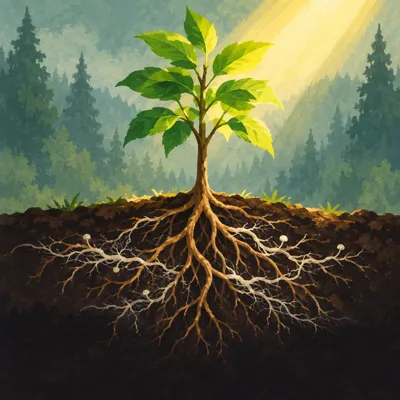
Plant Ecology quiz
3 questions. No signup. Your move.
What organisms decompose dead plants to recycle nutrients into soil?
Now make it a duel.
Play more questions on Plant Ecology in LearnClash. Challenge friends in a new quiz duel.
Play more in the appA tap copies this page’s link so the app can pick up where you left off.
That was every question in this preview. Pick another topic or keep going in the app.
A new quiz every day: Today’s quiz
The video couldn’t load. You can watch it on YouTube.
Choose a topic, answer questions and challenge a friend in LearnClash.
Watch on YouTubeA tap copies this page’s link so the app can pick up where you left off.
More questions about Plant Ecology
These visible examples show the question style. LearnClash turns the full topic into ranked duels and spaced repetition.
-
Which insects carry off seeds that have fatty elaiosomes?
Answer: Ants
Why: Ants consume only the fatty attachment and discard the undamaged seed inside underground waste chambers where it sprouts.
-
Which small green land plants lack vascular veins and true roots?
Answer: Mosses
Why: Mosses absorb moisture and nutrients directly across their surfaces rather than through internal vascular tubes.
-
Where do strangler fig seeds typically germinate?
Answer: In the canopy of a host tree
Why: Germinating in the canopy lets young strangler figs capture sunlight before growing roots downward to compete for soil resources.
-
What term describes trees that shed all their leaves seasonally each autumn?
Answer: Deciduous
Why: Deciduous species lose all their foliage at once before winter, whereas evergreen trees replace needles continuously.
-
Which underground fungal network connects plant root systems to exchange nutrients?
Answer: Mycorrhizae
Why: The mutualism exchanges soil-derived minerals like phosphorus from the fungus for sugar carbohydrates synthesized by the plant.
-
Which plant tissue carries water and minerals from roots to leaves?
Answer: Xylem
Why: Functional xylem tubes are actually dead hollow cells that conduct water upward without consuming cellular energy.
Keep going in the app
A tap copies this page’s link so the app can pick up where you left off.

