
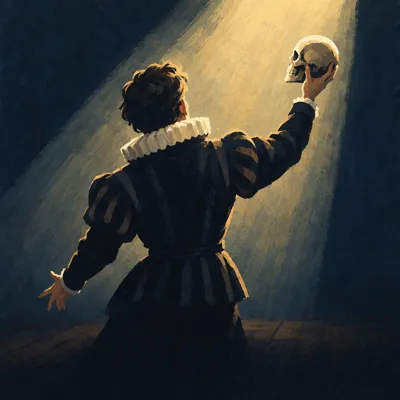
Shakespeare Quotes quiz
3 questions. No signup. Your move.
Who speaks the line 'To be, or not to be, that is the question'?
Now make it a duel.
Play more questions on Shakespeare Quotes in LearnClash. Challenge friends in a new quiz duel.
Play more in the appA tap copies this page’s link so the app can pick up where you left off.
That was every question in this preview. Pick another topic or keep going in the app.
A new quiz every day: Today’s quiz
The video couldn’t load. You can watch it on YouTube.
Choose a topic, answer questions and challenge a friend in LearnClash.
Watch on YouTubeA tap copies this page’s link so the app can pick up where you left off.
More questions about Shakespeare Quotes
These visible examples show the question style. LearnClash turns the full topic into ranked duels and spaced repetition.
-
Who delivers the funeral speech opening with 'Friends, Romans, countrymen, lend me your ears'?
Answer: Mark Antony
Why: Antony's masterclass in rhetoric repeatedly calls Brutus 'an honourable man' while cleverly inciting the crowd to total riot.
-
What dying curse does Mercutio place on both families in Romeo and Juliet?
Answer: A plague o' both your houses!
Why: Mercutio repeats this bitter curse three times before succumbing to the wound Tybalt dealt him.
-
To what natural force does King Lear cry 'Blow, winds, and crack your cheeks'?
Answer: storm
Why: Lear rants at the howling tempest on the heath after his ungrateful daughters Goneril and Regan lock him outside.
-
What word is commonly misquoted after 'I knew him' in Hamlet's Yorick speech?
Answer: well
Why: Shakespeare actually wrote 'I knew him, Horatio': Yorick was the king's jester who had carried young Hamlet on his back a thousand times.
-
What does King Richard offer his entire kingdom for during the Battle of Bosworth?
Answer: A horse
Why: Richard loses his mount in the fray and is slain shortly after, making this desperate plea his final famous line.
-
Which character in Shakespeare's Hamlet offers the advice 'To thine own self be true'?
Answer: Polonius
Why: Polonius says it as farewell advice to his son Laertes, who is leaving for France, in the same speech that warns 'Neither a borrower nor a lender be'.
Keep going in the app
A tap copies this page’s link so the app can pick up where you left off.

