
Eduardo Viveiros de Castro quiz
3 questions. No signup. Your move.
Where was Viveiros de Castro a professor during the 2018 fire?
Now make it a duel.
Play more questions on Eduardo Viveiros de Castro in LearnClash. Challenge friends in a new quiz duel.
Play more in the appA tap copies this page’s link so the app can pick up where you left off.
That was every question in this preview. Pick another topic or keep going in the app.
A new quiz every day: Today’s quiz
The video couldn’t load. You can watch it on YouTube.
Choose a topic, answer questions and challenge a friend in LearnClash.
Watch on YouTubeA tap copies this page’s link so the app can pick up where you left off.
More questions about Eduardo Viveiros de Castro
These visible examples show the question style. LearnClash turns the full topic into ranked duels and spaced repetition.
-
Why is a shaman's journey considered a dangerous act?
Answer: Losing human perspective
Why: Shamans can take on a spirit's or animal's viewpoint and, unlike most people, come back to tell the story.
-
Which "Metaphysics" is the title of Viveiros de Castro's 2009 book?
Answer: Cannibal Metaphysics
Why: The French original of 2009 uses the plural, Métaphysiques, and the English translation did not follow until 2014.
-
What causes the problem of equivocation during anthropological fieldwork?
Answer: Homonymous conceptual terms
Why: Viveiros de Castro's example is the vulture, which sees the maggots in rotting meat as grilled fish: one word, two worlds.
-
How does an Amazonian shaman cross boundaries between species?
Answer: Changing their perspective
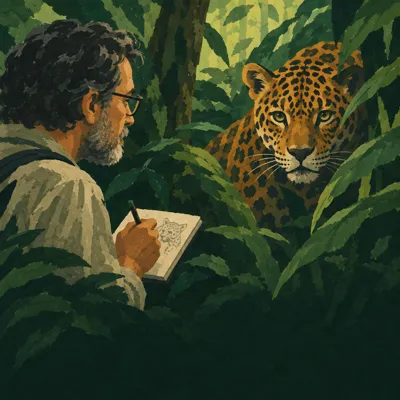
Why: Viveiros de Castro: shamans can cross and come back, into a world where what we see as blood is manioc beer to the jaguar.
-
What term does Viveiros de Castro use for non-human personhood?
Answer: subjectivity
Why: In his 1998 Cambridge lectures, the subjectivities filling the world include animals, gods, spirits, the dead, plants and occasionally even objects.
-
What task does Viveiros de Castro call 'controlled equivocation'?
Answer: Translation
Why: He calls it controlled in the sense that walking may be called a controlled way of falling: the translator works the gap rather than closing it.
Keep going in the app
A tap copies this page’s link so the app can pick up where you left off.

