
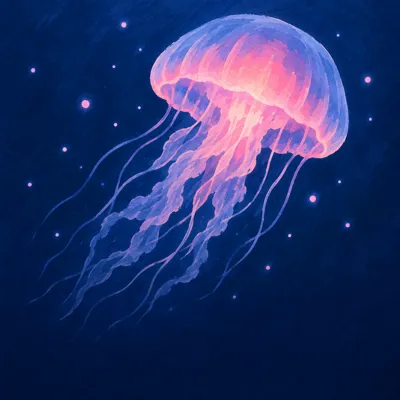
Jellyfish quiz
3 questions. No signup. Your move.
What dangling body parts do jellyfish use to catch prey?
Now make it a duel.
Play more questions on Jellyfish in LearnClash. Challenge friends in a new quiz duel.
Play more in the appA tap copies this page’s link so the app can pick up where you left off.
That was every question in this preview. Pick another topic or keep going in the app.
A new quiz every day: Today’s quiz
The video couldn’t load. You can watch it on YouTube.
Choose a topic, answer questions and challenge a friend in LearnClash.
Watch on YouTubeA tap copies this page’s link so the app can pick up where you left off.
More questions about Jellyfish
These visible examples show the question style. LearnClash turns the full topic into ranked duels and spaced repetition.
-
Which animals use spiny throat linings to swallow jellyfish?
Answer: Sea turtles
Why: Leatherback turtles live almost entirely on jellyfish, and backward-pointing spines in their throat stop prey from escaping once caught.
-
How many hearts are found inside the body of a jellyfish?
Answer: Zero
Why: No heart, no blood, no brain; oxygen simply diffuses through the two thin tissue layers, and only about 5 percent of a jellyfish is solid matter.
-
Which juvenile stage is released when a jellyfish polyp strobilates?
Answer: Ephyra
Why: The eight-lobed ephyra pulses through the water column until marginal tissue growth fills in the gaps.
-
In which natural environments do almost all jellyfish species live?
Answer: Oceans
Why: True jellyfish are all marine; the best-known freshwater species is a coin-sized hydrozoan now found on every continent but Antarctica.
-
Why do many jellyfish species have four-leaf clover shapes inside?
Answer: Reproductive organs
Why: The four-leaf clover is a set of gonads, and their tetramerous arrangement is the giveaway that the whole animal is built in fours.
-
What process splits a jellyfish polyp into a stack of discs?
Answer: Strobilation
Why: Each saucer-like segment produced during strobilation detaches individually to mature into an independent jellyfish.
Keep going in the app
A tap copies this page’s link so the app can pick up where you left off.

