
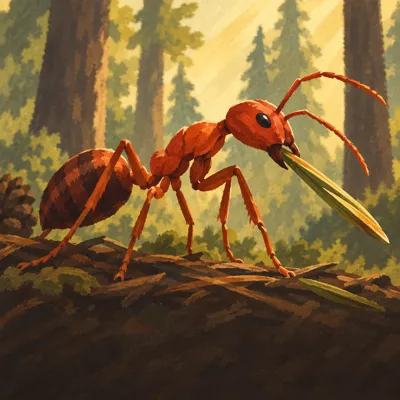
Wood Ants quiz
3 questions. No signup. Your move.
What event starts a wood ant generation when winged ants fly to mate?
Now make it a duel.
Play more questions on Wood Ants in LearnClash. Challenge friends in a new quiz duel.
Play more in the appA tap copies this page’s link so the app can pick up where you left off.
That was every question in this preview. Pick another topic or keep going in the app.
A new quiz every day: Today’s quiz
The video couldn’t load. You can watch it on YouTube.
Choose a topic, answer questions and challenge a friend in LearnClash.
Watch on YouTubeA tap copies this page’s link so the app can pick up where you left off.
More questions about Wood Ants
These visible examples show the question style. LearnClash turns the full topic into ranked duels and spaced repetition.
-
What two colors are most commonly seen on a wood ant?
Answer: Red and black
Why: Head and thorax are rusty red and the gaster brownish black; Formica rufa is hairy, while its lookalike F. polyctena is almost hairless.
-
Approximately how many times their own body weight can wood ants lift?
Answer: 40 times
Why: A load test clocked one 8.9 mg wood ant moving 352.9 mg, about 40 times its weight; free in the jaws, loads run nearer ten times.
-
Which beetle mimics pheromones to live in wood ant nests?
Answer: Lomechusa strumosa
Why: Ants grip its tufts of hair, called trichomes, and carry the beetle into the nest, where they feed it mouth to mouth like their own brood.
-
How many legs does a wood ant have?
Answer: six
Why: Six legs mark it as an insect; wood ants march them along scent trails that can run 100 metres from the mound.
-
How many queens does a multi-queen wood ant nest usually have?
Answer: hundreds
Why: A big wood ant mound can hold 100,000 to 400,000 workers, and Formica polyctena colonies can have 1,000 queens or more.
-
What keeps wood ants the top predators in pine canopies?
Answer: Aggressive territorial exclusion
Why: Red wood ants sit atop a three tier ant hierarchy as territorials, and they defend their ground with sprayed formic acid rather than a sting.
Keep going in the app
A tap copies this page’s link so the app can pick up where you left off.

