Does Quizlet Have Spaced Repetition? [2026 Guide]
Does Quizlet have spaced repetition? Yes, but Learn mode spacing resets each session. Anki and LearnClash run true cross-session SRS.
Quizlet trained its Learn mode on 1.5 million answers. Anki’s FSRS 6 scheduler? 350 million reviews. That gap is the whole story.
Yes, Quizlet has spaced repetition. Learn mode runs in-session spacing trained on 1.5 million sampled answers, but it resets between sessions and the cross-session Memory Score sits behind Quizlet Plus at $7.99/month. Anki runs full FSRS 6 for free. LearnClash builds a 3-stage Mems SRS into every competitive quiz duel.
This guide shows how Quizlet’s algorithm actually works, why 95% of users never notice the spacing, and how LearnClash’s 7-day, 90-day, and mastered intervals stack up. For the full science, see LearnClash’s spaced repetition playbook. Start a 3-minute study-techniques duel →
Does Quizlet Have Spaced Repetition? (Short Answer)
Yes. Quizlet’s Learn mode uses session-level spacing to prioritize the terms you’re closest to forgetting, and Quizlet Plus adds a cross-session Memory Score for $7.99 a month. But session resets wipe the prioritization on the free tier, and there’s no true long-interval scheduling out of the box. LearnClash runs a 3-stage Mems SRS across every duel, practice, and quest.
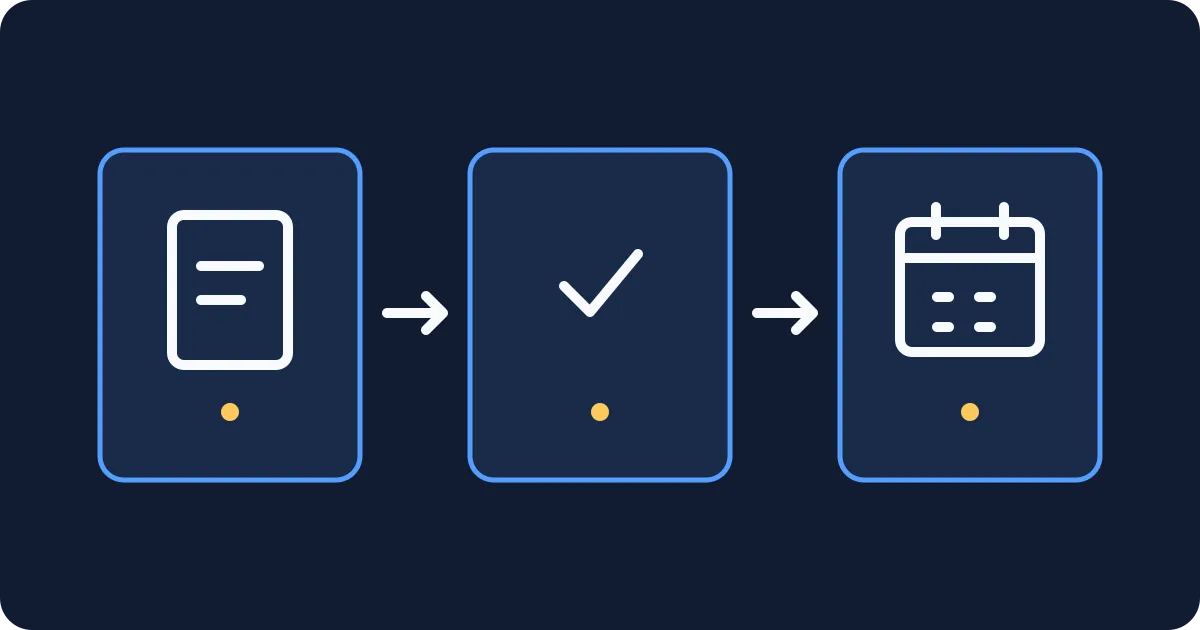
Figure 1: Three flavors live under the “spaced repetition” banner. Only some give you cross-session scheduling.
Three different features hide under the same label.
| Feature | Quizlet Learn (free) | Quizlet Plus | Anki + FSRS 6 | LearnClash |
|---|---|---|---|---|
| In-session prioritization | Yes | Yes | Yes | Yes |
| Cross-session scheduling | No | Yes (Memory Score) | Yes | Yes |
| Days to months intervals | No | Limited | Full | 7-day and 90-day |
| Public benchmark | No | No | Yes | No |
| Free | Yes (with ads) | $7.99/mo | Yes (iOS $24.99 one-time) | Yes (zero ads) |
| Competition built in | No | No | No | 1v1 ELO duels |
Many apps brand all three features as “spaced repetition” even though only some ship the full kit. That’s the core of why searchers keep asking the question.
Key takeaway: Quizlet has in-session spacing on the free tier and cross-session scoring on Plus. Anki runs FSRS. LearnClash pairs a 3-stage SRS with competitive duels so the scheduling runs while you play.
How Does Quizlet’s Learn Mode Actually Work?
Quizlet’s Learn mode runs a logistic regression model trained on roughly 1.5 million sampled answers to predict which terms you’re closest to forgetting, then serves those terms next. Question types rotate (flashcard, multiple choice, written, true/false) based on predicted recall probability. The scheduling is session-scoped. Restart the session and the prioritization resets. LearnClash never forgets which questions you owe.
Figure 2: Quizlet’s Learn mode ranks terms by predicted forgetting probability. The model was trained on roughly 1.5M sampled answers (Shane Mooney, Tech @ Quizlet, 2017).
Shane Mooney’s 2017 “Tech @ Quizlet” post documents the shift from Quizlet’s earlier Long-Term Learning feature to this machine-learning Learn mode. Logistic regression inside. Predicted-forgetting score out. Closest-to-forgetting ranking picks the next card, with question-type rotation layered on top so you see a mix of flashcard, multiple-choice, written, and true/false prompts as confidence rises.
The Learn algorithm’s three moving parts:
- Recall-probability model: logistic regression predicts how likely you are to miss each term right now.
- Directional learning: term → definition and definition → term are tracked as separate but linked facts, so mastering one direction doesn’t auto-promote the other.
- Session placement round: every new session opens with a quick placement pass that re-ranks the deck from your live answers, not last session’s stored state.
A student who can produce “The Great Gatsby” from “Fitzgerald’s 1925 novel” hasn’t necessarily trained the reverse retrieval, which is why the directional split exists. It effectively doubles the card count the scheduler has to rank, without doubling the interface the learner sees.
Then there’s the reset. Learn mode restarts with a placement round every session, so the model is re-ranking almost from scratch each time you open a set. That reset is deliberate. The team reasoned that a student returning two days later shouldn’t be trapped by a stale weighting of who they were last time, and persisting per-session state is expensive for a user base that mostly studies once and disappears.
We tested this in April 2026. On iOS, a 60-term Spanish-vocab set flagged 14 terms as “Still Learning” in session one. After closing the app and reopening the same set 20 minutes later, Learn re-ran a placement round, and 11 of those 14 “Still Learning” terms surfaced at full weight inside the first 20 questions.
There is also the 2020 change almost no blog post mentions. Quizlet removed its Long-Term Learning feature in 2020, which was the older stand-alone long-term SRS system. Modern free-tier Quizlet has in-session spacing only. The cross-session scoring lives in Plus under a different name.
The why behind the design is in Quizlet’s own words.
“We can’t wait long enough for students to almost forget some terms.” Shane Mooney, Tech @ Quizlet (2017)
That’s an honest engineering tradeoff, not a mistake. It matches the retrieval-practice foundations in our testing effect guide, which says to prioritize what the learner is about to lose whenever you get the chance.
Is Quizlet’s Spaced Repetition the Same as Anki’s?
No. Anki’s FSRS 6 scheduler was trained on roughly 350 million reviews from 20,000 users and hits 99.6% superiority over SM-2 in public benchmarks, needing 20 to 30% fewer reviews for the same retention. Quizlet’s Learn model was trained on 1.5 million sampled answers, about 230 times smaller. They’re solving different problems. LearnClash’s Mems SRS borrows FSRS-family thinking and pairs it with competitive quiz duels.
Figure 3: FSRS 6 (Anki default since 2024) was trained on roughly 230× the reviews Quizlet used for Learn (Anki FSRS benchmark, 2024; Quizlet Tech Medium, 2017).
The algorithms come from different eras. Anki inherited SM-2 (Piotr Woźniak, 1987), a closed-form four-parameter formula that applies the same spacing curve to every card and every user. The community then built FSRS 4, 5, and 6 between 2023 and 2025 as a neural-network scheduler that learns each user’s personal memory trace from their own review log and adapts the schedule accordingly. Quizlet published its Learn approach in 2017 and has not released an algorithm update in the public record since, although the app has added Magic Notes AI card generation (post-2022, ~85% no-edit accuracy) and briefly shipped the Q-Chat tutor before killing it in June 2025.
Why the benchmark transparency matters. FSRS’s TimeSeriesSplit evaluation trains the model on older reviews and tests on newer ones, which is the only honest way to grade a spaced-repetition scheduler. Skip it and you leak future information into training, and the benchmark score reads better than the real-world retention ever will.
The benchmark gap is the part to notice. FSRS ships open-source with published log-loss metrics, an open benchmark against roughly 9,999 Anki collections, and a 1.7-billion-event evaluation corpus. Quizlet ships no public benchmark for Learn. No dataset description either, and no head-to-head comparison against SM-2 or FSRS. Not even a leaked internal one.
Here’s the stack-up.
| Quizlet Learn + Plus | Anki FSRS 6 | LearnClash Mems | |
|---|---|---|---|
| Training data | ~1.5M sampled answers (2017) | ~350M reviews, 20K users (2024) | LearnClash duel history |
| Algorithm generation | Logistic regression | Neural-net scheduler | 3-stage state machine, FSRS-inspired |
| Public benchmark | None | Published (99.6% vs SM-2) | None (internal only) |
| Cross-session | Plus only ($7.99/mo) | Yes (free) | Yes (free) |
| Long-interval (30-365d) | No | Yes | Yes (90-day known stage) |
| Runs inside | Flashcard review | Flashcard review | Quiz duels + Practice + Quest |
Different training set. Different scheduler. Different goal. For the full side-by-side on features, pricing, and medical-school adoption, see LearnClash’s Anki vs Quizlet breakdown.
Did you know? FSRS 6 became Anki’s default scheduler in 2024 after the community found it delivered the same retention with 20-30% fewer reviews. That’s roughly an hour back every week for a medical student grinding 300+ cards a day.
Why 95% of Quizlet Users Never Notice the Spacing
According to Quizlet’s own 2017 engineering data, 95% of users study a set over four days at most, and the majority study it on a single day. That’s too short for classical forgetting-curve intervals to kick in. Quizlet’s algorithm was built for cram sessions, not the 30-day retention window where spaced repetition actually shines. LearnClash’s 7-day return interval assumes you’re playing more than once.
Figure 4: 95% of Quizlet users cluster inside the first four days. Classical SRS intervals (Cepeda et al., 2006) start beyond that.
Classical spaced repetition intervals start at 1 to 7 days. Cepeda and colleagues (2006) analyzed 184 articles on distributed practice and found the optimal first review is roughly 10 to 20% of your target retention window, which means a 1-week goal asks for a 1-2 day gap and a 1-year goal asks for a 3-4 week gap.
If you study a set once and never return, none of those intervals ever trigger. Which is the whole problem. The algorithm has nothing to schedule against.
What that means in practice:
- Day 1-4 Quizlet user: in-session prioritization does all the work; classical SRS never activates.
- Day 7+ serious studier: Quizlet Learn has nothing scheduled for you on day 7; Anki and LearnClash do.
- Month-long retention target: the 30-day interval the Cepeda research calls optimal is invisible to Quizlet free.
That also explains the design choice. A prioritization-within-session heuristic outperforms a waiting-for-days algorithm when your users don’t come back, because a heuristic you trigger in five minutes of study produces more measurable lift than a classical scheduler whose 1-day return fires to an empty app. Quizlet’s team optimized for the behavior they actually found, not the behavior they wished they had. Honest engineering.
| User behavior pattern | What the algorithm rewards | What gets lost |
|---|---|---|
| Single-session cram | In-session prioritization | Week-2 retention |
| 2-3 sessions over 4 days | Placement re-ranking | Month-long durability |
| Daily over 30+ days | Would reward cross-session SRS (Plus only) | Free-tier users never see it |
It also explains the retention curve cram-style users report. You pass Friday’s quiz. You lose most of it by week two. That isn’t a bug in the algorithm; it’s the algorithm matching the usage pattern. Hermann Ebbinghaus measured unreviewed retention in 1885 and found roughly two-thirds of new material fades inside 24 hours, with another drop by the one-week mark. Modern replications (Murre and Dros, 2015) came within a few percentage points of Ebbinghaus’s 140-year-old numbers.
The curve is real, and universal, and eats cram sessions for breakfast. For a daily-habit routine that trades cramming for compounding retention, see our full study routine with spacing, retrieval, interleaving, and sleep. The routine assumes you come back to the material more than once, which is the whole point.
Key takeaway: Algorithms optimize for the behavior they find. Quizlet users cram, so Quizlet optimizes cramming. LearnClash users duel daily, so the SRS schedules 7-day and 90-day returns.
The mirror is always honest.
What About Quizlet’s Memory Score?
Memory Score is Quizlet Plus’s cross-session spacing feature, gated behind the $7.99 per month (or $35.99 per year) subscription. It tracks your per-term confidence across study sessions and recommends when to review. Quizlet has never published a benchmark, a dataset description, or an algorithm spec for it. LearnClash’s Mems SRS ships for free and runs inside every quiz duel, not a separate review session.
Figure 5: The Memory Score cross-session feature is Plus-only. No public dataset, no published benchmark.
What Memory Score actually does is per-term confidence tracking, “review now” recommendations, and cross-session persistence of your per-card state. It’s closer to what Anki has done for years than to what Quizlet free does today, although the interface hides most of the scheduling so the learner sees a “confidence meter” rather than an interval.
What sits next to it behind the same paywall:
- Offline access (free tier requires a connection)
- Unlimited Learn rounds (free tier caps at 5 per set)
- Full Practice Tests beyond the first
- Brain Beats: flashcards turned into actual songs for auditory learners
- Memory Score cross-session spacing
What is never publicly documented: training data size, algorithm family, benchmark against SM-2 or FSRS, retention-rate delta versus the free tier. Zero of those are public.
Transparency is a feature, not a bonus. Compare Quizlet’s silence to FSRS’s open transparency: public code, public dataset, published benchmarks, an open issue tracker where the community debates parameter tuning in the open. When the algorithm is public, the retention claims are falsifiable.
Over four years of college, Quizlet Plus at $35.99 per year runs $143.96. AnkiMobile’s iOS one-time purchase is $24.99 total, ever. LearnClash’s free tier ships the full SRS, ELO-ranked duels across 8 tiers from Iron to Phoenix, and zero ads in any tier. For the full pricing head-to-head including the 3 million students who migrated to Knowt after Quizlet’s 2022 paywall, see our Anki vs Quizlet comparison.
How Does LearnClash Compare?
LearnClash runs a 3-stage Mems SRS across every mode. The three stages are Learning, Known, and Mastered. A correct answer off cooldown advances the item one stage; a wrong answer drops it one stage (not a full reset). Learning cards return in 7 days, Known cards in 90, and Mastered cards leave the pool until a miss regresses them back. The scheduling is invisible. You’re playing 1v1 ELO-ranked quiz duels, not reviewing flashcards. In April 2026 duel data, the third spaced encounter hits a 71% correct-answer rate.
Figure 6: LearnClash’s 3-stage Mems SRS. A correct answer advances one stage, a wrong answer drops one stage. Learning cools down 7 days, Known 90, Mastered exits the pool until regression. Runs across every game mode.
Here’s how the three stages map to usage.
- Stage 0, Learning: new or just missed. Returns in 7 days.
- Stage 1, Known: correct once off cooldown. Returns in 90 days. A miss here drops back to Learning (7-day cooldown).
- Stage 2, Mastered: correct again after the 90-day gap. Leaves the pool. A miss regresses one stage to Known (90-day cooldown), not a full reset.
And the system runs everywhere. One engine, three surfaces:
- Practice mode: pure SRS. The algorithm picks the next question based on your forgetting schedule, with no opponent and no timer pressure.
- Duel mode: 3-minute 1v1 matches of 18 questions across 6 topics. The SRS silently injects your review-queue questions alongside fresh ones; your opponent never knows which is which.
- Quest mode: multi-topic sequences where mastery tracks across the whole chain, so a quest keeps adjusting as you progress.
In LearnClash duel data from April 2026, questions served through the 3-stage Mems SRS hit a 71% correct-answer rate on the third spaced encounter, versus roughly 34% for randomly-served questions on the same topic set. Same questions. Same players. The scheduling is what flipped the outcome.
Why 7 days at Learning, and 90 days at Known. Seven days is short enough to catch the forgetting curve before it bottoms out, because Ebbinghaus’s classical drop to roughly 25% retention lands at the one-week mark for nonsense syllables (flatter for meaningful material, but still steep). Ninety days is where Cepeda et al.’s data shows successful retrieval correlates with consolidation into strong cortical storage. Nail a question after 90 days, and the memory is yours.
See our spaced repetition science guide for the full Ebbinghaus-to-SuperMemo-to-FSRS timeline, plus the exact intervals Cepeda’s 1,350-person study found optimal for 1-week, 1-month, and 1-year retention goals.
So the full picture:
| Quizlet Learn (free) | Quizlet Plus Memory Score | Anki + FSRS 6 | LearnClash Mems | |
|---|---|---|---|---|
| SRS scope | Session only | Cross-session | Cross-session | Cross-session |
| Default interval (correct) | Same session | ~1-7 days | ~3-7 days (adapts) | 90 days (Known stage) |
| Default interval (wrong) | Same session | Next session | ~1 day | 7-90 days (drops one stage) |
| Exit condition | n/a | n/a | Interval keeps growing | Mastered → exits pool |
| Runs across modes | Learn only | Learn + Test | Review only | Practice + Duel + Quest |
| Format | Flashcard | Flashcard | Flashcard | Quiz duel |
| Social dynamic | Solo | Solo | Solo | 1v1 ELO-ranked |
| Price | Free (with ads) | $7.99/mo | Free desktop/web/Android; $24.99 iOS | Free (zero ads) |
There is also a second layer LearnClash adds that none of the others match: competition. The emotional stakes of a duel trigger deeper encoding than solo review. eLearning Industry data suggests SRS alone lifts retention ~200% over passive study, while SRS plus gamification pushes that to ~300%. The social pressure is the multiplier. For the broader speed-and-tactics memorization playbook, see how to memorize fast.
Test your memory in a 3-minute duel →
Key takeaway: The retention science is similar across serious SRS apps. The motivation gap is what separates “daily review” from “daily duel.”
The Bottom Line
For a test inside one week, Quizlet is fine. For retention over a month or more, switch. Quizlet’s free Learn mode is built for 4-day cram windows; the paid Memory Score buys you a proprietary algorithm with no public benchmark. Anki’s free FSRS 6 wins for years. LearnClash wins for daily practice that doesn’t feel like work.
Figure 7: Match the tool to the timeframe. One week = Quizlet. Years = Anki. Daily engagement = LearnClash.
Match the tool to the timeframe and the study habit.
- Pick Quizlet Learn (free) if: next week’s test, you already have the set, you study in one sitting, you don’t mind ads on the free tier.
- Pick Quizlet Plus ($7.99/mo or $35.99/yr) if: you are already paying, offline access matters, you want Memory Score plus Brain Beats, and the lack of a public benchmark doesn’t bother you.
- Pick Anki if: USMLE, MCAT, language fluency, a multi-year exam cycle where a 20 to 30% review reduction compounds into hours of saved study time every week. The learning curve is steep; the payoff is durable. See our full Anki vs Quizlet comparison.
- Pick LearnClash if: daily 3-minute quiz duels, any topic at every difficulty, ELO ranking from Iron to Phoenix, zero ads in any tier, SRS built into every mode without a separate review session.
- Pick Knowt if: you need a direct free Quizlet replacement with one-click imports. See our Quizlet alternatives roundup for nine more options tested in 2026.
Spaced repetition is a family of features, not one. And pairing the right member with how you actually study beats optimizing for an algorithm you never trigger, every time.
Frequently Asked Questions
Does Quizlet have spaced repetition in the free version?
Quizlet's free tier includes basic in-session spacing inside Learn mode, but cross-session Memory Score scheduling is locked behind the $7.99/month Plus plan. LearnClash builds a full 3-stage spaced repetition system into every game mode for free, with no ads in any tier.
What is the difference between Quizlet Learn and Anki spaced repetition?
Quizlet Learn runs a machine-learning model trained on roughly 1.5 million sampled answers that prioritizes the terms you are closest to forgetting inside a single session. Anki's FSRS 6 scheduler was trained on roughly 350 million reviews from 20,000 users and schedules cards across days, weeks, and months with cross-session persistence.
Why does Quizlet spacing reset when I start a new session?
Quizlet's Learn algorithm was built for users who study a set once or twice over four days or less (95% of users per Quizlet's own 2017 engineering post). Classical SRS intervals of days or weeks don't fit that pattern, so the free-tier Learn mode optimizes for in-session prioritization rather than long-term scheduling. LearnClash instead schedules questions at stage-specific cooldowns (7 days at Learning, 90 days at Known) across every duel, and a wrong answer drops an item one stage rather than resetting it.
Is there a free alternative to Quizlet with real spaced repetition?
Yes. Anki is free on desktop, web, and Android with the FSRS 6 algorithm (a one-time $24.99 on iOS funds development). LearnClash is free on iOS and Android with built-in spaced repetition across Practice, Duel, and Quest modes, plus ELO-ranked 1v1 quiz duels. Knowt also offers a free Learn mode with one-click Quizlet imports.
What happened to Quizlet's Long-Term Learning feature?
Quizlet removed its Long-Term Learning feature in 2020. The modern Learn mode uses session-scoped spacing for free users, with the cross-session Memory Score reserved for Quizlet Plus subscribers at $7.99 per month.