
How to Memorize Fast: 9 Science-Backed Methods [2026]
How to memorize fast: 9 science-backed methods ranked by encoding speed and 24-hour recall. Spaced retrieval beats rereading 2x. Tested.

It’s 11pm. The thing has to be in your head by 9am. You don’t have time for a study habit.
The fastest way to memorize something is active retrieval on a spaced schedule: read once, close the page, write down what you remember, wait, and repeat. A 2021 meta-analysis by Latimier and colleagues found spaced retrieval beats one long study session with an effect size of 0.74, the largest single boost in memory science. So when people ask how to memorize fast, the honest answer isn’t a hack. It’s a loop. LearnClash runs that loop inside a 3-minute quiz duel on any topic, so the same format that made trivia apps fun can drill a chemistry chapter into your head before breakfast.
Below, 9 techniques ranked on how to memorize fast, each scored on encoding speed and 24-hour retention. After that, the right technique for speeches, lines, lists, lyrics, and numbers. Match the method to the material and you stop wasting the night. Pick a topic and run a 3-minute quiz duel →
Why Most “Memorize Fast” Tricks Fail
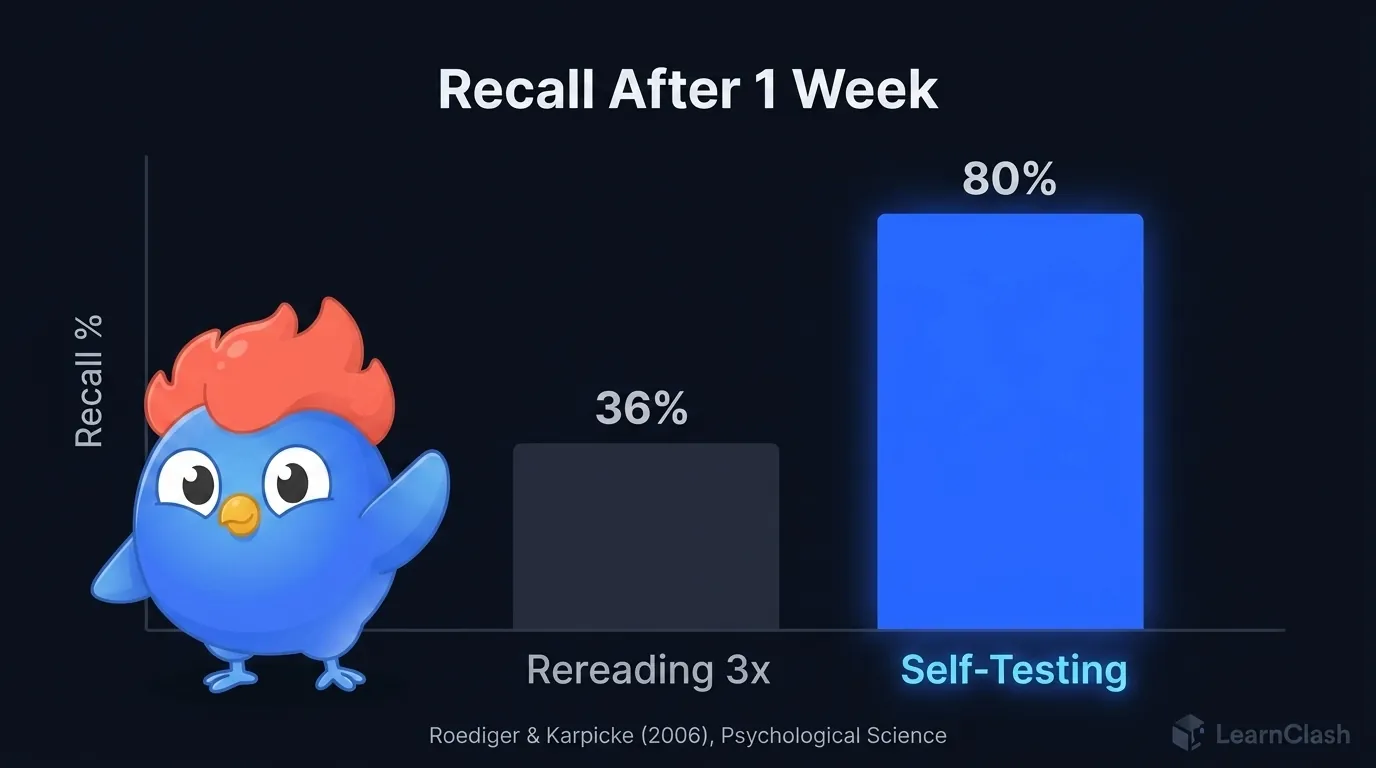 Figure 1: Roediger and Karpicke (2006) found testing produced 80% recall after one week versus 36% for rereading the same material.
When people search for how to memorize fast, they reach for the wrong tools first. Highlighting, rereading, and summarizing all feel productive. But Dunlosky and colleagues (2013) reviewed 700+ studies and rated all three low utility. LearnClash skips them entirely and runs the two highest-utility techniques on autopilot.
Blame one word: fluency. Reread a paragraph three times and the words start to flow. Your brain reads that flow as familiarity, and it quietly upgrades familiarity to mastery. Bad upgrade. The information is still rattling around in working memory. It never moved into long-term storage, no matter how smooth the page felt on pass four.
Dunlosky’s team noticed something brutal: students who highlighted scored worse than students who just read the text once and then tried to recall it cold. The highlighter felt busier and learned less.
So fast memorization has almost nothing to do with how many times you look at the page. It’s about retrieval. Every time you drag a fact out of your own head instead of glancing back at the source, you lay down a stronger trace. Which leads to an uncomfortable rule. If a study technique feels easy, it’s probably doing nothing. The real best way to memorize is the one that makes you sweat a little.
How Fast Can You Really Memorize?
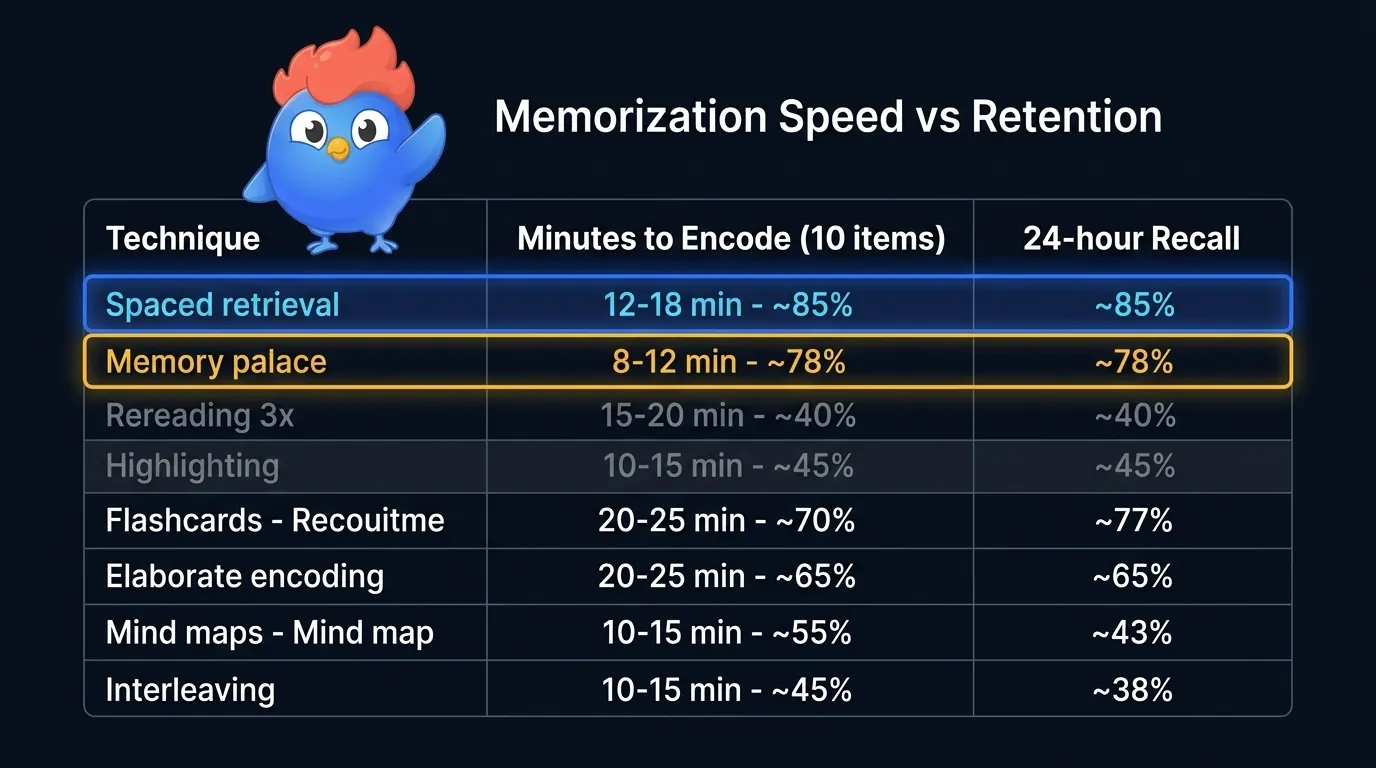 Figure 2: Estimated time-to-encode and 24-hour recall by technique. Spaced retrieval and memory palace dominate the recall axis.
The honest answer to how to memorize something fast splits in two directions. Short lists go faster than you’d guess. Dense material goes slower. A trained competitor can park a shuffled 52-card deck in working memory inside five minutes. That same competitor needs hours to encode a textbook chapter that’s still intact a week later. LearnClash sits between those poles and packs six retrieval events into every 3-minute turn. So how to memorize fast is two separate problems wearing one search box: how fast you can encode the thing, and how long you need it to stay put.
| Technique | Minutes to encode (10 items) | 24-hour recall |
|---|---|---|
| Rereading 3x | 15-20 | ~40% |
| Highlighting | 10-15 | ~45% |
| Active recall (3 self-tests) | 10-15 | ~70% |
| Spaced retrieval (3 tests, gaps) | 12-18 | ~85% |
| Memory palace | 8-12 | ~78% |
| Mnemonic / acronym | 5-10 | ~65% |
| Chunking | 3-8 | ~70% (short items) |
Two things jump out of that table. The good techniques aren’t slower. Several are faster. And cramming feels quick in the moment, then loses two-thirds of its ground inside a day. Look at the recall column again. Spaced retrieval sits at the top, and it’s also one of the fastest things on the list to encode. So the trade-off people assume exists, “fast cramming” versus “slow good study,” mostly doesn’t. The only real price of switching is the squirm of testing yourself before you feel ready. Pay it anyway. It’s the cheapest study upgrade you’ll ever make.
1. Active Recall: Test Yourself Before You Feel Ready
 Figure 3: The active recall loop. Each test forces a retrieval, which strengthens the memory trace more than a re-read.
Active recall is the single fastest memorization technique, and a LearnClash duel is nothing but active recall in a timer. Read a chunk, close the source, then write or speak everything you remember without peeking. Roediger and Karpicke’s 2006 study clocked it: students who tested themselves once recalled 80% after a week, while rereading students recalled only 36%. Same minutes spent. Double the durability.
The hard part isn’t the testing. It’s testing yourself before you feel ready. People review until the material “feels solid,” then stop right at the point where the real work would start.
That “feels solid” sensation is the fluency illusion wearing a new costume. And the retrieval that hurts the most, the one where you stare at a blank line and your brain strains, is the one laying down the strongest trace. So lean into the blank line.
A practical move:
- Read the chapter once.
- Close the book.
- Set a 90-second timer and write everything you remember.
- Open the book and check what you missed.
- Repeat the cycle on the gaps.
Three rounds of this beat three hours of rereading. And the soreness in your brain is the workout. Active recall is the closest thing memory science has to a single answer to how to memorize quickly.
Run a 3-minute active-recall duel on any topic →
2. Spaced Retrieval: Three Self-Tests Beat Three Hours of Reading
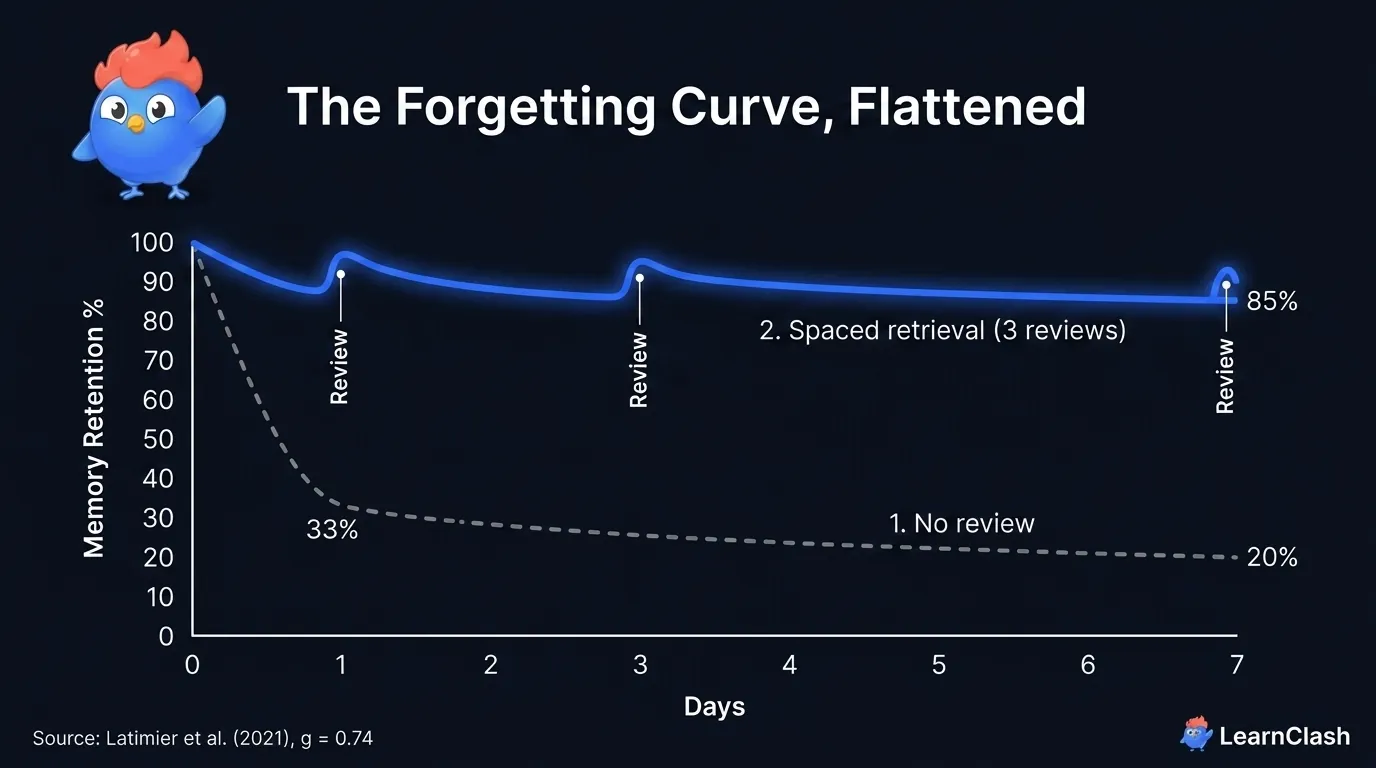 Figure 4: Three spaced reviews flatten Ebbinghaus’ forgetting curve and push retention from ~30% to ~85% after one week.
Spaced retrieval is the most powerful memory technique ever measured, and LearnClash’s 3-stage SRS schedules missed questions at expanding intervals so each duel doubles as a review session. Latimier, Peyre, and Ramus (2021) ran a meta-analysis of 29 studies and found spaced retrieval beats massed retrieval with an effect size of g = 0.74. That’s huge. If you only adopt one technique from this guide on how to memorize fast, make it this one.
Back in 1885, Hermann Ebbinghaus measured the leak. We lose roughly two-thirds of new information within 24 hours when we never revisit it. Drop a handful of retrievals into that window and the forgetting curve flattens hard. The right gap runs about 10-20% of the time you want to remember it, so a one-week target points to reviews 24 and 48 hours after you first learn it.
Rule of thumb: Three spaced self-tests at 1 hour, 1 day, and 3 days lock in a week-long retention window for most material.
One detail decides whether spacing works: the reviews have to be tests, not re-reads. A re-read does the reaching for you. A test makes your brain reach, and the reach is the rep. Skip the reach and you’ve spaced nothing. For the interval math behind all this, see our spaced repetition guide.
3. Memory Palace: The Ancient Trick Memory Champions Still Use
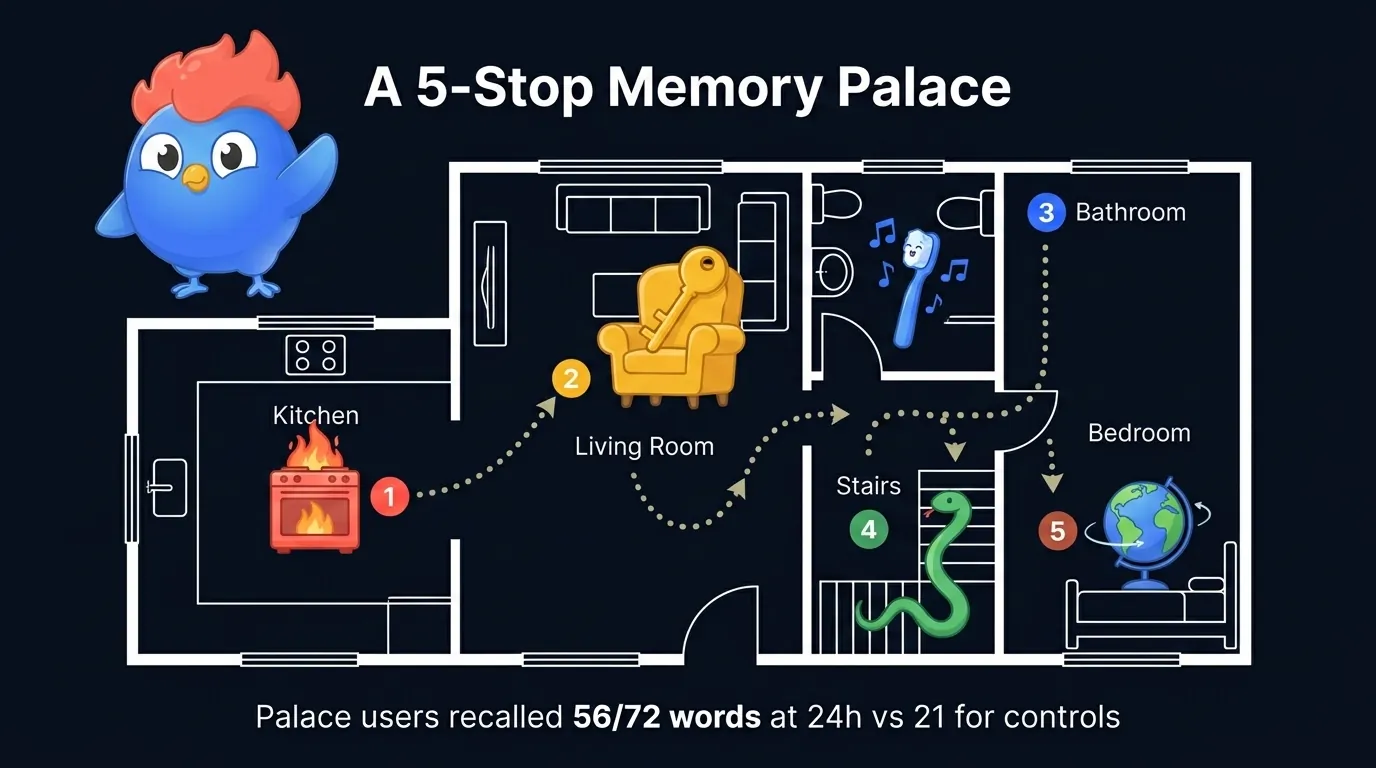 Figure 5: A simple memory palace. Five vivid images at five fixed locations encode five facts you’ll still recall tomorrow.
The memory palace (or method of loci) is how memory champions memorize a shuffled deck of 52 cards in under a minute. LearnClash supplies the questions; pair them with your own palace and ordinary study material starts behaving like a card deck. In a controlled trial, palace-trained participants recalled 56 of 72 words after 24 hours, against only 21 for passive controls.
The recipe is simple:
- Pick a place you know cold (your apartment, your school, the route to work).
- Walk a fixed path through it. Five to ten stops.
- At each stop, place one vivid, weird image that represents the fact.
- To recall, walk the path again.
The weirdness matters. A flaming oven sticks. A normal oven doesn’t. Joshua Foer, who went from journalist to U.S. Memory Champion in one year, described this in Moonwalking with Einstein: the brain remembers the absurd far better than the mundane. If you’re hunting for how to memorize anything, the palace is the technique that scales widest, from groceries to a cranial-nerve list to the order of the U.S. presidents.
Worked example. To memorize the first five U.S. presidents (Washington, Adams, Jefferson, Madison, Monroe), park each at a stop in your kitchen: a wooden teeth-set in the sink, a giant red apple (“Adams”) on the counter, a third-hand jefferson nickel taped to the fridge, James Madison shrunk inside the microwave, and a marilyn-monroe cutout on the stove. Ridiculous beats forgettable.
Build a palace on any topic, then stress-test it in a LearnClash duel →
4. Chunking: Why 7±2 Is Your Working Memory Limit
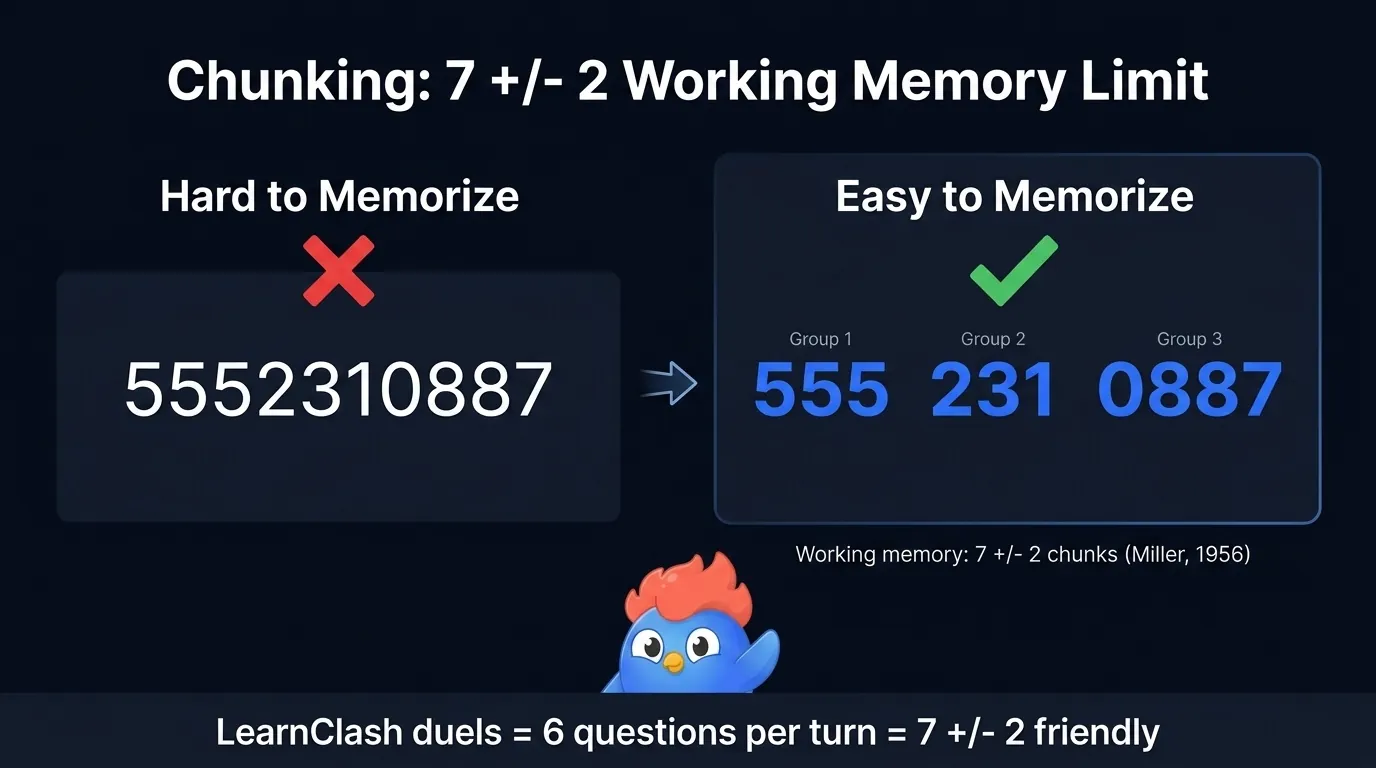 Figure 6: Working memory holds 7±2 chunks. Splitting raw digits into groups multiplies what you can hold.
Chunking is the fastest way to memorize raw strings of letters, digits, or list items, and LearnClash duels chunk knowledge into 6 questions per turn, a 7±2-friendly load that fits the working-memory ceiling George Miller described in 1956. A phone number stored as 555-2310-887 is three chunks. Stored as 5552310887 it’s eleven items, and your brain will trip over it.
To chunk fast:
- Group by meaning (dates, area codes, syllables) when possible.
- Group by sound (rhythm, beat) when meaning isn’t there.
- Cap each chunk at 3-5 items.
- Practice the chunks one at a time before chaining them.
So when you face a long list, your first move isn’t to read it again. It’s to redraw it into chunks. The act of grouping is itself an encoding step. People who ask how to memorize fast often skip this move and try to brute-force the raw string. Don’t.
5. Mnemonics That Stick: Acronyms, Stories, and the PAO System
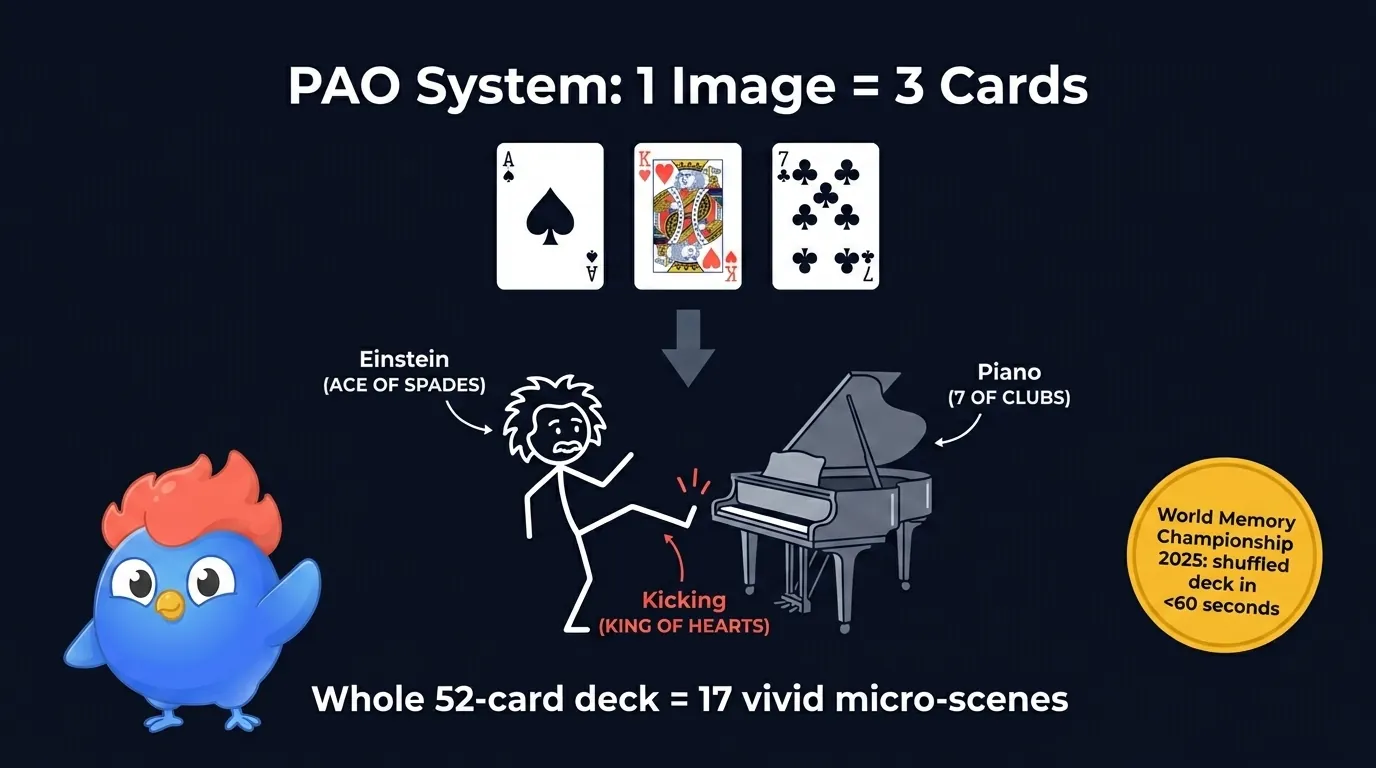 Figure 7: The PAO (Person-Action-Object) system used by World Memory Championship competitors to encode 52-card decks in minutes.
Mnemonics are tiny compression algorithms. PEMDAS, ROY G. BIV, HOMES for the Great Lakes: each one crams a whole list into a single word. LearnClash’s wide topic range lets you test a mnemonic across any subject you like, from anatomy to anime. One catch worth flagging early. Design the mnemonic before you start grinding the list, not halfway through.
Memory athletes go further with the PAO system (Person-Action-Object). Every card or two-digit number maps to a person, an action, and an object, so three cards collapse into one image. Einstein kicking a piano. Three more cards, another image. A whole deck shrinks to about 17 vivid micro-scenes.
Competitors at the World Memory Championships used exactly this to memorize a freshly shuffled 52-card deck in under a minute at the December 2025 final in Ho Chi Minh City. The rest of us don’t need the deck. A simpler ladder works:
- Acronyms for short ordered lists.
- Acrostics (“My Very Educated Mother…”) for sequences with set first letters.
- Stories that link items in order through cause and effect.
- Rhymes (“i before e, except after c”) for spelling and rules.
Mnemonics are a great answer to how to memorize fast when the material has a fixed order or set of categories. They’re a worse fit for messy concepts where you need real understanding, not surface recall.
6. Teach It Out Loud: The Protégé Effect
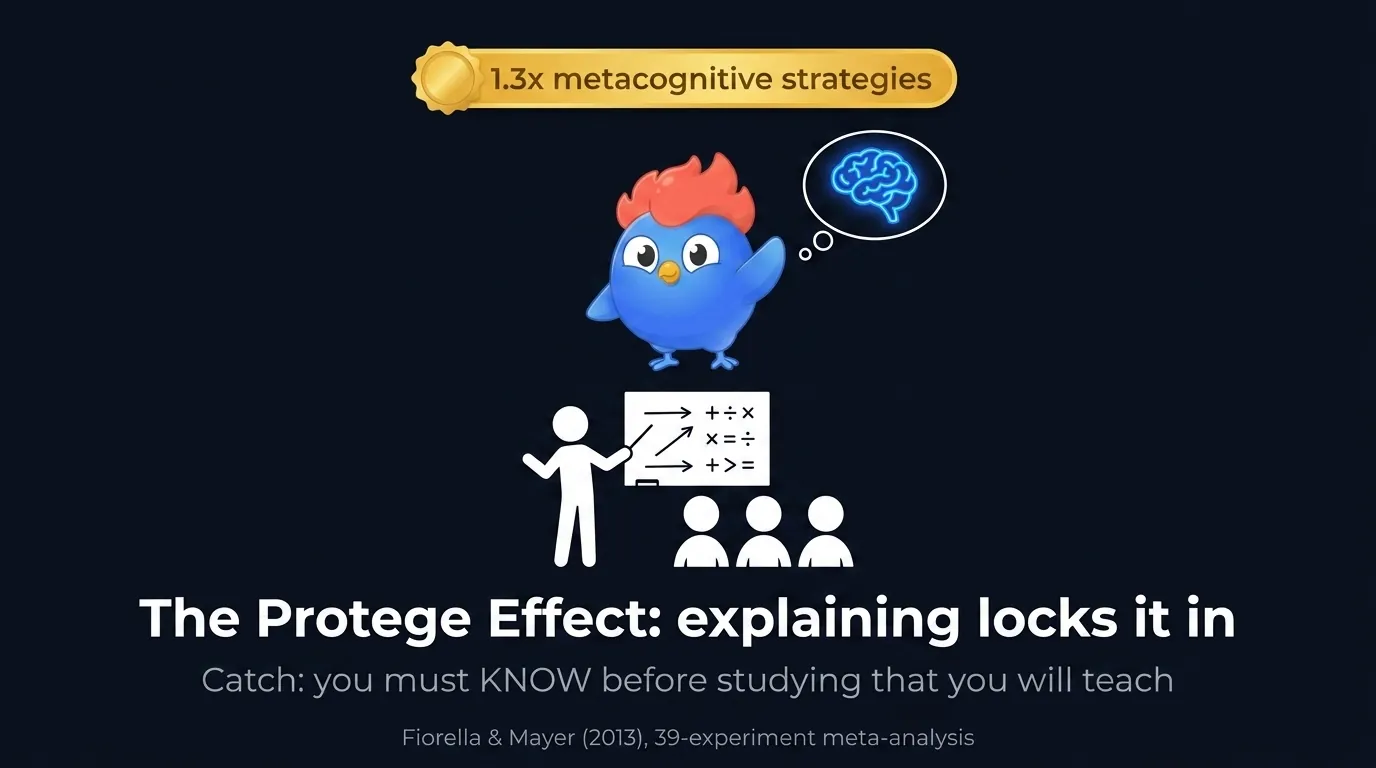 Figure 8: Learners who prepare to teach use 1.3x more metacognitive strategies and remember more (Fiorella & Mayer, 2013).
The protégé effect is the finding that explaining material to someone else burns it deeper into your own head. A 2016 study found people learning to teach used 1.3x more metacognitive strategies than those learning to take a test. Win a LearnClash duel against a friend, then explain to them why you got it right, and you’re hitting both retrieval and explanation in the same minute.
There’s a brutal catch. You have to know you’ll teach before you study. A meta-analysis of 39 experiments found the whole effect collapses when teaching is sprung on people after the fact. Anticipation is the active ingredient, not the act.
So say it out loud before you open the book: “I’m explaining this to my partner tonight.” That one sentence rewires how your brain handles the next 30 minutes of input.
No human around? Talk to your phone. The “explain it to a 10-year-old” framing strips out jargon and lights up the gaps you didn’t know were there. Start the next retrieval round on those gaps. I’d call the protégé effect the most underrated memorization technique going, because it quietly doubles as comprehension insurance. You can’t fake-teach something you don’t actually understand.
7. Sleep on It: The 30-Minute-Before-Bed Window
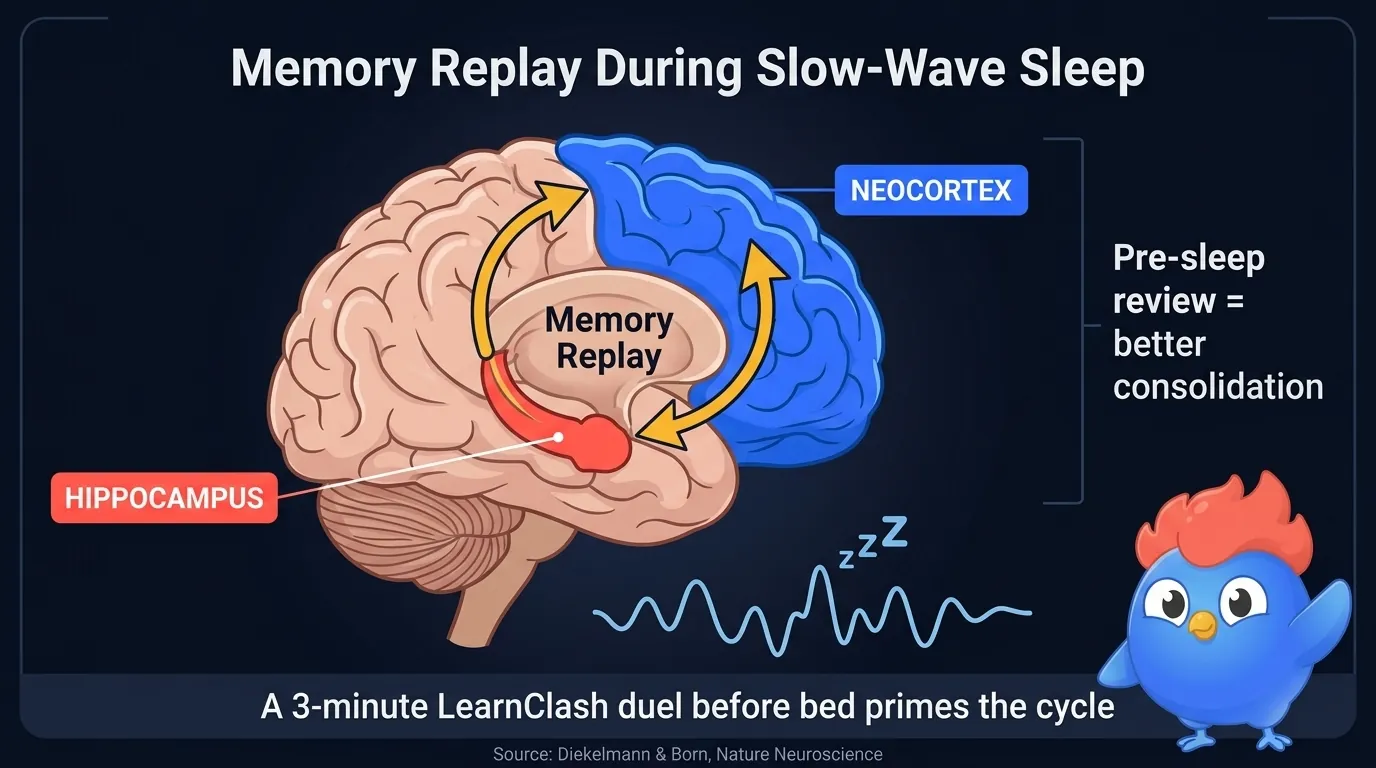 Figure 9: During slow-wave sleep the hippocampus replays new memories to the neocortex, transforming fragile traces into durable ones.
Sleep is the most ignored entry on any how to memorize fast list, and a 3-minute LearnClash duel drops neatly into the pre-sleep review window. While you’re in slow-wave sleep, your hippocampus replays the day’s new memories to the neocortex, where they harden into long-term storage. Skip the night and most of the day’s encoding is gone by the time you wake up.
Timing changes the math. Studies in Nature Neuroscience show material reviewed in the 30-60 minutes before sleep captures more of the consolidation window than the same material reviewed in the morning.
There’s a split by content type, too. Declarative facts like names, dates, and definitions prefer the night-before slot. Procedural skills like typing, instruments, and sports consolidate later in the cycle. Match the review to the kind of thing you’re trying to keep.
The practical playbook:
- Do your hardest cramming right before bed, not first thing in the morning.
- Avoid scrolling between review and lights out. New input competes for the same consolidation circuits.
- Don’t sacrifice the sleep itself. Five hours instead of seven costs you more than five extra minutes of cramming bought.
So the all-nighter is worse than useless. It destroys the schedule that made the cramming worth doing.
8. Exercise Before You Study: The 24-Hour BDNF Boost
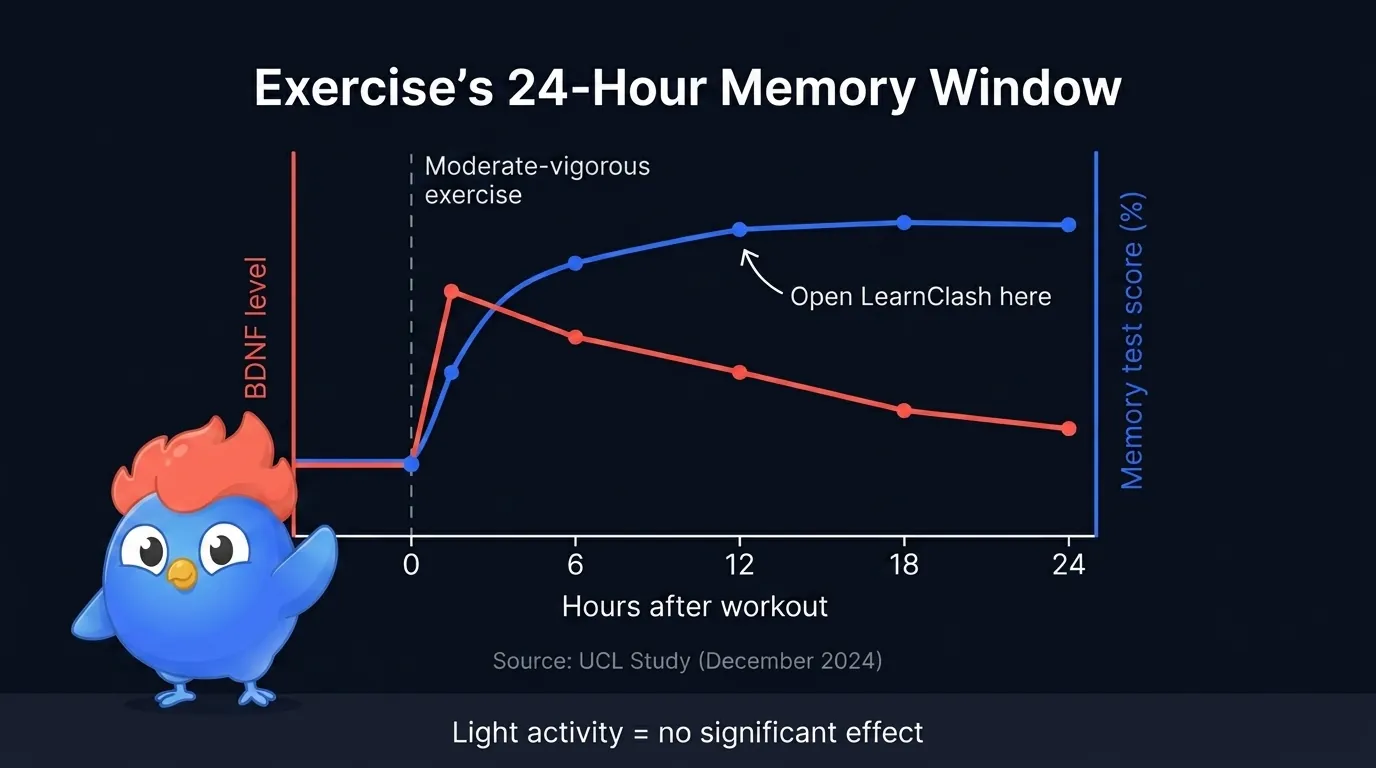 Figure 10: Moderate-to-vigorous exercise elevates BDNF and lifts memory performance for up to 24 hours (UCL, December 2024).
Exercise hands you a free 24-hour memory boost, and a LearnClash duel fired off on the cool-down lands right inside the BDNF window. A 2024 University College London study strapped accelerometers on older adults and found memory test scores 24 hours after moderate-to-vigorous activity beat the scores after a sedentary day. The engine is BDNF, brain-derived neurotrophic factor, which exercise floods through the hippocampus.
Intensity decides everything here. Walking the dog won’t do it. Jogging, cycling, swimming, or a hard bodyweight circuit will. A 2019 study found light activity produced no significant memory effect; only moderate-to-vigorous output triggered the BDNF cascade in the prefrontal cortex.
That’s the part people skip. They go for the gentle stroll, feel virtuous, and get nothing on the memory side. Push the heart rate or don’t bother counting it as a study aid. Here’s the stack:
- 20-minute jog or fast walk at conversational-but-difficult intensity.
- 5-minute cool-down with water and breath.
- Open the material, run an active-recall round.
- Repeat the recall round before bed to lock the day in.
It sounds like overkill for a vocabulary list. But the same workout that helps your heart hands you a free 24-hour memory boost. Take it. Adding a workout to your how to memorize fast routine is the single biggest gain that costs zero study minutes.
9. Embrace Difficulty: Why “Easy Studying” Doesn’t Stick
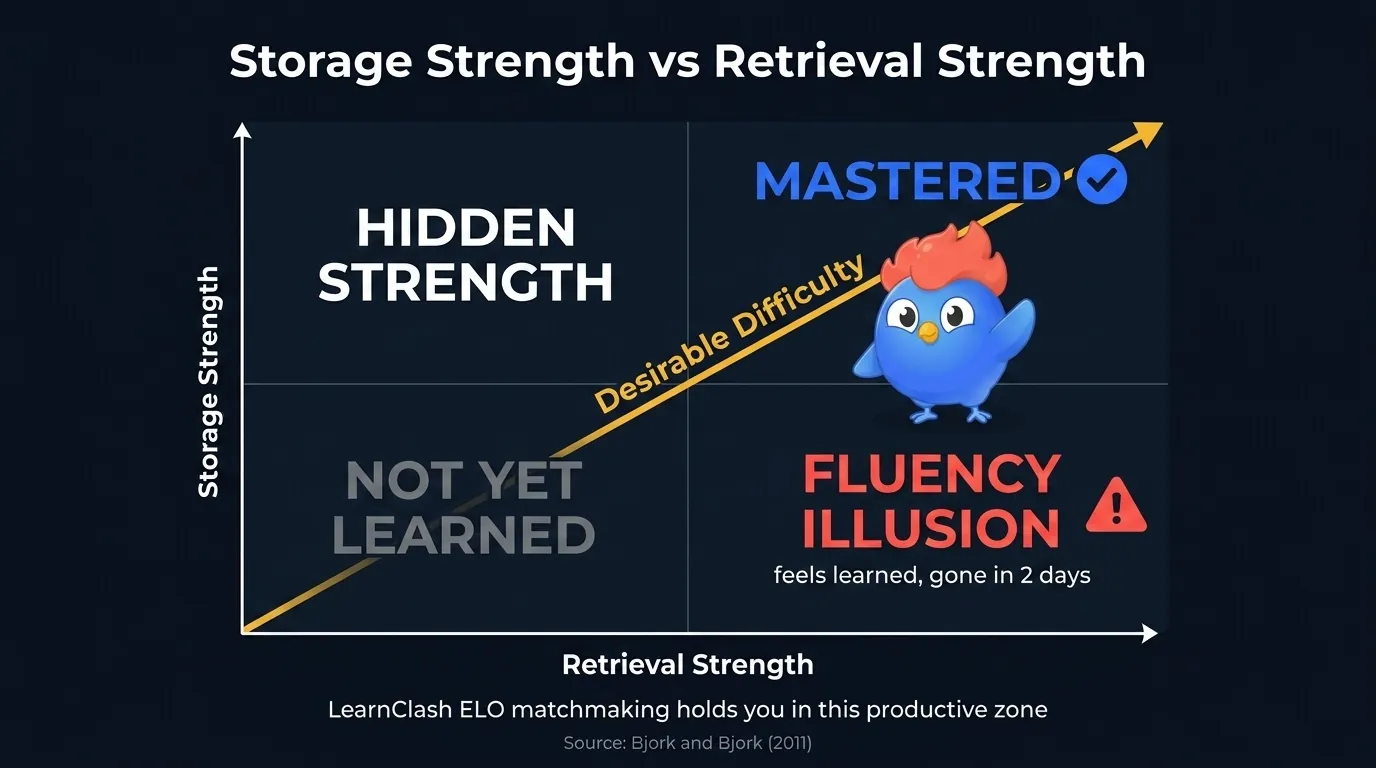 Figure 11: Bjork’s storage-strength vs retrieval-strength model. Effortful retrieval is what builds storage strength.
The last rule of how to memorize fast is the hardest to accept: make it harder. Robert Bjork coined the term desirable difficulty in 1994 to describe the paradox: the conditions that feel hardest in the moment produce the most durable learning. ELO matchmaking in LearnClash holds you at the productive edge of difficulty, where every duel is hard enough to require effort but easy enough to win sometimes. That zone is where memories form.
Bjork and Bjork (2011) split memory into two strengths:
- Retrieval strength: how easily you can recall the item right now.
- Storage strength: how stably the item is encoded for the long run.
The cruel twist is that high retrieval strength can mask low storage strength. After your tenth re-read, the page feels obvious. Wait two days. Gone. The fix sounds backwards: make practice harder on purpose. Space your reviews, interleave topics, change the format. Every one of those slows you down today and speeds you up tomorrow.
A smooth study session is a warning sign, not a win. Storage gets built by friction, so treat the effort as the signal that something’s actually sticking.
Two More Techniques to Memorize Faster: Interleaving and Dual Coding
Two more techniques to memorize faster don’t get their own slot in most guides, but they each add a measurable edge: interleaving (mixing topics in one session) and dual coding (pairing words with pictures). LearnClash bakes interleaving straight into the duel format, switching topics every few questions so each switch forces a fresh retrieval.
Interleaving: mix topics instead of grinding one
Interleaving means shuffling problem types or subjects inside a single session instead of finishing one before starting the next. Brunmair and Richter’s 2019 meta-analysis of 49 studies found an overall effect of Hedges’ g = 0.42, rising to g = 0.67 for visual material like paintings, and flipping to g = -0.39 for plain vocabulary, which means blocking actually wins for isolated word lists. Every topic switch forces your brain to reload that subject from scratch, and that reload is itself a retrieval event. LearnClash duels interleave 6 topics per round, so the switching is built in.
One rule sorts it. If the test makes you pick between similar-looking options, interleave. If it asks you to recall isolated facts, block. Mix anatomy with physiology when the whole challenge is telling them apart. Grind one vocabulary list at a time when each word stands alone with nothing to confuse it.
Dual coding: pair the word with a picture
Dual coding pairs verbal information with a visual so two memory channels encode the same fact. Allan Paivio’s classic experiments hit over 90% accuracy on 2,000-image recognition tests after a single viewing, a level text alone never reached. A 2025 reanalysis by Higdon and colleagues argues that distinctiveness, not dual coding itself, drives the picture-superiority effect, but the practical advice is identical: attach one vivid, strange image to any fact you need to hold. Sketch the idea, build a concept map, or just picture something absurd. The catch, per Richard Mayer’s multimedia research, is that the image must tie directly to the fact. A pretty but unrelated picture adds load instead of removing it.
How to Memorize Specific Things Fast
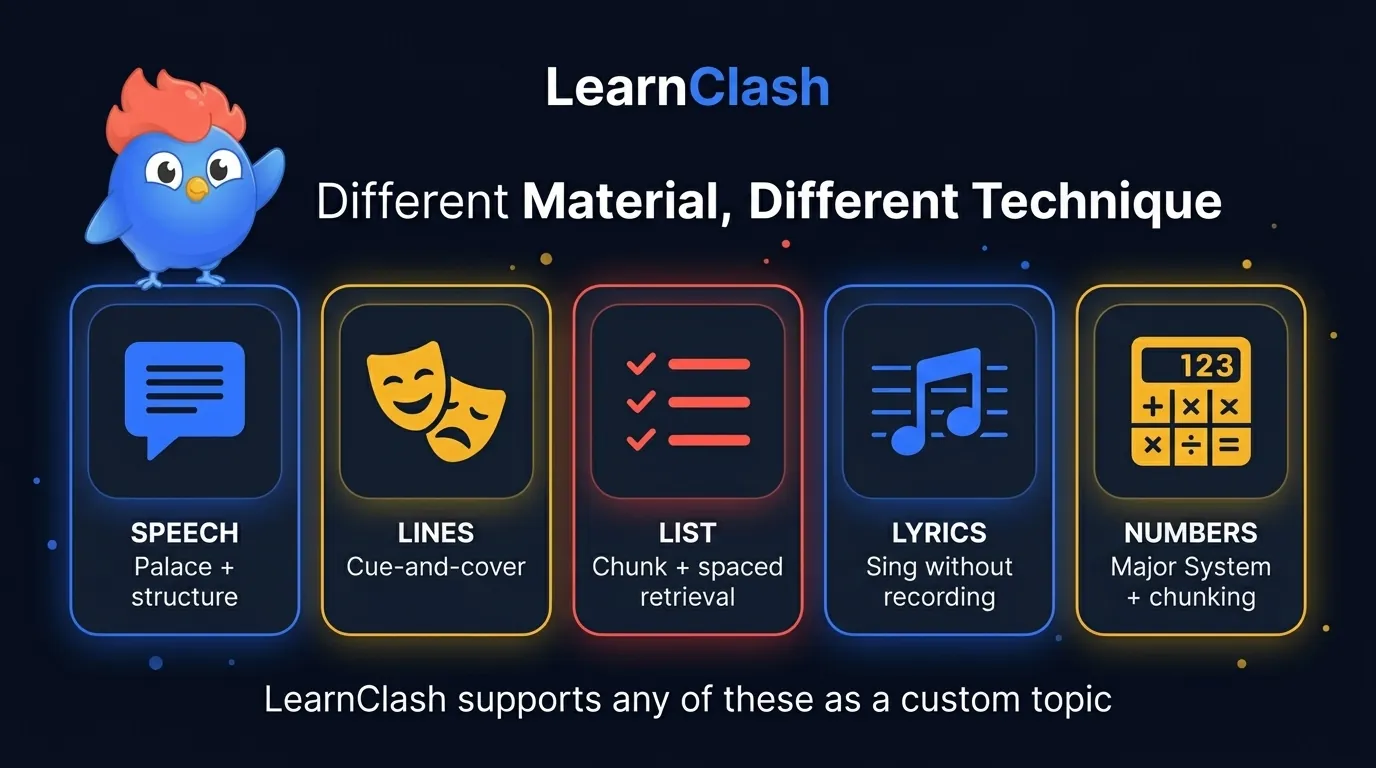 Figure 12: Different material types respond to different speed techniques. Match the method to the format.
Here’s how to memorize the things people search for most often. The format changes the technique. LearnClash supports any topic, so you can drill literally the speech, list, song, or chapter you need before tomorrow. Pick the matching method below before you start, because the wrong technique on the right material is one of the fastest ways to waste an evening.
| Material | Fastest technique | 24h payoff |
|---|---|---|
| Speech | Structure + memory palace | ~80% recall with sleep |
| Lines / script | Cue-and-cover from partner line | Off-book in 3 days |
| Long list | Chunk (5) + 2 spaced retrievals | ~85% at 60min |
| Song / lyrics | Sing-then-without | Full lyric in ~20min |
| Numbers | Major System peg or chunk 3-4 | PIN in 3min |
| Exam chapter | Full stack (palace + recall + sleep) | Night-before cram + next-morning review |
How to memorize a speech
Don’t memorize word-for-word; memorize a structure. Break the speech into 5-7 beats, write a one-line summary of each, and place each beat at a stop in a memory palace. Then practice with the structure visible, then with it hidden, then out loud to a wall. Three full passes plus an overnight sleep beats two hours of muttering a script.
How to memorize lines or a script
Cover-and-recall the partner’s lines first, your own lines second. Use the cue (what they said before) as the retrieval prompt. Read the scene once, cover your lines, run them from the cue. Stage actors call this “lines off book by Tuesday” and they’re using pure active recall on a full script.
How to memorize a long list (groceries, names, exam topics)
Chunk into groups of 5, link with a story or memory palace, then run two spaced retrievals 30 and 60 minutes apart. For names specifically, repeat the name out loud during the introduction, link it to a face feature, and use it again within the next minute. That triple-touch is the fastest way to memorize the names of everyone in a room.
Pro tip for names: The minute-three rule. Say it back within 60 seconds, link it to one visual anchor, and use it once more before the conversation ends. Miss any of the three touches and the name is gone by tomorrow morning.
How to memorize a song and how to memorize lyrics fast
Sing along three times with the recording, then once without it. The without-it pass is the only one that builds storage. The recording is a crutch; pulling the lyric out of your own head is the workout. This is the same cover-and-recall move that actors use on a script.
How to memorize numbers (PIN, formulas)
Use a mnemonic peg system that maps digits to letters or images. Or chunk in groups of 3-4. Or both. The Major System assigns a consonant to every digit (1=t, 2=n, 3=m…), turning a 10-digit number into a single memorable phrase.
How to memorize for a test or an exam chapter
This is where every technique above earns its keep. Read the chapter once. Build a memory palace with one stop per major section. Run an active-recall round on each stop. Sleep on it. Run a second round in the morning. Then walk to class. The trick to learning how to memorize effectively for an exam is to start two days out, not the night before.
Speed vs Retention: What “Fast” Really Costs You
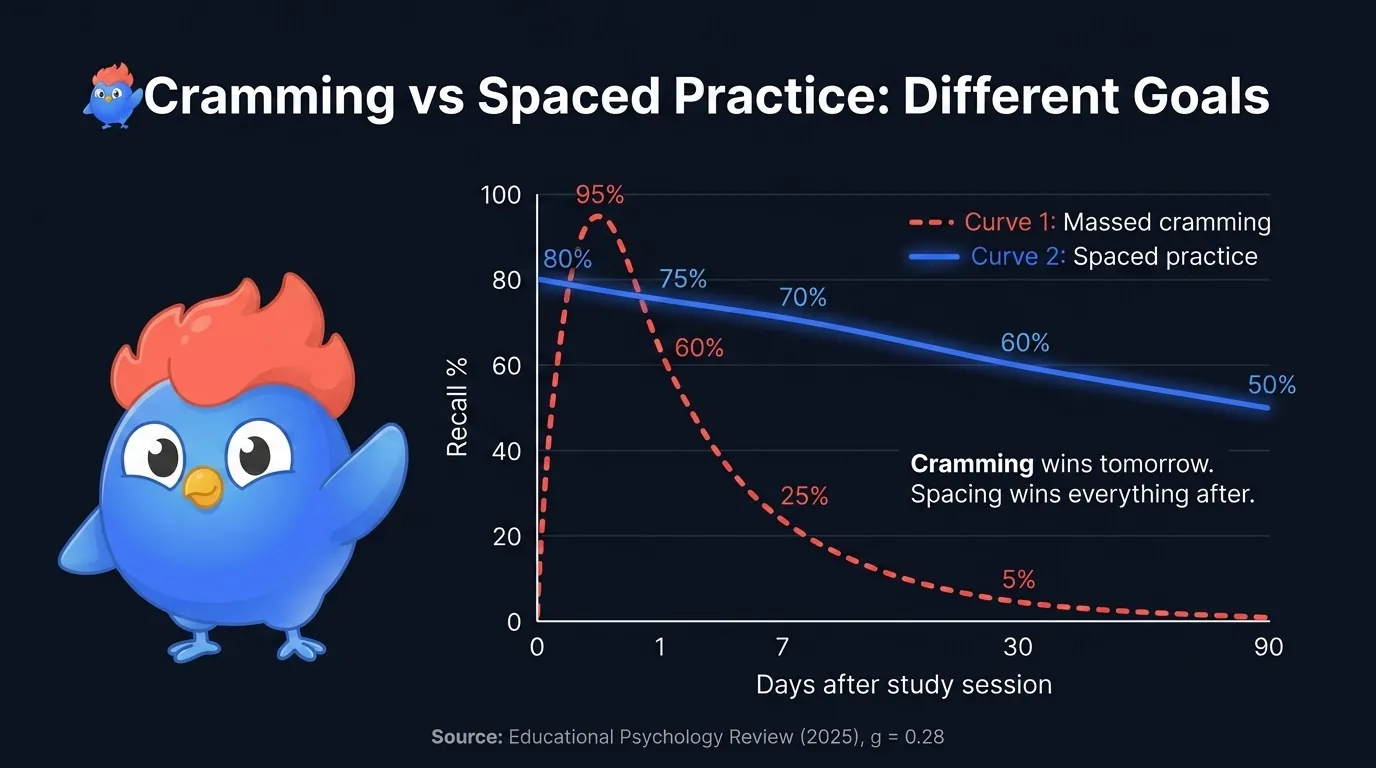 Figure 13: Massed cramming wins the next-morning quiz. Spaced practice wins everything after that.
Cramming and consolidation aren’t the same goal, and the fastest way to memorize for tomorrow morning is rarely the best way to remember three months from now. LearnClash combines fast encoding (3-minute duels) with long-term retention (a 3-stage SRS that surfaces missed questions on a Learning → Known → Mastered cadence). If your only deadline is tomorrow, cram with active recall. If you want to know it next semester, layer spacing on top.
A 2025 meta-analysis of mathematics learning (Educational Psychology Review) found spaced practice produced a steady g = 0.28 retention advantage even in classroom settings, where conditions are messier than in the lab. The effect doubled in isolated learning environments where students could control timing.
Stop treating cramming and spacing as enemies. They’re the first and second touch on the same loop. Cram tonight, then space the reviews across the next few days.
So the two goals never actually fight. Cramming wins tomorrow morning. Spacing wins next month. The smart move when you ask how to memorize fast is to run both. Cram tonight, revisit tomorrow morning, revisit again Friday. Each touch costs minutes, and by Friday the material lives somewhere your brain can reach it under pressure instead of somewhere it evaporated by Wednesday.
Start the cram-then-space loop on any topic →
Make It Stick: Spacing for Long-Term Retention
Speed gets it into your head; spacing is how to remember what you learn past the exam. The single move that converts a one-night cram into durable memory is spacing the same retrievals across days and weeks, because each well-timed review arrives after a little forgetting and forces an effortful recall that resets the curve. LearnClash’s 3-stage SRS does this in the background, re-surfacing missed questions on a Learning → Known → Mastered cadence so the spacing happens without a spreadsheet.
If your goal is how to retain information for a semester rather than a morning, the timeline changes. Cramming techniques (palace, chunking, mnemonics) front-load the encoding; spaced retrieval is what stretches it. Three to five spaced self-tests at expanding intervals are enough to push most material into long-term storage, with the first gap scaling to roughly 10-20% of how long you want to keep the fact.
Encoding fast and remembering long are two different jobs with two different tools. Run the fast techniques tonight, then space the reviews across the week so the thing actually stays.
Beware the fake shortcut. The popular “Learning Pyramid” (10% retained from reading, 90% from teaching) looks scientific but has no source: Letrud (2012) traced the numbers to a 1960s training lab that published them without citing a single study. The principle that active beats passive is real; the tidy percentages are invented. For the full interval math and the Leitner system, see the spaced repetition guide. For the complete study routine that wraps these methods into a weekly habit, see how to study effectively.
The Three Body Hacks Most Study Guides Skip
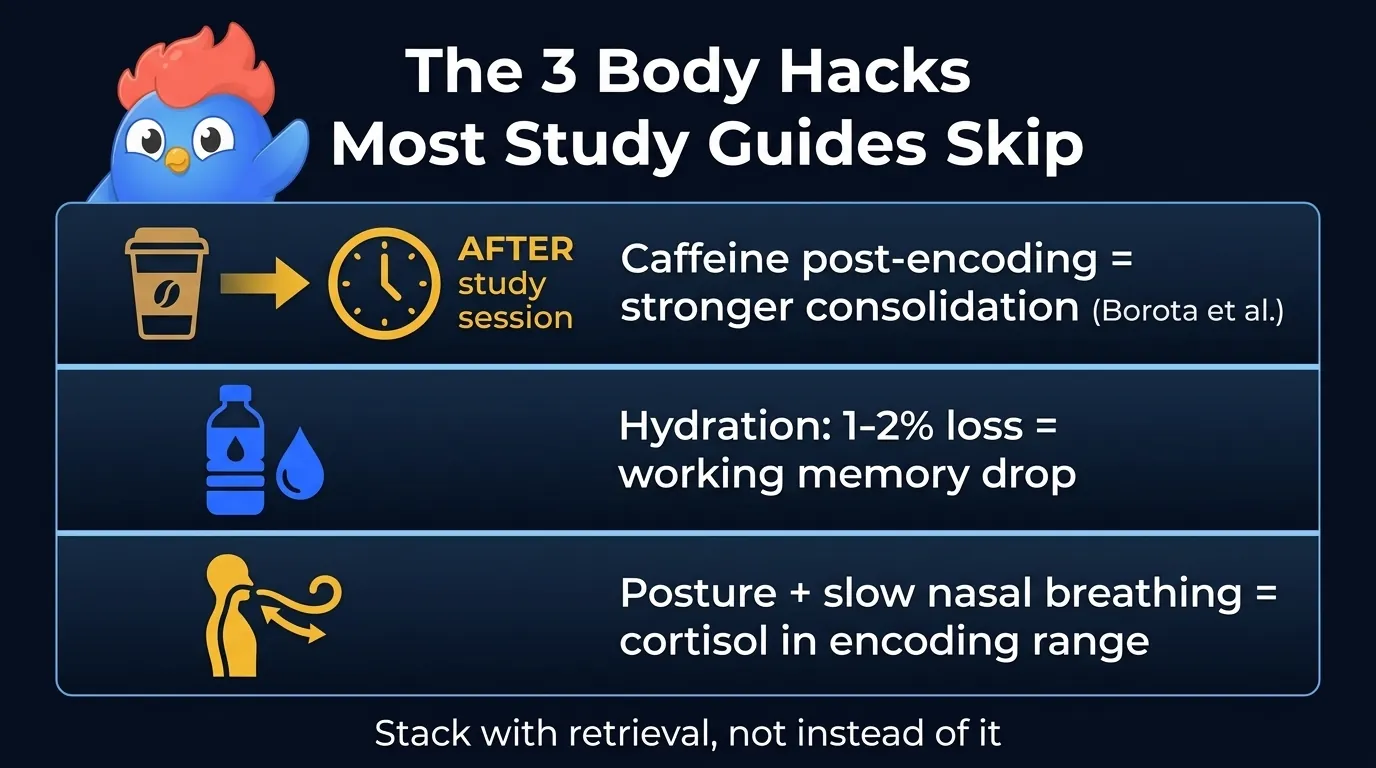 Figure 14: Three body-state factors that quietly shape encoding speed: post-session caffeine, hydration, and posture.
Caffeine, hydration, and posture each move the needle on encoding speed in ways most articles on how to memorize fast ignore. None of them replace retrieval, but stacked with retrieval they add a real edge that costs almost nothing to set up the night before a deadline. Run a LearnClash duel inside the right body state and the same 3 minutes encode noticeably more.
| Hack | When | Why it works |
|---|---|---|
| 200mg caffeine | Right after study | Boosts noradrenergic consolidation of what you recently learned |
| Sipping water | Throughout | 1-2% dehydration already cuts working memory |
| Upright posture + slow nasal breath | During | Keeps cortisol in the encoding range, out of the spike range |
Caffeine timing
A 200mg dose taken right after a study session, not before, has been shown in lab work by Borota and colleagues (2014) to consolidate post-encoding memory better than caffeine taken before. The reason is mechanistic: caffeine boosts the noradrenergic activity that supports consolidation, and the brain consolidates what you recently learned, not what’s about to be learned. So drink the coffee with the closing book, not with the opening one.
Hydration
Mild dehydration (1-2% body water loss) reduces working memory and increases reaction time. A water bottle on the desk isn’t a wellness cliche; it’s a study tool. Keep sipping.
Posture and breathing
Sitting upright with slow nasal breathing keeps cortisol in the productive range that supports encoding, instead of the spike range that disrupts it. Slouch and shallow-breathe through a 30-minute cram and you’re studying with one hand tied behind your back.
How LearnClash Builds These Techniques Into Quiz Duels
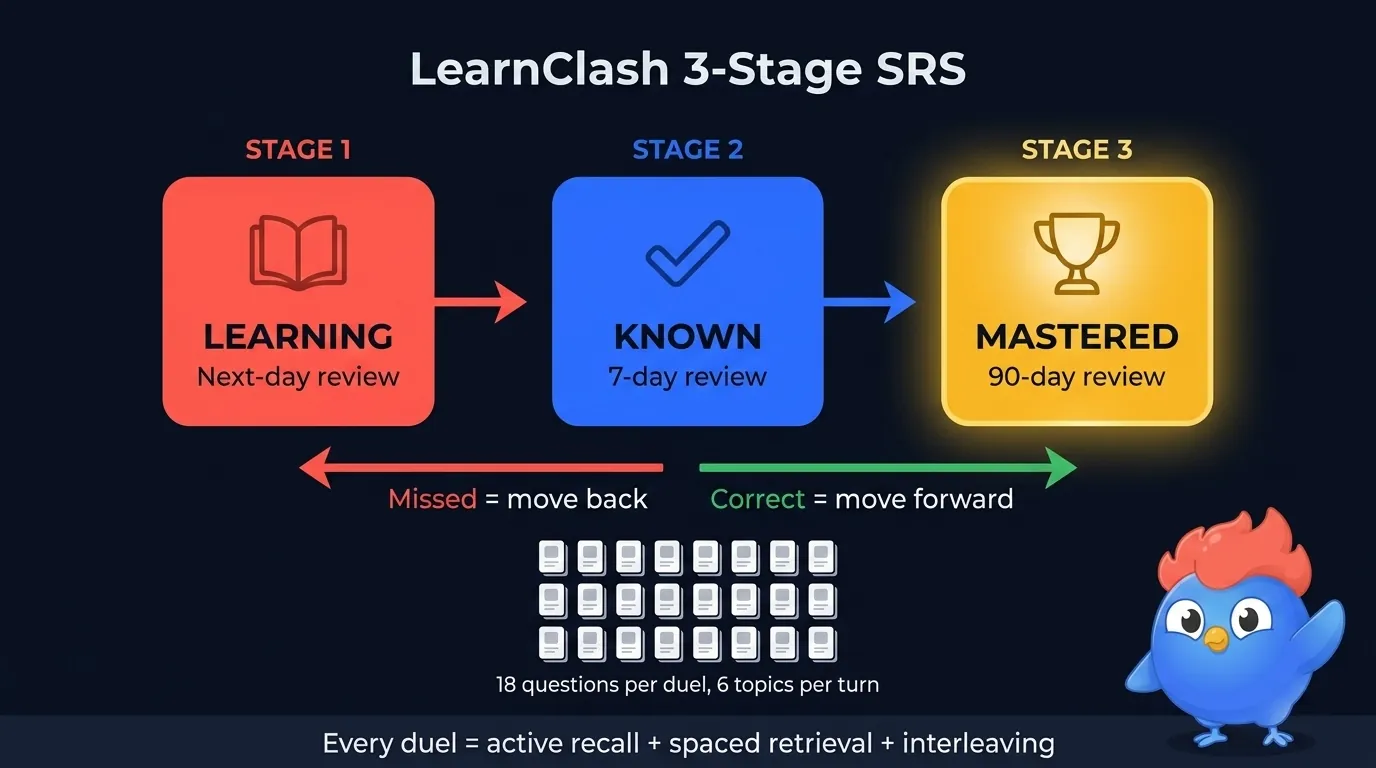 Figure 15: LearnClash’s 3-stage SRS pipeline. Missed questions move backward; mastered ones graduate to long-interval review.
LearnClash is a competitive learning app built around the same techniques this article ranks. We didn’t bolt them on; the duel format is spaced retrieval at speed. Every 3-minute turn fires 6 retrieval events across 6 different topics, which means every duel runs active recall, interleaving, and chunking at once.
The numbers we built it around:
- 18 questions per duel, split across 6 topics in turns of 6, so you’re interleaving by design.
- 3-stage SRS: Learning (next-day review), Known (7-day review), Mastered (90-day review). Missed questions slide back a stage; correct answers move forward.
- 8 ELO tiers from Iron to Phoenix, so every match holds you at the desirable-difficulty edge: hard enough to demand retrieval, easy enough to win.
- Any topic, picked by you. Anatomy, anime, art history, accounting. The same engine that drills Marvel trivia drills your med-school flashcards.
Pick a topic and run a duel; then run another tomorrow. Two 3-minute sessions on consecutive days beat one 30-minute cram.
The Bottom Line
Fast memorization isn’t a trick. It’s three moves. Retrieve instead of reread. Space the retrievals. Sleep on what’s left. Run those three on any topic and you’ll lap the people still highlighting at midnight. That’s the whole answer to how to memorize fast, and to how to memorize anything that has to outlast tomorrow. LearnClash wires all three moves into a 3-minute duel, so the loop runs whether or not you remember to set it up.
Your first duel takes 3 minutes. Download LearnClash free →
For the testing-effect deep dive, see our testing effect article. Or see how memory-first LearnClash stacks up against a pure trivia app in our LearnClash vs Trivia Crack comparison.
Explore more learning science articlesFrequently Asked Questions
What is the fastest way to memorize something?
Active retrieval combined with spaced reviews. Test yourself, wait, test yourself again at expanding intervals. A 2021 meta-analysis by Latimier and colleagues found spaced retrieval practice produces a 0.74 effect size over massed cramming, the largest single technique gain in memory science. LearnClash automates this with quiz duels that re-surface missed questions on a spaced schedule.
How can I memorize 10 pages in 1 hour?
Chunk the material into 5-7 ideas per page, build a memory palace with one location per chunk, then run three timed self-tests with 5-minute gaps. Memory palace users recalled 56 of 72 words after 24 hours versus 21 for passive readers. Combine the palace with retrieval and you can hold 10 dense pages for a 24-hour window.
Does highlighting help you memorize faster?
No. Dunlosky and colleagues (2013) reviewed 700+ studies and rated highlighting low utility. Highlighting feels productive because familiar text triggers a fluency illusion, but the brain treats recognition as if it were learning. Replace highlights with self-quizzing on the same material and recall improves by 30-50%. LearnClash builds that self-quizzing loop into every duel.
How long should I sleep after memorizing?
At least one full sleep cycle, ideally 7-8 hours. Slow-wave sleep replays new memories from the hippocampus to the neocortex, transforming fragile traces into durable ones. Reviewing material 30-60 minutes before bed routes more of it into that overnight consolidation window. A 3-minute LearnClash duel right before sleep is enough to prime the cycle.
Can exercise help you memorize faster?
Yes. A 2024 University College London study found memory test performance improved up to 24 hours after moderate-to-vigorous exercise, mediated by elevated BDNF. A 20-minute walk or jog before a study session primes the encoding window. Intensity matters: light activity does not produce the same effect, so push the heart rate.