
Spaced Repetition: How to Review What You Learn
Spaced repetition explained: what research says about review gaps, how recall differs from rereading, and how LearnClash schedules quizzes.

You recognise the answer on the page. A week later, without the page, it will not come. That is the gap a review routine has to address.
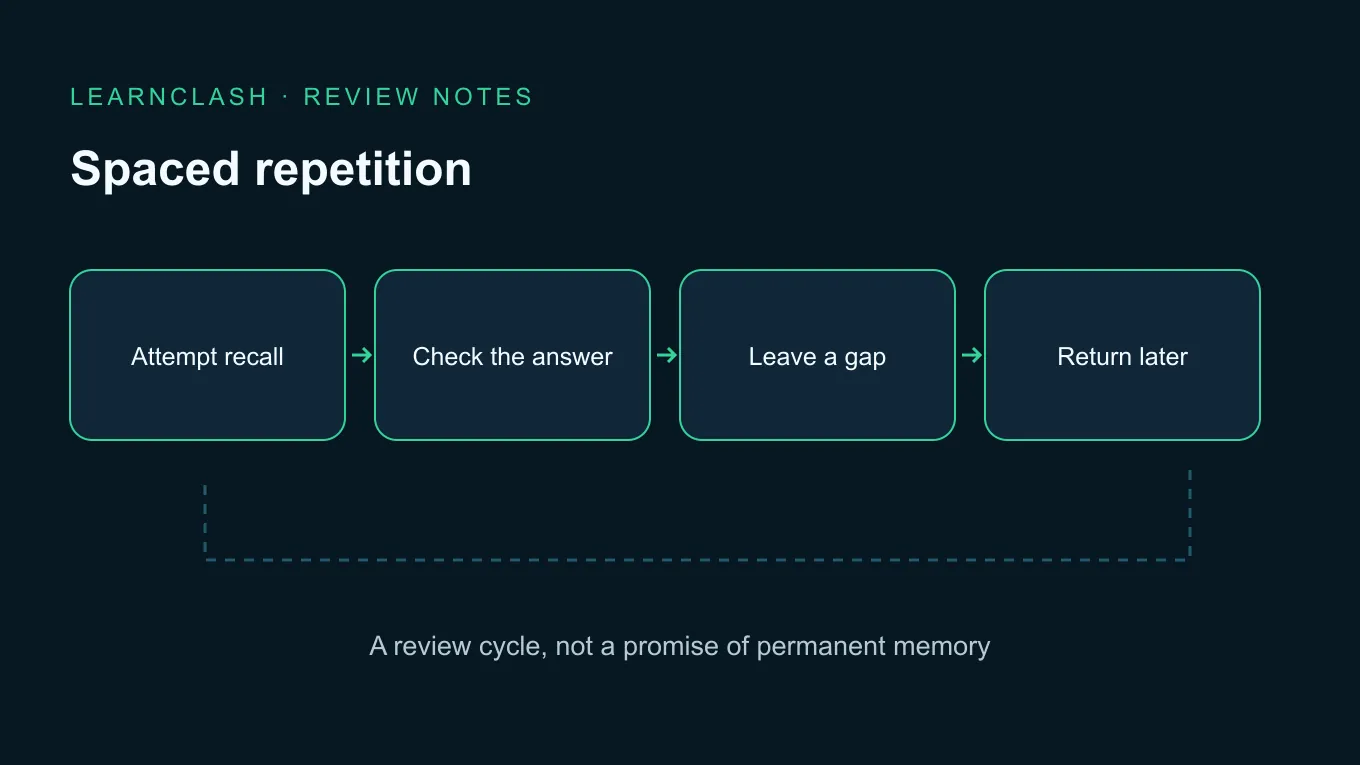
Spaced repetition separates practice sessions with delays. Try to retrieve an answer, check it, then return later. Research supports that pattern, but it does not supply a universal clock that knows exactly when you will forget. LearnClash uses fixed checkpoints for quiz questions rather than claiming to measure that moment.
Below: the forgetting curve, the review intervals the research actually supports, when cramming helps and what it leaves unresolved, and the three-stage system I ended up building instead of an infinite one. Test your memory on any topic →
What Is Spaced Repetition?
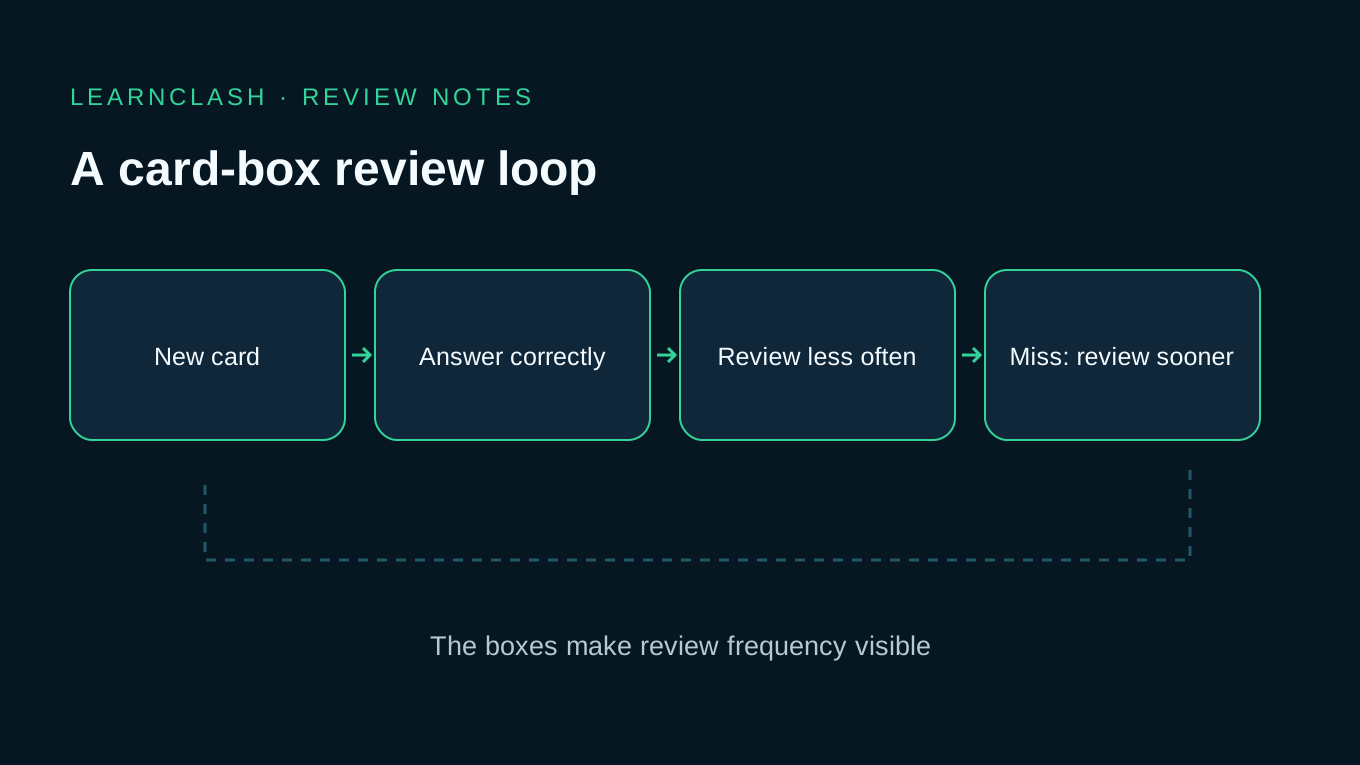
The oldest working version of the idea fits in a shoebox. In 1972, the German science journalist Sebastian Leitner published So Lernt Man Lernen (“How to Learn to Learn”), which taught a card-box method: answer a flashcard correctly and it moves to a box you review less often, miss it and it drops back to the first box, the one you work through most often. No software, no algorithm. Cardboard partitions did the scheduling.
That is the whole mechanism, then and now. A spaced repetition system tracks how well you know each item and stretches the gap before the next review as your answers improve, so weak items cycle fast while strong items rest. Everything since 1972 has been refinement of that loop; the Leitner system breakdown covers the original five boxes and what became of them.
Why Do We Forget? The Forgetting Curve Explained
In 1885, Hermann Ebbinghaus sat alone in his apartment memorizing lists of nonsense syllables, then measured how quickly they leaked away. His savings scores, the share of relearning effort spared: 58% after 20 minutes, 44% after an hour, 33% after a day, 25% after a week, 21% after a month.
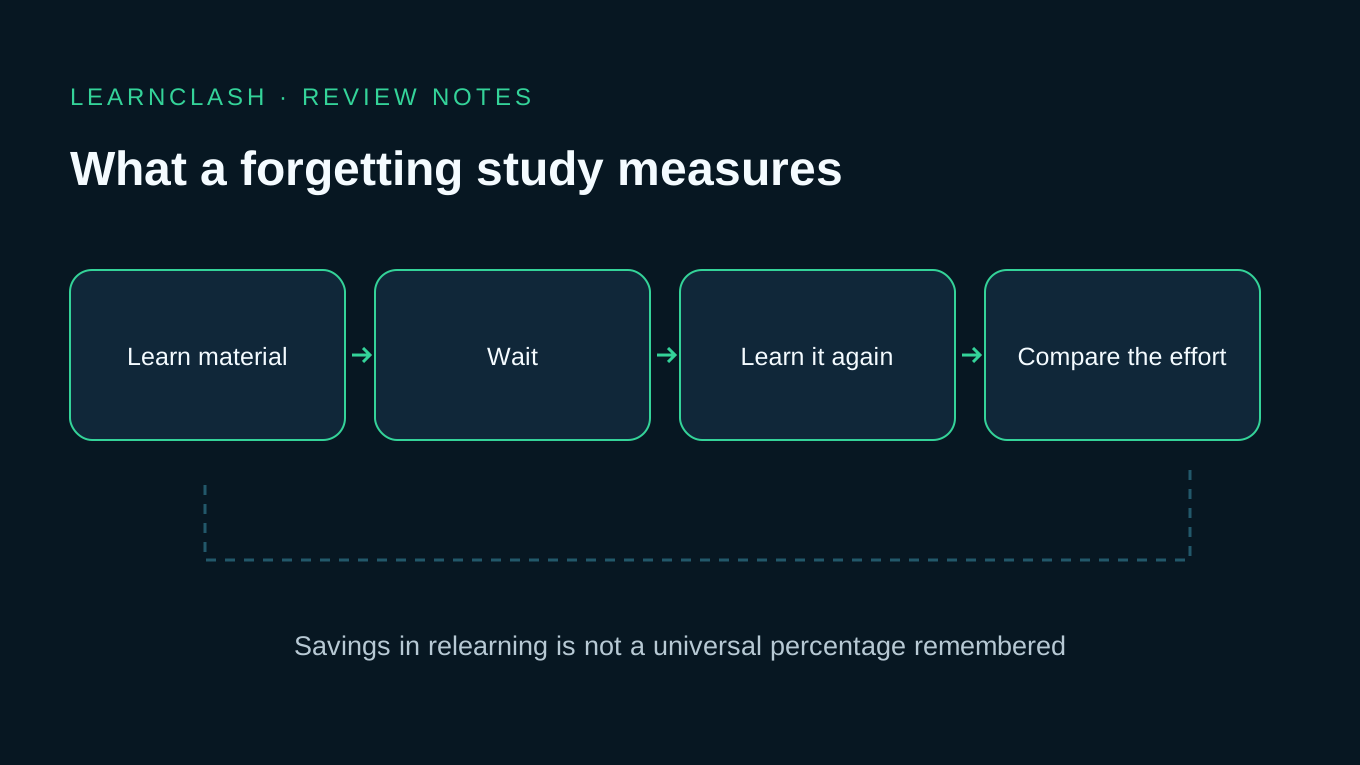
The figures track how much work was saved when learning the same lists again; they do not tell you what share of everyday facts a person still knows. In 2015, Murre and Dros replicated the method with another single participant. The work supports a pattern of forgetting under those conditions. It does not mean that every reader loses two-thirds of a textbook overnight.
Ebbinghaus studied himself. The narrow material and single-person design matter when applying the results. Use the curve as a reason to plan another encounter, not as a diagnosis of your own memory.
The curve has a flip side that traps diligent students specifically. Right after a session, everything feels known. Robert Bjork calls that feeling the illusion of competence, and rereading feeds it, because the brain confuses “that looks familiar” with “I could produce that answer.”
| Recognition | Recall | |
|---|---|---|
| What your brain does | “That looks familiar” | “What’s the answer?” |
| Feels like | Easy, confident | Hard, uncertain |
| What it establishes | You can identify an answer with cues | You can produce an answer under the tested conditions |
| Triggered by | Rereading notes | Quiz questions, duels |
A useful review asks you to attempt an answer before checking. Multiple-choice questions also provide cues, so they are not identical to producing an answer unaided. Spacing and response format are separate choices.
The Cepeda et al. 2006 review found broad evidence for spacing across verbal-memory experiments. Its overall result does not make every task or interval equally effective.
How Does Spaced Repetition Actually Work?
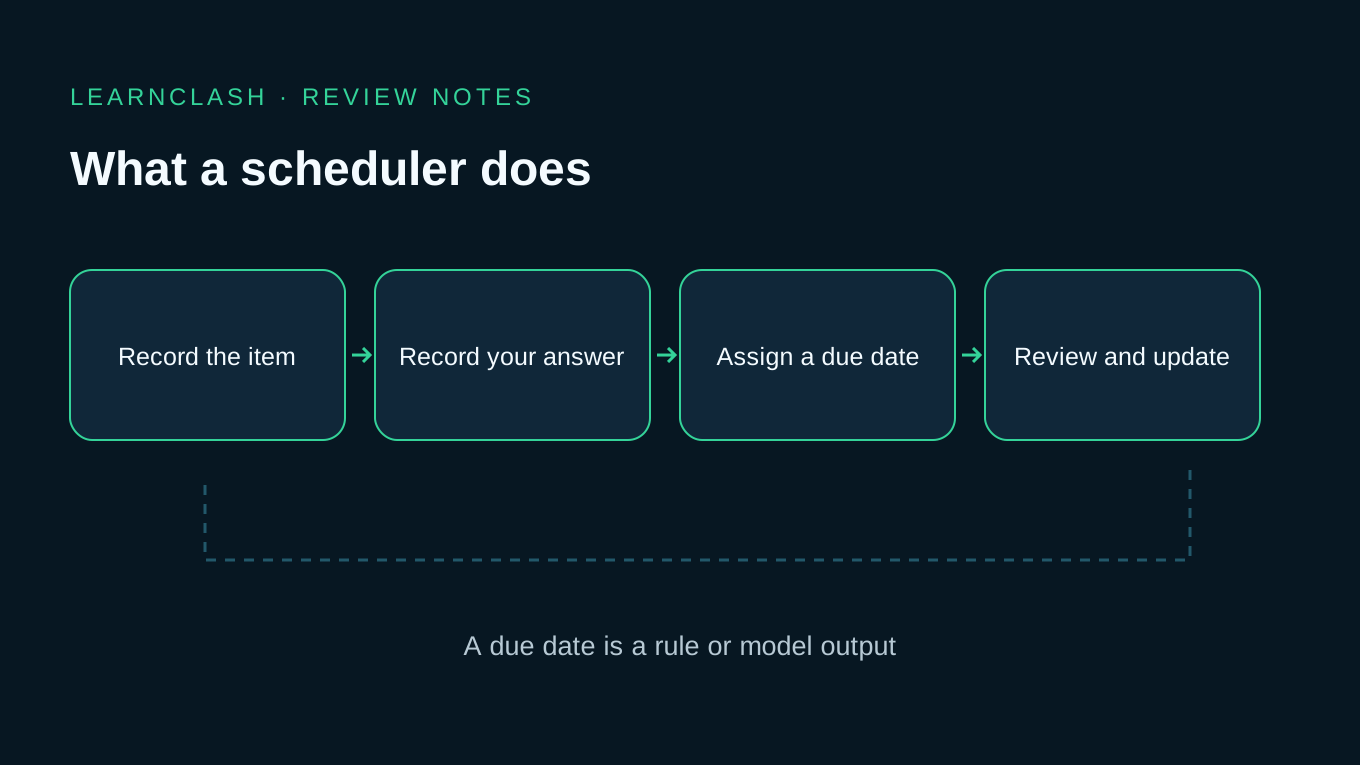
A scheduler needs a record of the item, your latest response and a rule for when it should return. Paper boxes can do this. So can software that assigns each card a due date. The useful question is not whether the app has an algorithm, but whether you can see what the next review asks you to do.
Anki’s official deck-options manual describes FSRS, a scheduler that can fit parameters to review history. You can set a target for recall and weigh it against the work that target adds, which gives you more control over the review load than a fixed three-stage system. They also require enough history and sensible use of the answer buttons; a precise-looking due date is still a model output.
At each encounter, separate three decisions:
- Attempt: answer before revealing the solution. Otherwise, recognition can masquerade as recall.
- Feedback: check the answer and resolve the error. Repeating a wrong explanation is not the goal.
- Delay: leave enough space to make the next attempt informative, while keeping the material recoverable with feedback.
Difficulty helps only when it serves the task: if you have never met the material, cannot make sense of the question or have no way to check the answer, a harder review may just leave you stuck. Feedback matters. Nor does sleeping between sessions guarantee a particular result. The practical plan is to keep a repeatable routine, inspect what you miss and adjust if the material is consistently beyond reach.
What Are the Optimal Spacing Intervals?
The optimal gap between reviews scales with how long you need to remember something: Cepeda et al. (2008) mapped it across 1,354 participants and found the gap runs about 20 to 40 percent of a one-week retention horizon and falls to about 5 to 10 percent of a one-year horizon. The shorter the horizon, the larger the share. Those percentages correspond roughly to one to three days for a week and three to five weeks for a year. They illustrate the ranges, not a personal study prescription.
The study ran gaps up to 3.5 months with final tests up to a year later, and the optimal gap scaled with the retention goal in every condition. No fixed calendar can serve a Friday quiz and a year-out exam at the same time.
| Your situation | Useful planning question | Limit of the evidence |
|---|---|---|
| A test next week | Can you return on a different day before the test? | No single day sequence suits every subject |
| Knowledge needed months later | Can you include a delayed check beyond this week? | Passing today does not establish long-term recall |
| An uncertain deadline | Can the routine continue without becoming a backlog? | No schedule guarantees permanent memory |
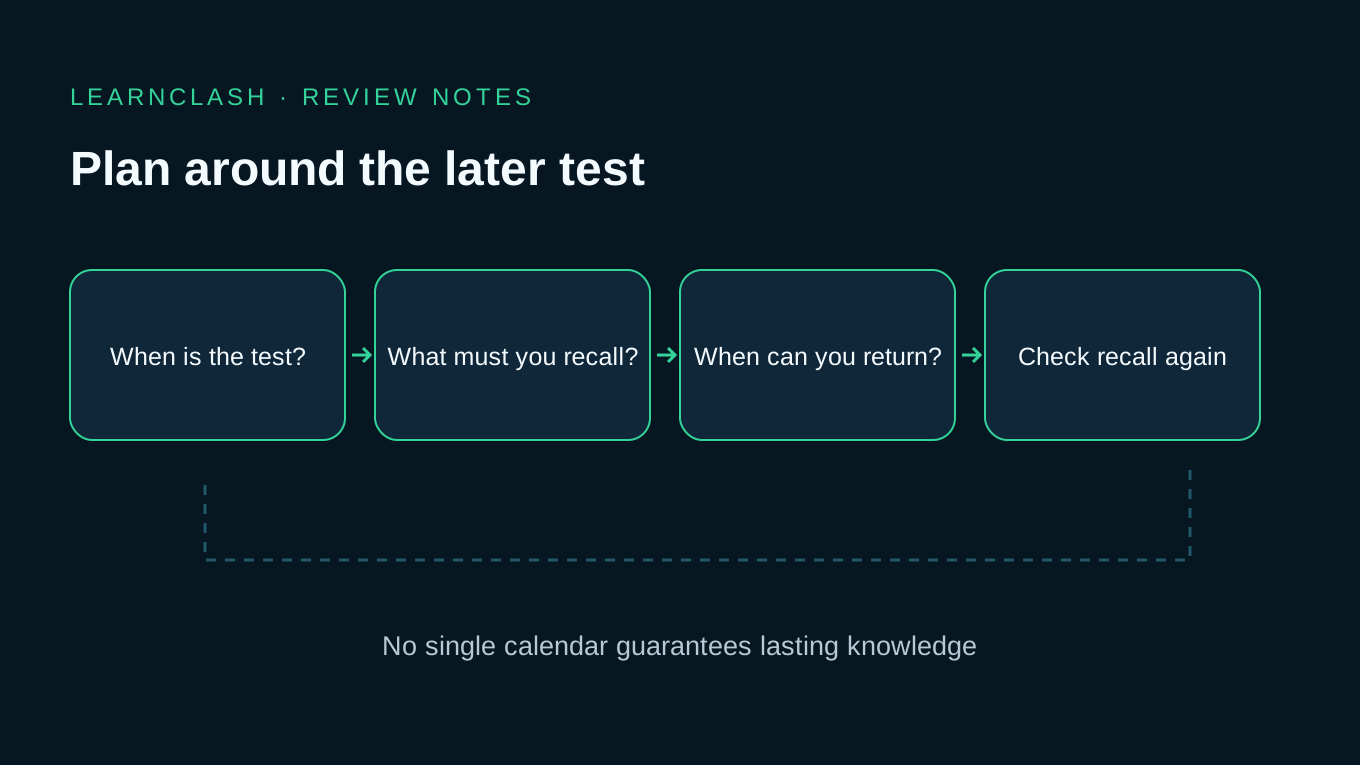
This is why the 1-3-7-14-30 ladder on study blogs is a heuristic rather than a finding, and why the most-cited ladder of all, 1/3/7/21, is examined in our source audit. One counterintuitive result deserves more attention than it gets: Karpicke and Roediger found that equally spaced reviews match or beat expanding ones for long-term retention. The intuition that gaps must keep growing holds mainly for short-term recall.
Why I Capped LearnClash’s Ladder at Three Stages
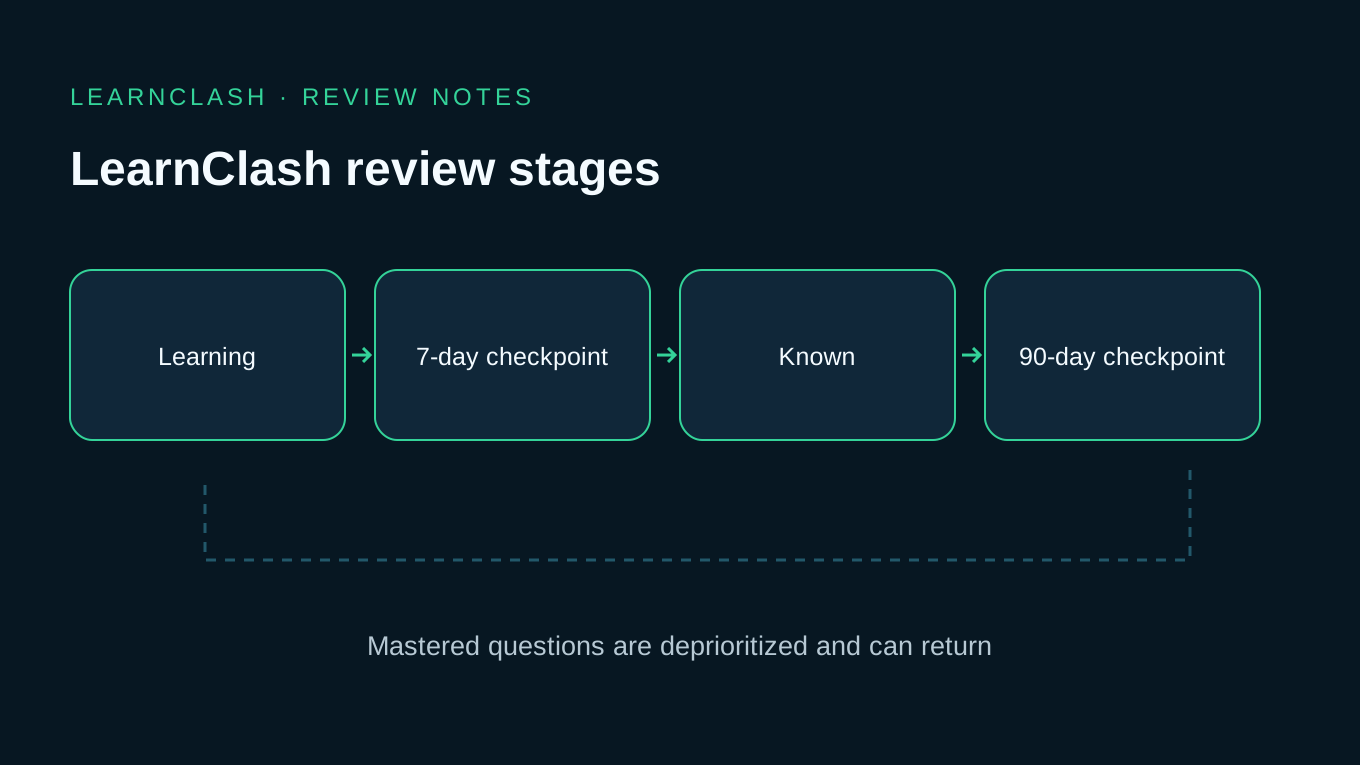
When I built LearnClash’s review system, the reference designs all pointed one way: an open-ended interval ladder in the Anki style, where every card carries its own ever-growing gap. I went the other way and shipped a state machine with exactly three stages. Learning, Known, Mastered, and nothing else. The design uses 7-day and 90-day cooldowns for stage progression. A correct answer after the relevant gap can move a question forward; a wrong answer can drop it one stage. Mastered questions are deprioritized, not deleted. They may return when fresh or due content runs out, and a later miss can lower their stage again.
That is a product choice, not a scientific finding that those two intervals fit every learner. An adaptive scheduler such as FSRS offers different controls. LearnClash’s simpler system makes the next checkpoint easy to explain, but it does not estimate a personal forgetting curve or prove that its timing beats other methods.
1.7% of the 128,085 cards tracked in LearnClash’s SRS had reached Mastered. 41.0 percent sat in Learning and 57.3 percent in Known. LearnClash production export, July 21, 2026 (1,161 accounts)
The 1.7 percent is a distribution of app states, not a retention score or a population learning result. Stage progression requires elapsed cooldowns, so the age and activity of the accounts affect that distribution. The full decision history, including the folklore schedule we refused to ship, is in why we threw out the 1/3/7/21 ladder, and the LearnClash SRS retention curve explains the checkpoints and their limits.
Active Recall and Spaced Repetition: Better Together
Spacing decides when you practice. Retrieval describes what you attempt before seeing the answer. It is useful to keep them separate, because a spaced reread and a spaced recall test ask different things of you.
Karpicke and Roediger (2008) had students learn word pairs, one group by restudying, the other by repeated recall tests. During the learning phase the two groups looked identical, which is exactly what makes rereading so seductive. A week later, the testing group retained 80 percent of the material. The restudy group kept 36.
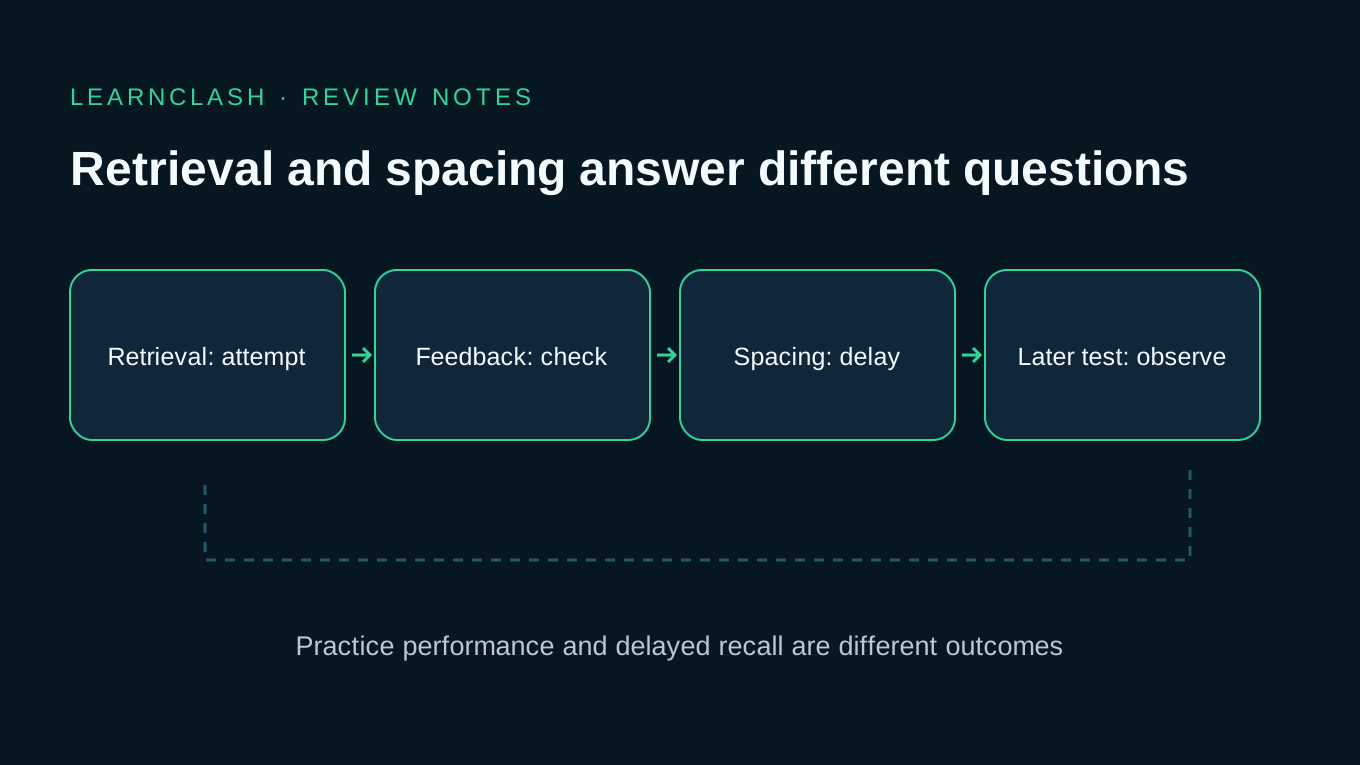
The two techniques answer different questions: active recall asks you to produce an answer before you see it, while spacing asks you to try again after a gap, when the last encounter is less fresh. Try first. Check next. Together they create opportunities to check recall over time, without guaranteeing that every review arrives at an optimal moment. Competition is harder to quantify honestly. I built a duel loop because I enjoy returning to a game with another person. That design preference does not establish a retention multiplier, a higher attendance rate or a causal learning gain. You may prefer solo flashcards. Choose the routine you can keep and check what you can recall after a delay.
For the speed-and-tactics side, how to memorize fast covers memory palaces, mnemonic systems, and the tactics that pair well with spaced retrieval when you are up against a deadline.
Does Quizlet Have Spaced Repetition?
Yes. Quizlet’s current Flashcards instructions, checked September 21, 2026, describe spaced repetition on its website. After revealing a card, you rate recall and return when the next review is due. The page excludes the mobile apps and does not establish the subscription tier for this feature. Do not confuse it with the separate Learn mode.
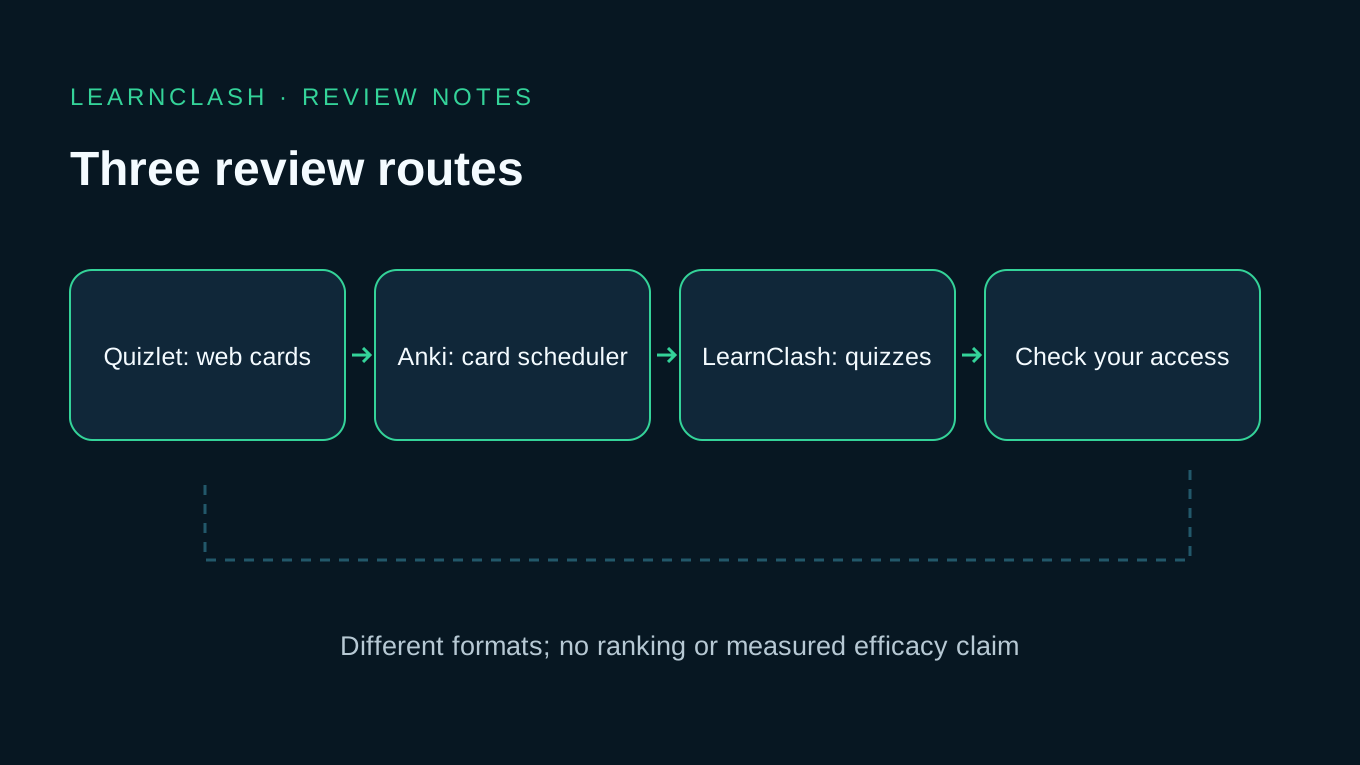
| Tool | Documented review route | What to check before choosing |
|---|---|---|
| Quizlet | Spaced repetition in web Flashcards | Your account’s access message; this help page excludes mobile |
| Anki | Card scheduler with FSRS controls | Deck quality, answer-button use and review workload |
| LearnClash | Questions tracked across duels and Solo | Whether general-topic quiz practice fits your material |
If you already have a study set in Quizlet and want to keep using it, first check what its web Flashcards route offers in your account; Anki gives you more controls over the schedule and your decks. Neither choice needs to be dismissed to explain LearnClash: its distinction is combining one-to-one competition with a question-review history. The detailed Quizlet review guide separates current documentation from older engineering claims. A dated technical post can explain an earlier algorithm without establishing today’s access, reset rules or price. That distinction matters when a comparison recommends buying a subscription. Before you buy a plan for this feature, check the access message in the account and on the platform you will use; this September 21 correction reviews the documents and does not report a new logged-in test of Quizlet or Anki.
For more detail, Anki vs Quizlet compares the flashcard approaches. The Quizlet alternatives guide covers a broader set of study formats. LearnClash does not import your course deck into a live classroom console; its topic-based questions are a different task, and they may not match an exam syllabus.
How LearnClash Runs Spaced Repetition While You Play
Two surfaces feed the same review pool. Solo mode is the deliberate one: short sessions built from the cards your personal schedule says are due. Duels are the ambient one, mixing your due questions in with fresh ones, and your opponent has no idea which is which.
The stages work the same everywhere:
- Learning: new or still being learned, with a 7-day progression cooldown.
- Known: the first valid progression is complete; the next has a 90-day cooldown.
- Mastered: a later correct answer after the required gap. The card is deprioritized and can return when fresh or due questions run out.
A miss can lower the stage. A question already in Learning stays there; the review history continues.
In practice, the duels do most of the work: in LearnClash’s July 21, 2026 production export, about 93 percent of SRS-tracked first encounters happened inside duels rather than Solo mode, so most review scheduling starts as a side effect of someone accepting a challenge.
No extra homework required. Answers in duels feed the same review history as Solo. Due questions can return through play. Opponent matching and question scheduling are separate mechanisms; neither guarantees that each question has the ideal difficulty.
For the research on why quizzes beat rereading, see the testing effect. To slot spacing into a full routine with focus, exam, and sleep tactics, how to study effectively covers the other eight methods, and how the ELO rating system works explains how skill ratings inform matchmaking. If you are setting up a routine tonight, start with a small amount of material you actually need. Attempt an answer, check it and note what went wrong. Set another review before your deadline, then include a later check if you want the knowledge beyond that deadline. If you repeatedly fail, reduce the load or improve the explanation rather than treating every struggle as evidence that the method works.
And if the exam is five days away, work within those five days. A fixed seven-day app checkpoint is not an exam plan. Use your notes, syllabus and worked examples for the material the test will assess. For general-topic practice with an opponent, try a LearnClash duel, then use your later answers to judge whether the routine is helping.
Frequently asked questions
How long does it take for spaced repetition to work?
There is no universal improvement deadline. It depends on the material, prior knowledge, practice and the later test. LearnClash starts tracking questions when you answer them; its cooldowns are product rules, not a promise of measured improvement.
Is spaced repetition better than cramming?
For a delayed test, spaced practice often outperforms doing all the work at once. Cramming can still help when the test is immediate. Neither method guarantees a fixed retention period, and the best schedule depends on when you will need the knowledge.
Can you use spaced repetition without flashcards?
Yes. You can revisit quiz questions, worked problems or explanations after a gap. The details depend on the skill. LearnClash uses questions in duels and Solo, with an ELO ladder for competition; that feature is not itself proof of a learning advantage.
What is the best spaced repetition schedule?
The best review gap scales with your goal: Cepeda et al. (2008) found the optimal gap runs about 20-40% of a one-week retention horizon and falls to about 5-10% of a one-year horizon. As arithmetic, those ranges are roughly 1-3 days for a week and 3-5 weeks for a year, not a personal prescription. LearnClash uses stage-based cooldowns. A wrong answer can lower a question's stage; its next review then uses that stage's cooldown: 7 days for Learning, 90 for Known. Due questions become eligible for selection, without a guaranteed return date. A correct answer after the Known cooldown can move a question to Mastered. Mastered items can still reappear.
Does Quizlet use spaced repetition?
Yes. Quizlet documents spaced repetition in Flashcards on its website. Its current help page excludes mobile apps and does not establish which subscription tier includes the feature. Learn and Flashcards are different routes; check the study method and access shown in your account.