
Why LearnClash Uses Prime-Number Question Counts
LearnClash uses prime-count question rounds (37, 43, 47, 53), not 50. The round-number tax and why round targets become exit cues.

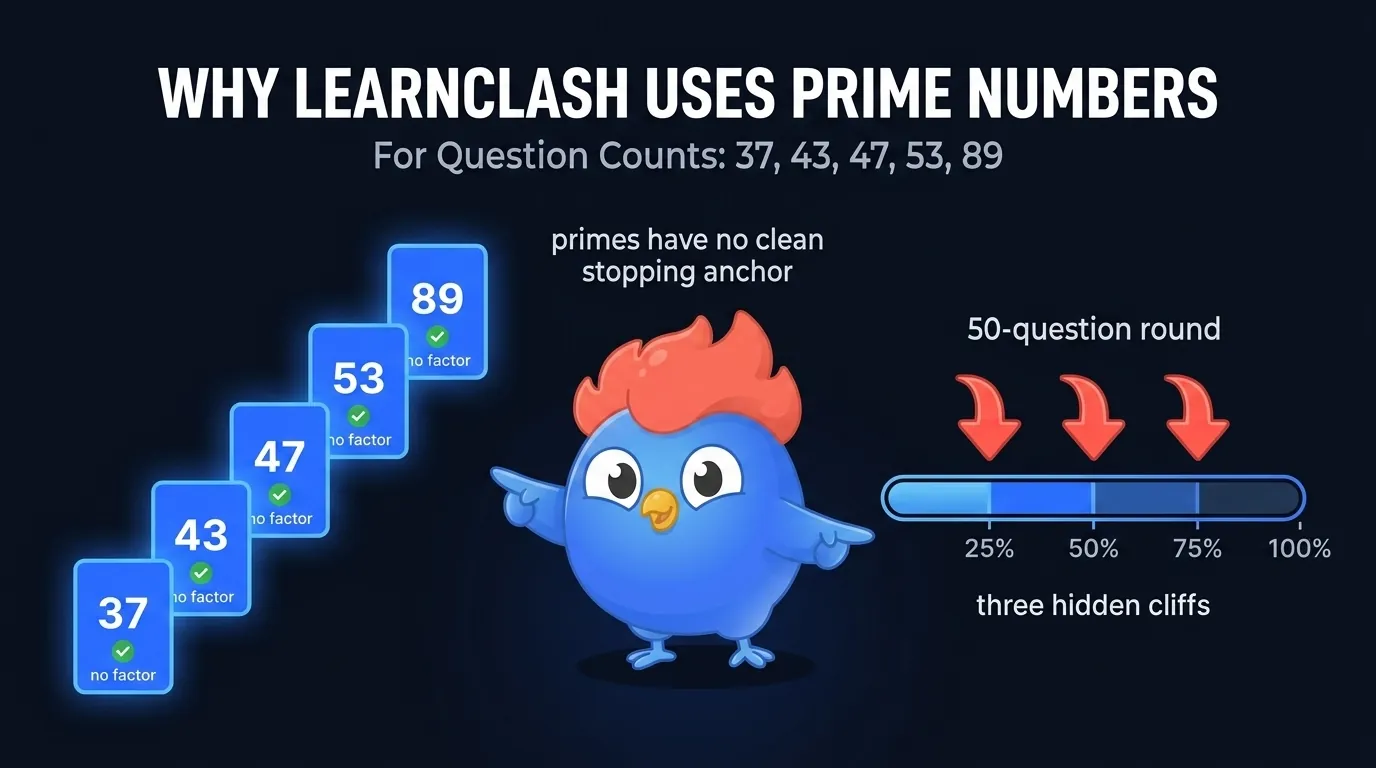
Baseball batters bench themselves at .300. SAT takers retake the test at 1090 but not at 1100. A round number is a finish line the brain draws for itself.
LearnClash uses prime-count question banks (37, 43, 47, 53, 89) in Practice and topic decks because round numbers leak completion. A prime has no factor between 1 and itself, so a prime-length round offers no clean halfway point, no quarter mark, no “almost there” anchor for the brain to mistake for the end. The pick of 37 over 50 is among the cheapest design decisions LearnClash makes, and it works because round numbers are not numbers. They are exit cues.
This article unpacks the round-number tax in quiz design, the three behavioral economics studies that mapped it, and the prime-count rule LearnClash uses to dodge it. Run a LearnClash 37-question round →
The Round-Number Tax in Quiz Design
The round-number tax is the completion gap between a quiz at a prime length (37, 43, 47, 53) and the same quiz padded or trimmed to a round one (25, 50, 100). The mechanism is the same one Pope and Simonsohn measured in baseball. Round numbers act as goals; goals are where people stop. LearnClash uses prime lengths in voluntary practice for exactly that reason, on the same content and difficulty band a round length would carry.
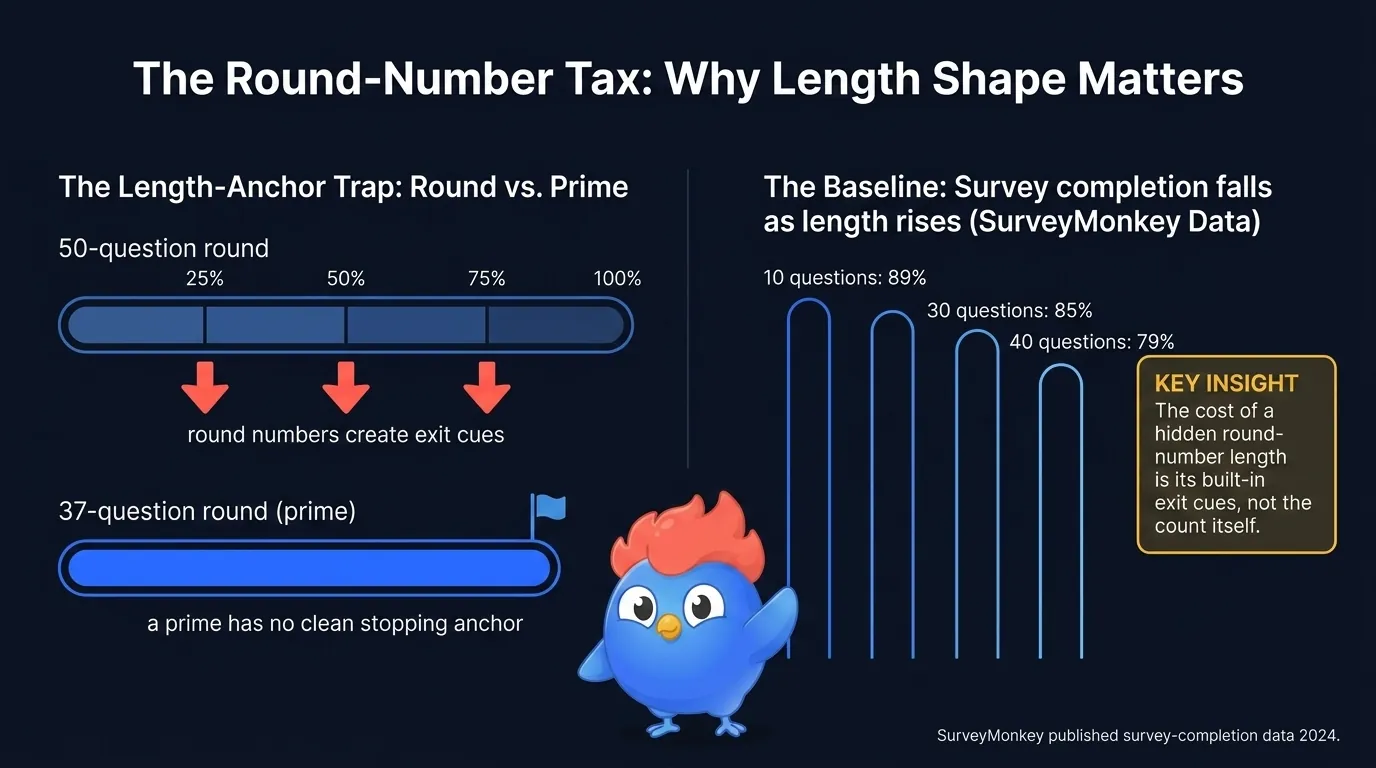 Figure 1: The round-number tax. A prime-length round has no factor-aligned stopping point; a round-length round has several.
Most quiz-design advice tells you to keep it short. Five to ten questions. Most of that advice is correct but solving a different problem. The “5-10 question” rule applies to lead-gen quizzes where you are buying the user’s attention with a recommendation at the end. LearnClash Practice is not lead-gen. It is repeated voluntary play on the same topic for weeks, and the brain that quits at 25 of 50 will also quit at 50 of 100. The question is not “how short” but “how many round-number exit cliffs does the user pass through on the way to the end.”
The answer for 37 is zero. There is no factor of 37 between 1 and 37 except 1. No “halfway.” No “three quarters.” No “almost there.” The progress bar does not light up at any clean fraction, because 37 has no clean fractions. The same is true of 41, 43, 47, 53, 59. Pick any prime, and you have a number whose visual gravity points only at the finish.
The asymmetry has a name. Pope and Simonsohn ran the numbers on baseball batting averages, and what they found is the round-number stopping bias at a national scale.
So how strong is the pull of a round number? Strong enough to skew Major League Baseball.
Round Numbers Are Exit Cues, Not Numbers
Round numbers function as goals, and the goal is where the action stops. Pope and Simonsohn (2011) measured it in three different domains: batting averages, SAT scores, and laboratory effort. In each, performance just below a round number triggered extra effort to cross it. Performance just above a round number triggered the opposite, an exit. The same mechanism is why LearnClash avoids round-number lengths in voluntary practice.
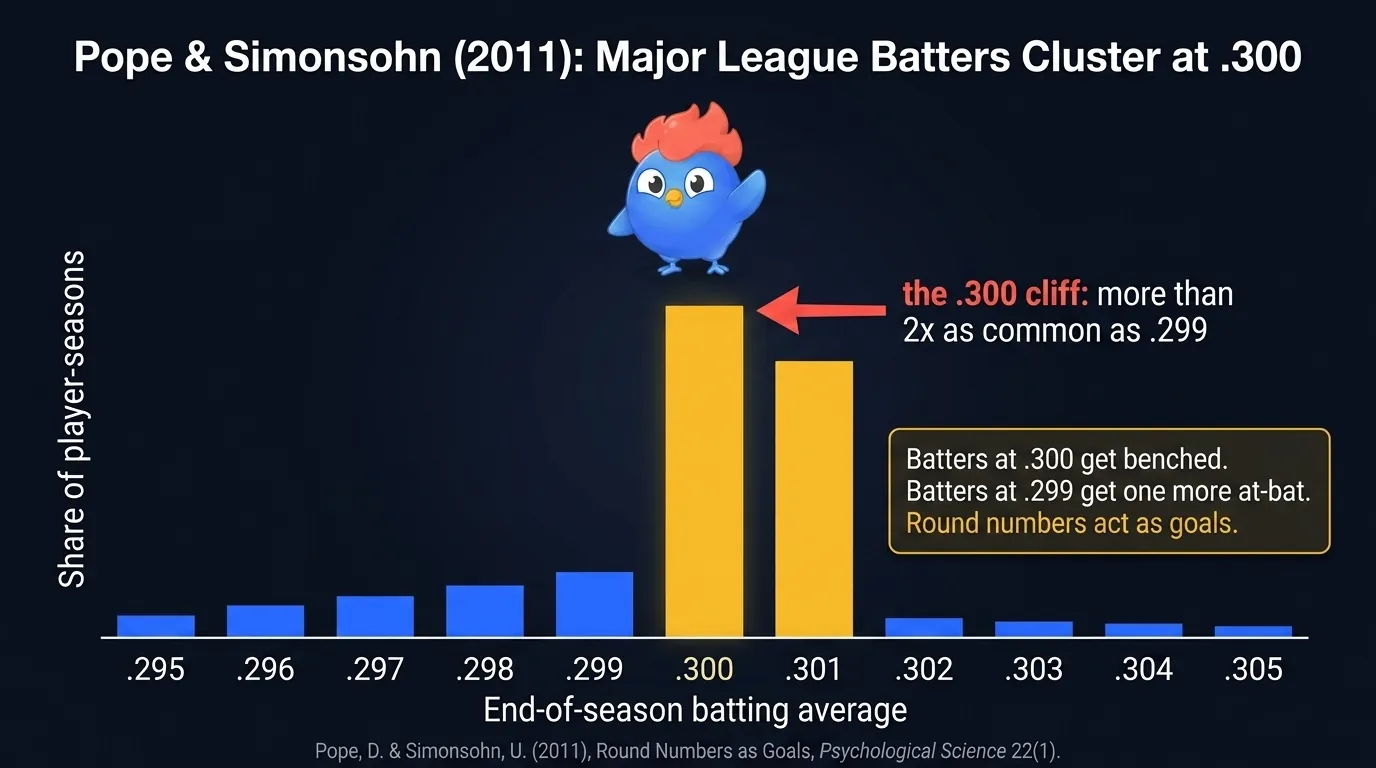 Figure 2: The Pope-Simonsohn baseball spike. End-of-season batting averages cluster at .300 because batters and managers treat round numbers as cliffs.
The baseball finding is the cleanest. At the end of a Major League Baseball season, the share of players who finished at exactly .300 or .301 was more than double the share who finished at .298 or .299, even though the underlying performance distribution should be smooth. The mechanism: a batter sitting at .299 in late September gets one more at-bat to push them over. A batter sitting at .300 gets benched, pinch-hit for, or rested to lock the round number in. Managers and players are doing the same thing the brain does on a quiz progress bar. They treat the round number as the goal, and the goal is where you stop swinging.
The SAT finding is the second cleanest. Students who score 1090 on a 1600-point scale are far more likely to retake the test than students who score 1100, even though the gap between 1090 and 1100 is a rounding error. The 1100 score sits on the “I am done” side of the round-number line; 1090 sits on the “almost” side. The decision to retake is the decision to keep going. Round numbers move that decision.
The three Pope and Simonsohn findings in one line: batters bench themselves at .300, SAT takers retake at 1090, and lab subjects report wanting to try harder when their score sits just below a round threshold than just above.
The lab finding is the third. Pope and Simonsohn ran a vignette study where participants were asked, after a hypothetical performance, how much extra effort they would expend. Subjects whose hypothetical score sat just below a round threshold reported wanting to exert more effort than subjects whose score sat just above. The brain is asymmetric about round numbers in a way it is not asymmetric about non-round ones.
The takeaway for quiz design: when the length of the round contains a round number anchor, the user’s brain marks that anchor as the goal. When they cross it, the goal is met. When the actual end of the round is later than the anchor, the second half of the round is fighting the brain’s “I am done” signal. Removing that anchor with a prime length is what keeps a voluntary round from leaking completion.
This is also why “halfway” lures matter so much in quiz design. 50 questions is not just an exit cue at 50; it is also an exit cue at 25 (halfway) and at 12 or 13 (a quarter). Each of those is a round-ish, factor-aligned natural stopping point. A 50-question round is not one cliff; it is three. We will get to the math of which numbers contain how many cliffs in section 5. First, the second study that maps the same pull from a different angle.
The Goal-Gradient Pull at 25, 50, and 100
The goal-gradient effect is the second behavioral mechanism behind the round-number tax. Kivetz, Urminsky, and Zheng (2006) gave coffee-shop customers loyalty cards. People accelerated their purchase frequency as they approached the free coffee, then dropped that frequency immediately after they received it. The same pull operates on a LearnClash Practice progress bar, and it operates around every visible milestone the brain treats as a goal.
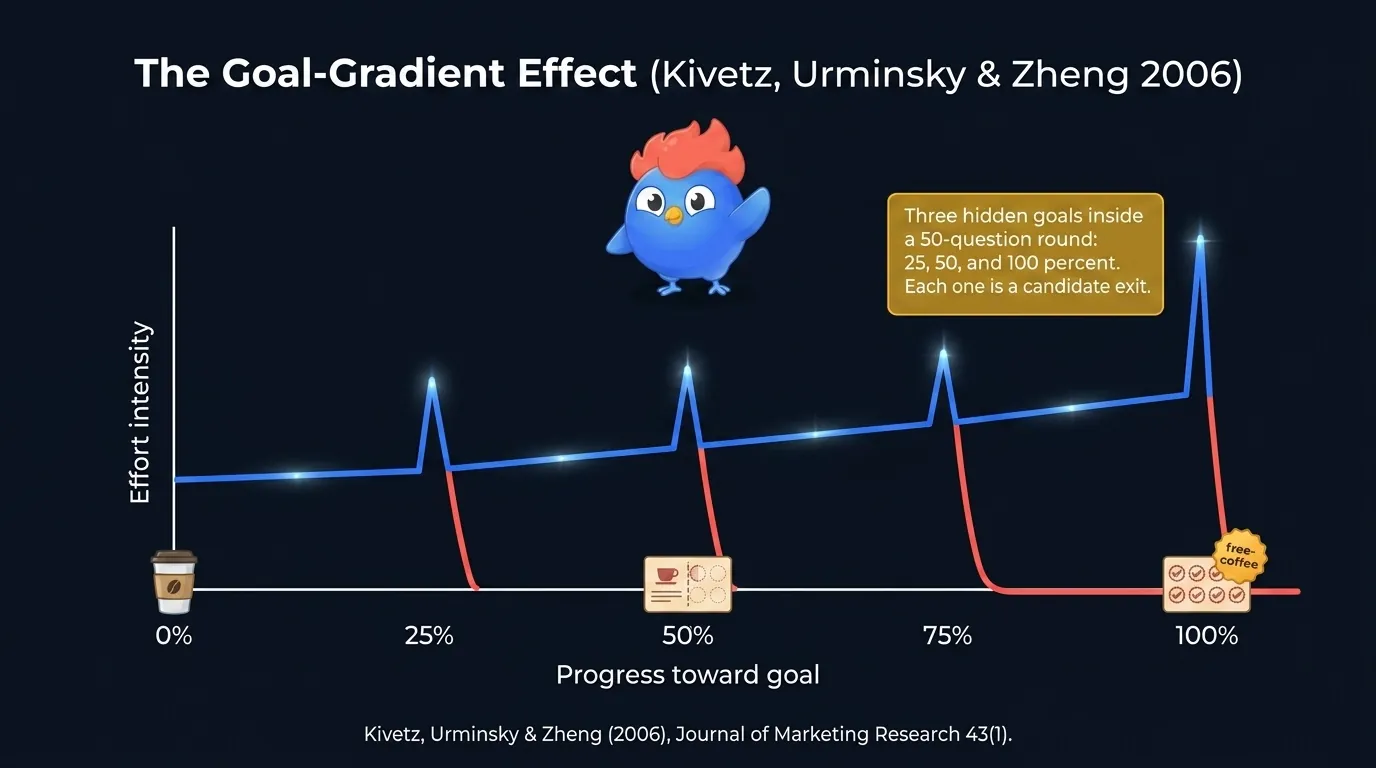 Figure 3: The goal-gradient pull. Effort accelerates before each round-number milestone and collapses immediately after.
The mechanism is not new. Behaviorist Clark Hull described it in animal experiments in 1932. Rats run faster as they approach the food at the end of the maze. Pigeons peck faster as they approach the trigger reward. Humans on a coffee card buy more often as they near the free drink. The free drink is a goal, and the goal pulls effort forward. Then collapses it.
In a 50-question quiz, the goal-gradient pull operates three times. The user accelerates toward question 25 (halfway, an implicit milestone). At 25, they pause, and a meaningful share of them quit. Of those who continue, the next pull is toward 50 itself (the explicit end of the round). At 50, the round ends, and the user closes the app. There is no question 51. The goal-gradient pull was always pointing at 50, and 50 is the finish.
Compare that to a 37-question round. The user has no implicit milestone. There is no halfway point that lights up on the progress bar at a clean fraction; 18.5 is not a number the bar can stop on. There is no two-thirds point worth noting; 24.67 is not a number that triggers anything. The only goal in the room is the end, question 37, and the goal-gradient pull operates exactly once, at exactly the right moment.
The 2006 study was extended by Joseph Nunes and Xavier Drèze in the same year. Their endowed progress effect showed that customers given a loyalty card with two stamps pre-filled (2 of 10) completed the card faster than customers given a fresh card with the same eight-purchase requirement (0 of 8). The pre-filled progress raised the completion rate from 19 percent to 34 percent, an 82 percent improvement, even though the actual work was identical.
That finding maps directly onto quiz UX. A progress bar showing “Question 13 of 37” reads as “deep in” because 13 is past the visual midpoint a user might guess for a long round; the user has been endowed with implicit progress. A progress bar showing “Question 13 of 50” reads as “barely a quarter,” because 12.5 is the clean quarter mark and 13 sits just past it. Same 13 questions answered, very different mental state. LearnClash exploits this by picking lengths where the early questions look further along than they are.
The mental-state difference at question 13 is bigger than the math difference. 13 out of 37 is 35 percent done; 13 out of 50 is 26 percent done. Those nine percentage points feel like the difference between commitment and second-guessing.
This is the entire game. Pick a length where the visual gravity points only at the finish, not at any artificial milestone the brain insists on building.
How LearnClash Picks Primes: 37, 43, 47, 53, 89
LearnClash Practice rounds are 37, 43, 47, or 53 questions, depending on the topic depth. Topic mastery banks run 89, 127, or 181 questions on the largest topics. Every length is a prime. The pick is not random; each prime targets a session-length band where the round-number tax is largest and the round length still falls inside a viable attention budget.
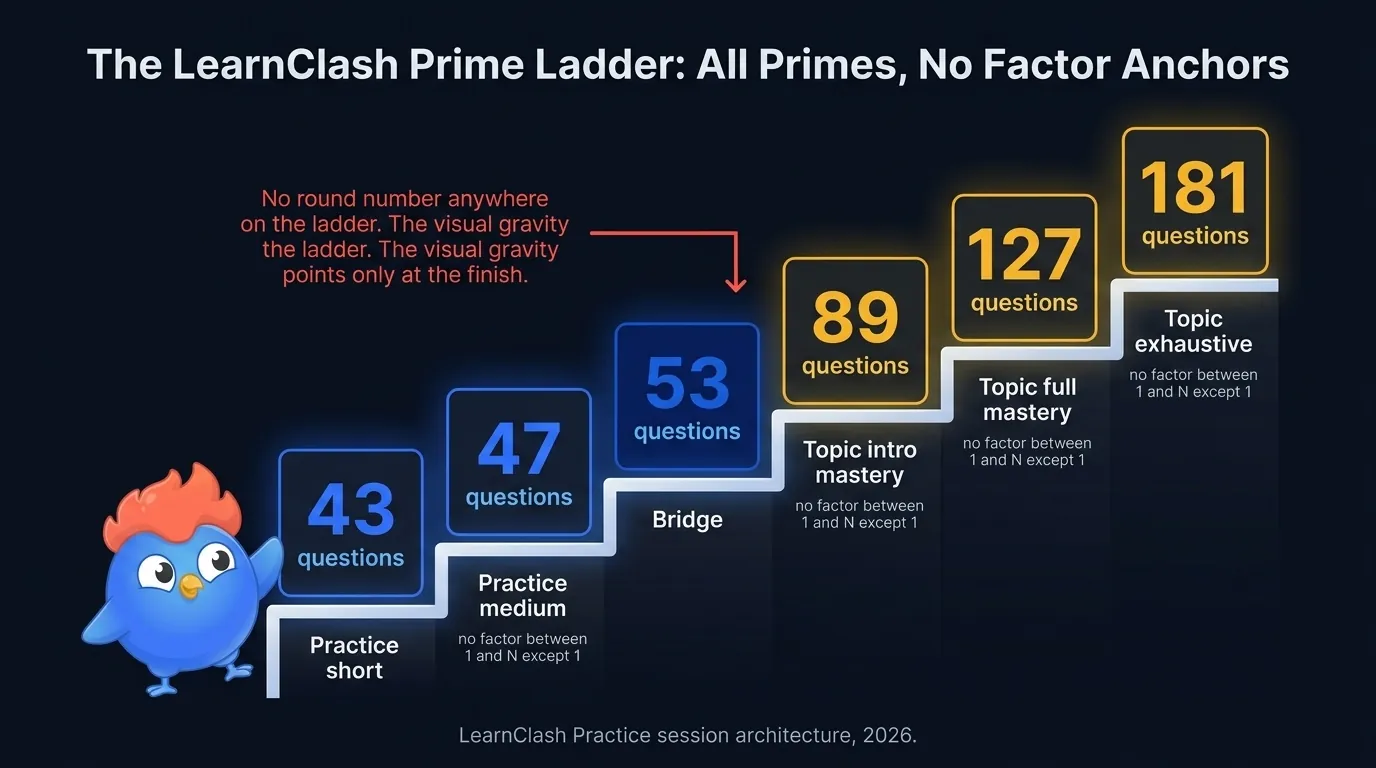 Figure 4: The LearnClash prime ladder. Each rung is a prime so the visual progress bar contains no factor-anchored milestone.
The shortest Practice round is 37, chosen against 31 and 41. 31 lands too close to the goal-collapse zone after 30, where the brain that planned a “quick 30-question round” will exit on the dot regardless of what the actual count says. 41 stretches just far enough past 40 that some users perceive it as “a little over 40” and quit at 40. 37 sits in the sweet spot, far enough from 30 that the user does not pre-commit to 30, and far enough from 40 that the user does not pre-commit to 40 either.
The next rung up is 43, then 47, then 53. The gaps reflect a deliberate non-pattern. If the rungs themselves were spaced at round intervals (37, 47, 57, 67) the user who finishes a 37-question Practice round and starts a new one would notice the round numbers in the rung structure and quit on the second round at 47. By spacing the rungs at 37, 43, 47, 53, the meta-pattern itself is prime-dense. The user who finishes a 37 and tackles a 43 does not see “37, 47” as a round-number reference frame; they see “37, 43” as a non-pattern.
The rule of thumb LearnClash uses internally: pick a prime that lands a clean 4 to 7 questions past the nearest round number. 37 is 7 past 30. 43 is 3 past 40. 53 is 3 past 50. Far enough from the round anchor that the user is not tempted to round-down their commitment, close enough that the actual length still maps to a comfortable session budget.
The largest topic banks are 89, 127, and 181 questions. Twin primes are useful here. 89 and 127 sit far enough apart that a user who beats 89 in one sitting does not visually anchor on 100 as a stretch goal; they anchor on 127 instead. The deepest banks (181) sit deliberately past the next round number (200) the user might otherwise pre-commit to. The pattern across the whole ladder: at no point does a round number become the visual reference frame, and at no point does the user’s brain default to a number that is not the end of the round.
The point of the ladder is that it is principled, not arbitrary. Every rung is a prime, so no length on the ladder carries a factor-aligned milestone, and the meta-pattern across rungs is prime-dense too. The same reasoning applies regardless of a player’s ELO tier, because the round-number anchor is a property of the count on the progress bar, not of the player’s skill.
The Math of Avoiding Exit Cues
A number’s pull is a function of how many factors it has. In LearnClash’s prime-count rule, 50 has the factors 2, 5, 10, and 25, and each factor maps to a clean fraction on a progress bar (one-half, one-fifth, one-tenth, one-half-of-one-half). Each clean fraction is a candidate stopping point. Primes have no factors. They have one candidate stopping point: the end.
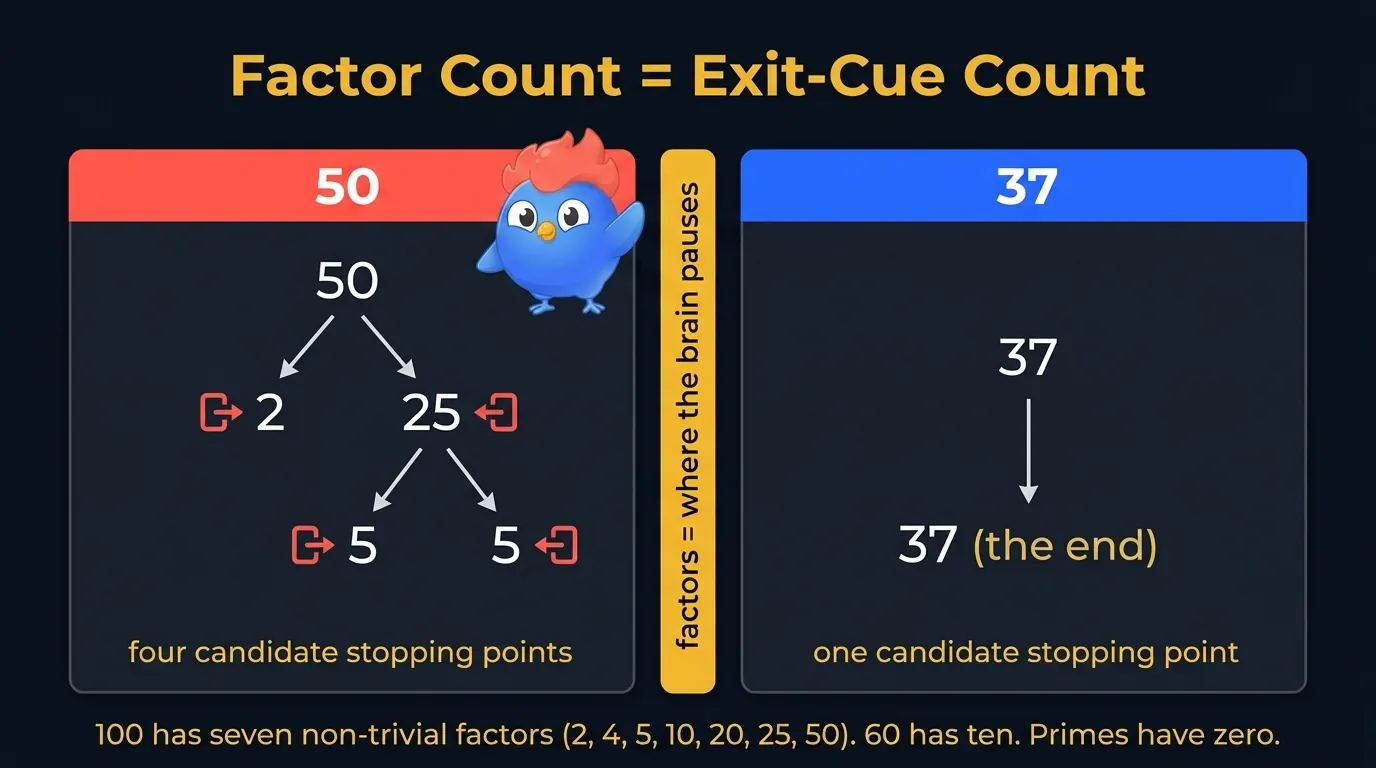 Figure 5: Factor count equals exit-cue count. 50 contains four candidate stopping points; 37 contains one.
The arithmetic is not subtle. 50 decomposes to 2 times 5 times 5. The non-trivial factor list (the factors other than 1 and 50 itself) is 2, 5, 10, 25. Each of those maps to an “I am partway” moment a user might pause on. 100 is worse; its non-trivial factor list is 2, 4, 5, 10, 20, 25, 50. Seven candidate stopping points in a 100-question round. Compare that to the LearnClash prime ladder:
- 37: no non-trivial factors
- 43: no non-trivial factors
- 47: no non-trivial factors
- 53: no non-trivial factors
- 89: no non-trivial factors
- 127: no non-trivial factors
The number 18 (LearnClash duel length) has factors 2, 3, 6, 9 (four candidate cuts) but ships as 6 rounds of 3 with the round count named up front. The user accepts “six rounds” as the contract before any questions show, so 6 functions as a known boundary and not an exit cue. We will cover the commitment-frame exception in the next section. The point here is that for any length whose count is not pre-committed, the number of exit cues equals the factor count, and primes minimize factor count to one.
A few practical heuristics fall out of this:
| Round count | Non-trivial factor list | Exit cues |
|---|---|---|
| 10 | 2, 5 | 2 |
| 20 | 2, 4, 5, 10 | 4 |
| 25 | 5 | 1 |
| 37 | (none) | 0 |
| 50 | 2, 5, 10, 25 | 4 |
| 60 | 2, 3, 4, 5, 6, 10, 12, 15, 20, 30 | 10 |
| 100 | 2, 4, 5, 10, 20, 25, 50 | 7 |
| 127 | (none) | 0 |
The worst length on this table is 60. The best lengths are the primes and the prime-square (25, which has only one non-trivial factor, 5). For any voluntary self-paced round, pick the prime closest to your target attention window. 30-question targets become 37 (LearnClash’s choice). 50-question targets become 53. 100-question banks become 127, or 89 if you want to land deliberately under the user’s expected commitment.
When Round Numbers Are Right
Not every quiz length should be prime. The round-number tax operates on voluntary, self-paced rounds where the user has not pre-committed to a specific count. When the count is named up front and accepted as a contract, the round-number anchor functions as a known boundary, not a hidden exit cue. LearnClash duels are 18 questions for exactly this reason.
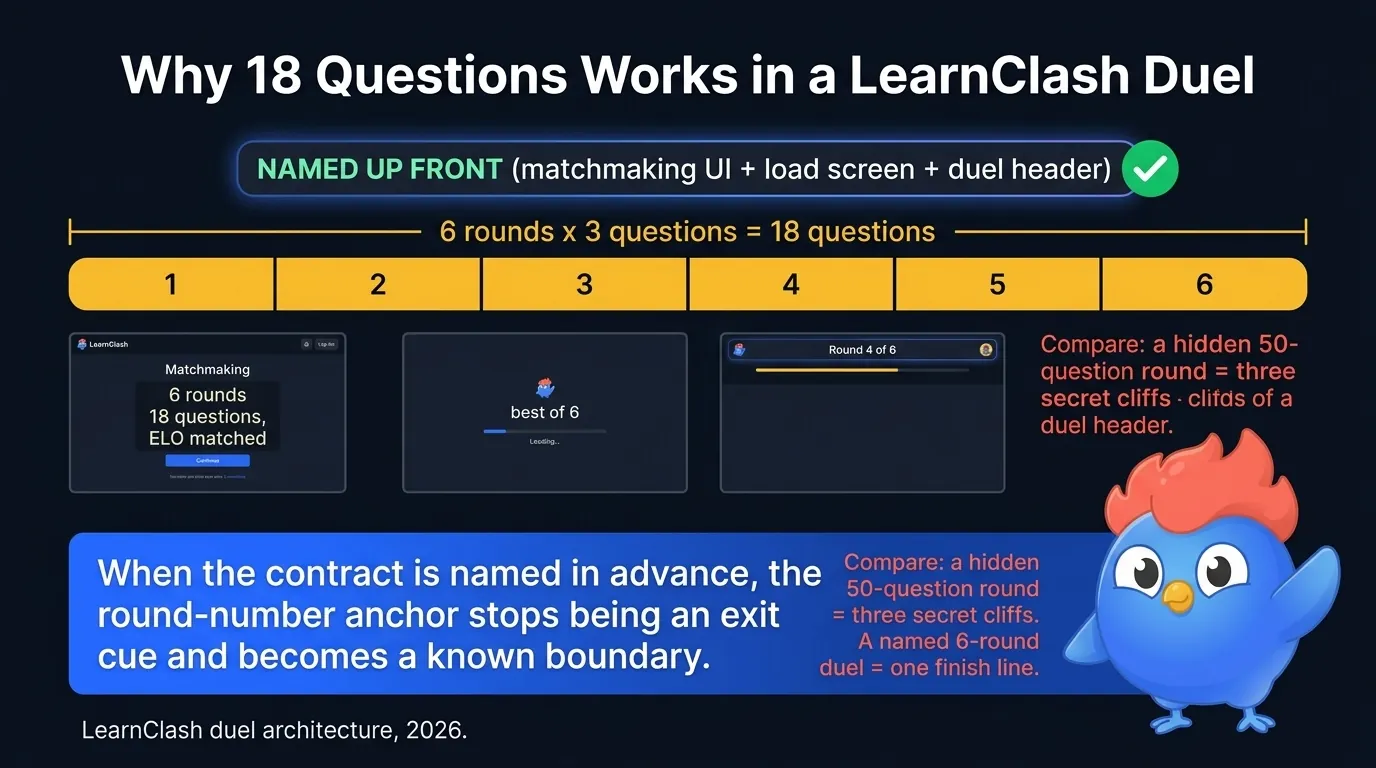 Figure 6: The 18-question LearnClash duel. Six rounds named up front turns 18 into a contract, not a hidden boundary.
The mechanics of a LearnClash duel are different from a Practice round. Before the duel starts, the user knows it is 6 rounds of 3 questions. That number is named in the matchmaking UI, on the load screen, and in the duel header. The user has accepted “six rounds” as the duration of the engagement. There is no question 19. There is no “you are halfway” surprise at question 9. The round structure is the contract, and the contract is the goal. In that frame, 18 questions land cleanly and the goal-gradient pull operates the way it should: pointing at the end of round 6, which is the end of the duel.
The general rule: if the user knows the round length before they start, use whatever number serves the design. If the user does not know the length before they start, or the length is open-ended, use a prime. The round-number tax only collects on round lengths that are negotiated mid-session.
This generalizes well past quizzes. Onboarding flows with a “Step 4 of 7” header functions like a contract; users finish 7-step onboardings at higher rates than they finish onboardings where the count is hidden. The seven is not the problem because seven is named. Pomodoro timers at 25 minutes work because 25 is the contract, not because 25 is round. Workout routines at 30 reps work because 30 is the agreement, and the brain has not been left to hunt for natural stopping points along the way.
The round-number tax shows up in three specific conditions: (1) the length is not announced in advance, (2) the length is open-ended or the user can quit any time without penalty, and (3) the round-number candidates inside the length are visible on a progress bar, a counter, or a session timer. All three apply to LearnClash Practice and topic banks, which is why those use primes. None of them apply to LearnClash duels, which is why those use 18.
The Counterargument: Test Length and Performance
A 2013 PLOS One study on exam length is the standard counter to “shorter is better.” Researchers gave students standard and long versions of the same exam and found no performance drop on the longer version, even as subjective fatigue ratings rose. The takeaway most product designers extract from this study is “users can handle long content if motivated.” That is correct for graded exams; in voluntary practice, where LearnClash measures completion, the conclusion flips, because the dependent variable is whether the user keeps going at all.
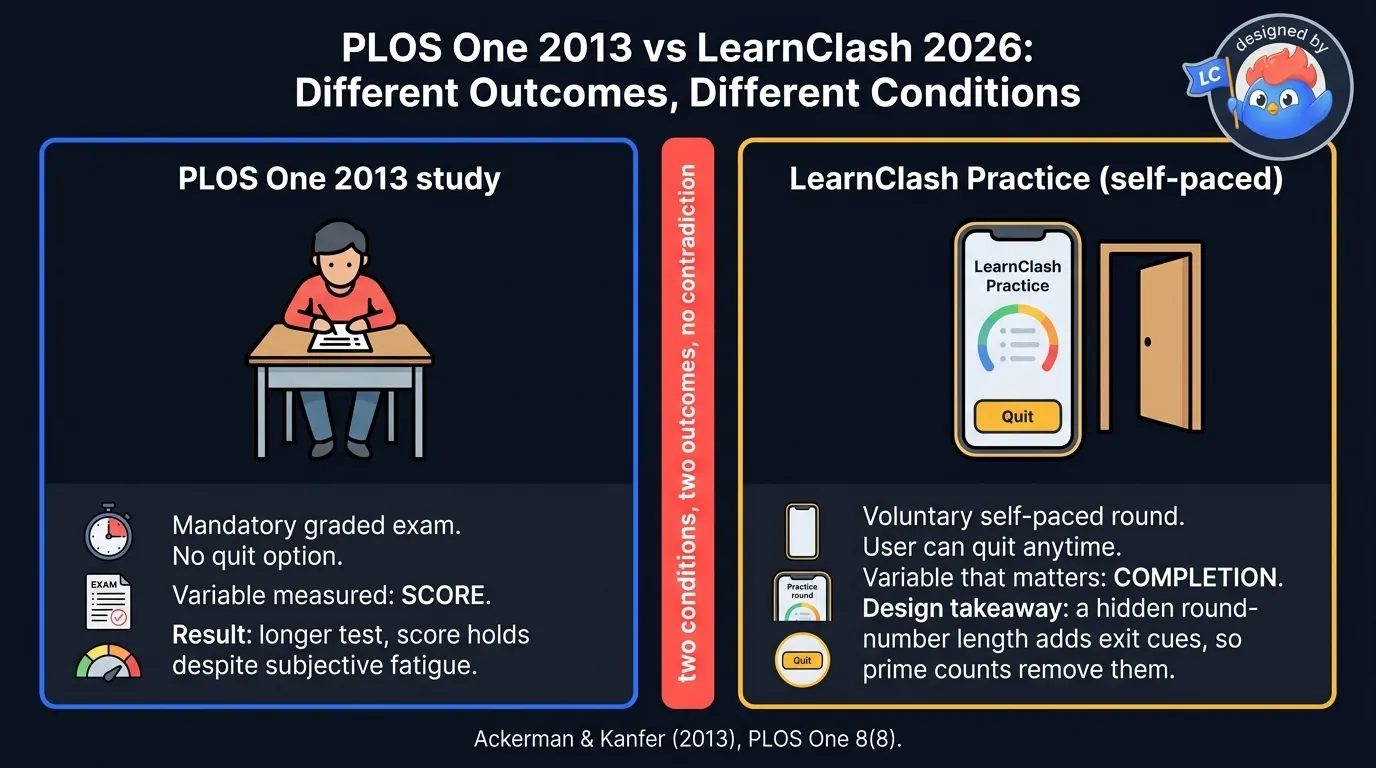 Figure 7: Why the test-length literature does not contradict the round-number tax. The PLOS One finding measures graded performance; voluntary practice is about whether the user keeps going.
The PLOS One study measured graded performance on a mandatory test. The students did not have a “quit” option. They had to finish or accept a zero. In that condition, subjective fatigue does not drive behavior because behavior is fixed. The exam will be finished regardless of how the user feels. Performance is the only variable, and performance held up.
The two studies measure two different outcomes. PLOS One asked “given the test must be finished, does score drop?” LearnClash asks “given the round can be skipped, does the user finish?” Both answers are well-defined and they do not contradict each other.
LearnClash Practice is the opposite condition. The user opens the app voluntarily, plays for as long as they want, and quits whenever they want. The variable is not performance; the variable is whether they finish the round at all. When the user is empowered to exit, subjective fatigue plus a visible round-number anchor produces exactly the predicted exit. The PLOS finding is correct and consistent with designing around exit cues, because the two conditions govern different outcomes: graded performance versus voluntary completion.
The honest read: longer mandatory tests do not hurt graded performance; longer voluntary rounds do hurt completion. If you are building a graded assessment for a captive audience, design around fatigue. If you are building voluntary practice for an audience that can quit, design around exit cues. LearnClash is the second case, which is why the prime-count rule exists. For a deeper read on how LearnClash separates voluntary practice from competitive duels, see the LearnClash 3-stage SRS design and why we threw out the 1/3/7/21 schedule and the LearnClash retention curve.
What This Means for Quiz Designers
If you build a quiz product, a flashcard app, a survey, a typeform, or any engagement format with a visible question count, the round-number tax is collecting from you whether you measure it or not. Five practical rules fall out of LearnClash’s experience.
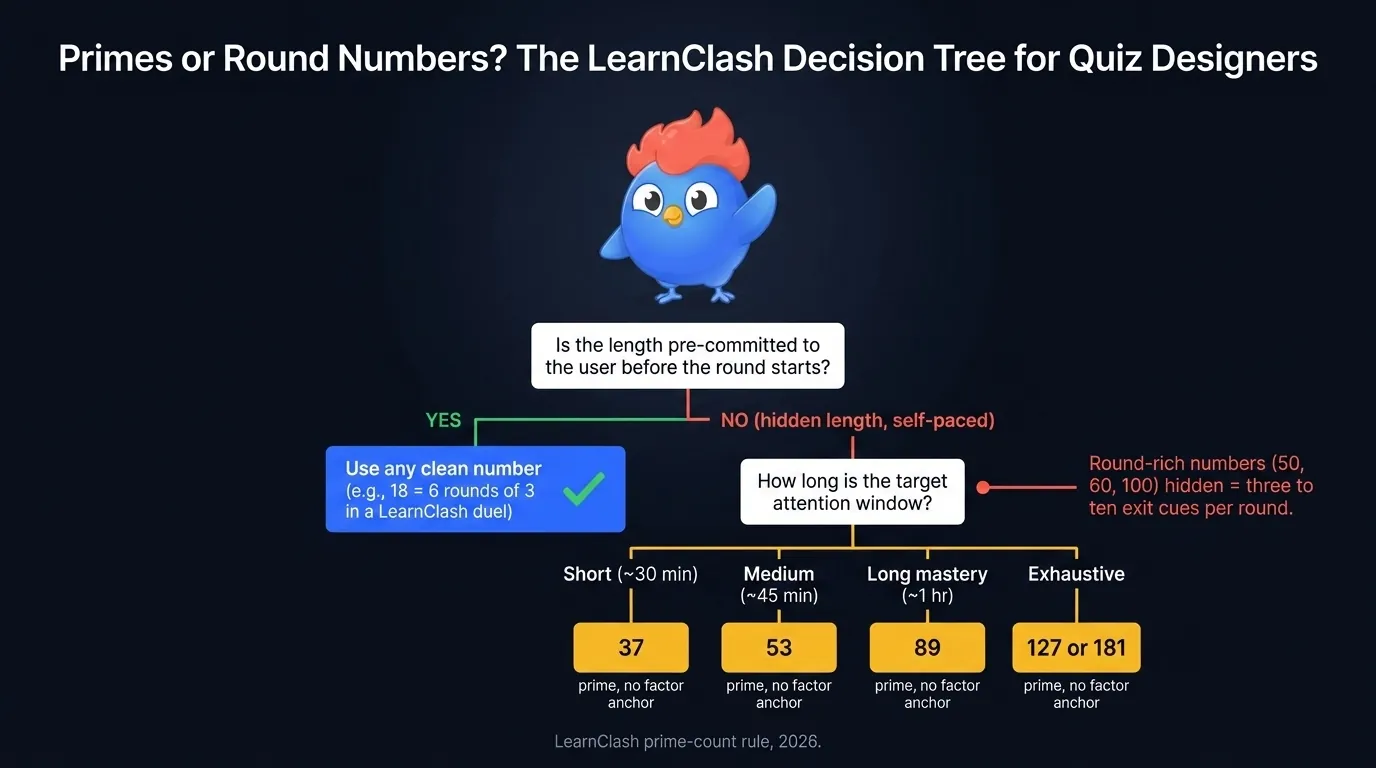 Figure 8: When to use primes versus round numbers. Five branches; the answer depends on whether the length is pre-committed.
- Name the length up front if you can. A 50-question survey that says “50 questions, about 8 minutes” at the start outperforms a 50-question survey that hides the count, because naming the contract converts the round number from exit cue to boundary. This is the cheapest fix and almost nobody does it.
- If you cannot name the length, pick a prime. 37, 43, 47, 53, 89, 127. The prime ladder LearnClash uses is reproducible across product categories. A 50-question lead-gen quiz with a hidden ending becomes a 53-question quiz with the same hidden ending and a measurably higher completion rate.
- Stagger the rungs of your ladder so the rungs themselves are not round. A user who finishes 37 and starts 47 sees the pattern as round (jump of 10). A user who finishes 37 and starts 43 does not. The meta-pattern matters as much as the individual rungs.
- Avoid round-rich numbers in any length the user discovers mid-session. 60 has 10 non-trivial factors; 100 has 7. These numbers are particularly bad because they look “natural” but contain the most exit cues. If you find yourself defaulting to 50 or 100 because they sound right, that is the round-number bias talking. Trust the math.
- Measure your completion rate split by length. The round-number tax is observable in any product with enough session data. With 30 days of session logs and a sample of users large enough that completion percentages are stable to within 2 to 3 points, you can A/B-test a 50-question version against a 53-question version and the gap will surface. It is not expensive data to gather, and it is the cleanest way to see the effect inside your own product.
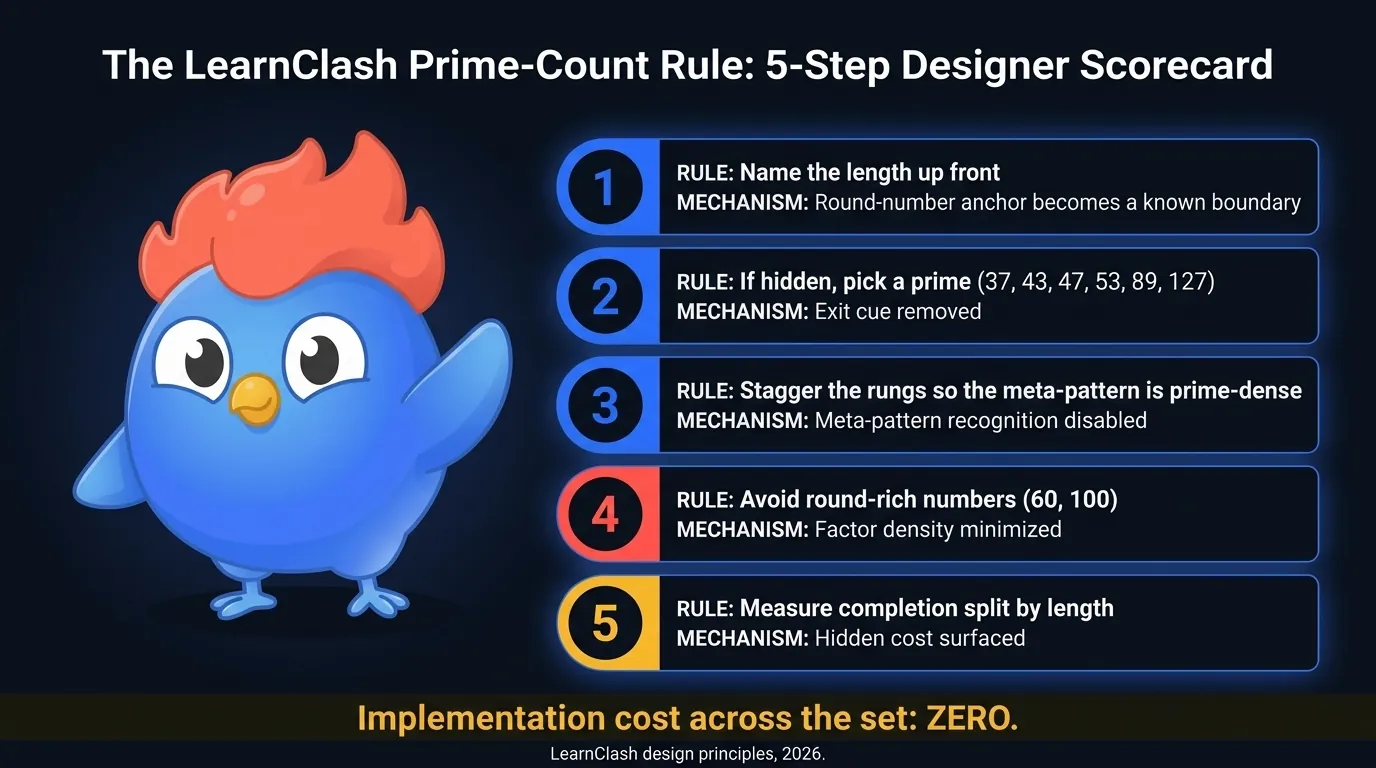 Figure 9: The five rules as a scorecard. Each rule maps to the behavioral mechanism it neutralizes; implementation cost across the set is zero.
The deeper principle: product design that ignores the round-number bias is leaving completion on the table. The mechanism is documented in three separate behavioral economics studies, and the fix costs nothing. The decision to pick 37 over 50 is the most expensive decision a competitor of ours can refuse to make.
The Bottom Line
Round numbers in quiz design are exit cues, not numbers. They function as goals, and goals are where people stop. Pope and Simonsohn measured the effect in batting averages and SAT scores. Kivetz, Urminsky, and Zheng measured it in coffee-card loyalty programs. Nunes and Drèze measured it in pre-stamped progress cards. LearnClash applies the same finding by sizing every voluntary round at a prime, so the only goal on the progress bar is the finish.
The rule is not “use primes always.” It is: if the user has not pre-committed to the length, the length should not contain a round-number anchor. Primes are the cheapest way to honor that rule, and LearnClash is the cheapest place to see the rule working live.
LearnClash uses prime-count question banks (37, 43, 47, 53, 89) in any voluntary, open-ended round because primes have no factor-aligned milestones for the brain to mistake as the finish. LearnClash duels stay at 18 because 6 rounds of 3 is a contract named up front, not a count discovered mid-session. The difference between the two formats is the difference between a known boundary and a hidden cliff. The prime-count rule in three lines:
- Prime-count rounds (37, 43, 47, 53, 89) ship in LearnClash Practice and topic banks because primes have no factor-aligned exit cues mid-round.
- Round-count rounds (18 = 6 rounds of 3) ship in LearnClash duels because the count is named up front and the user accepts it as a contract.
- Choosing a round-number length for a voluntary round means handing the brain a finish line before the real one; the mechanism appears in three behavioral economics studies; the fix costs zero.
For more on the LearnClash design philosophy, see our 3-stage SRS write-up, the LearnClash retention curve, the LearnClash statistics page, why we threw out the 1/3/7/21 SRS schedule, or how ELO-matched matchmaking lands win rates in a balanced band. The pattern across all of these: pick the mechanic that respects what the brain actually does, not the one that sounds right at first glance. Browse the LearnClash learning science cluster for more deep dives, or run a LearnClash 37-question Practice round and see the prime-count rule in action.
- Pope, D. and Simonsohn, U. (2011), “Round Numbers as Goals: Evidence From Baseball, SAT Takers, and the Lab”, Psychological Science, 22(1), 71-79
- Kivetz, R., Urminsky, O. and Zheng, Y. (2006), “The Goal-Gradient Hypothesis Resurrected: Purchase Acceleration, Illusionary Goal Progress, and Customer Retention”, Journal of Marketing Research, 43(1), 39-58
- Nunes, J. C. and Drèze, X. (2006), “The Endowed Progress Effect: How Artificial Advancement Increases Effort”, Journal of Consumer Research, 32(4), 504-512
- SurveyMonkey (2024), “Does Adding One More Question Impact Survey Completion Rate?”
- Ackerman, P. L. and Kanfer, R. (2013), “Investigating the Effects of Exam Length on Performance and Cognitive Fatigue”, PLOS One, 8(8), e70270
Frequently Asked Questions
Why does LearnClash use 37 questions instead of 50?
Round numbers act as exit cues. A 50-question round has implicit stopping points at 25 and 50, and each one triggers the natural-stopping-place bias that Pope and Simonsohn (2011) measured in baseball batters. A prime length like 37 has no clean halfway or quarter point, so the only goal in view is the finish. That is the round-number tax LearnClash designs around.
What is the round-number bias?
Round-number bias is the human tendency to treat numbers like 50, 100, or 25 as qualitatively different from non-round ones. Pope and Simonsohn (2011, Psychological Science) showed it in baseball batting averages and SAT scores: batters bench themselves at .300, and SAT takers retake the test at 1090 but not at 1100. LearnClash's prime-count question banks (37, 43, 47, 53) remove the visual anchor without changing difficulty.
Does a longer quiz always reduce performance?
Not on graded tests. A 2013 PLOS One study found students perform equally well or better on longer tests despite reporting more subjective fatigue. The exit-cue effect is different. It applies to voluntary continuation in self-paced practice, where round-number stopping points compete with the goal of finishing the round. In a timed LearnClash duel where the round is bounded up front, the effect goes away. In open-ended Practice, it dominates.
Why do LearnClash duels use 18 questions if 18 is not prime?
LearnClash duels are 6 rounds times 3 questions, named up front before the duel starts. The user accepts six rounds as the contract, so the round-number anchor functions as a known boundary, not a hidden exit cue. The prime-count rule (37, 43, 47, 53, 89) applies to Practice mode and topic question banks where the length is not pre-committed and the brain hunts for natural stopping points.
Are primes just a gimmick?
No. A prime length removes every factor-aligned milestone a progress bar could stop on, leaving the finish as the only goal. The mechanism is documented in three separate behavioral economics studies (Pope and Simonsohn 2011, Kivetz Urminsky and Zheng 2006, Nunes and Drèze 2006). Picking 37 over 50 is among the cheapest design decisions LearnClash makes, and it costs nothing to implement.