
LearnClash vs QuizDuel: Duels, Review and Ads
Compare LearnClash and QuizDuel on duels, ELO, review, ads and social play, with historical store prices and ratings clearly dated.

LearnClash combines topic choice, ELO ranking and scheduled review without ads. QuizDuel is the long-running social quiz from MAG Interactive, with familiar categories and an ad-supported free tier. Choose based on your routine and the people you want to play with.
From a store thumbnail, the two apps look much alike, with two players, a question grid and a winner; the choice gets clearer when you ask how you want to spend the time between one match and the next, and whether you want to return to the questions you missed. QuizDuel is the 2020 relaunch of a franchise that started in 2012 under FEO Media (MAG acquired the studio in 2017): roughly 20 curated categories, fast social turns, ads funding the free tier. LearnClash takes a different approach to topics, ranking and review. You choose topics, completed duels affect ELO and questions feed a three-stage review history. These features do not prove a learning advantage.
A note on how this page is maintained. This page first appeared in March 2026. It was checked against MAG reports in April and May, then again on July 31 after the Q3 report arrived. The historical figures below keep their dates. Try a LearnClash duel to judge the format yourself.
Disclosure and method: I build LearnClash, so read this as a first-party comparison with the receipts shown. The QuizDuel figures come from the July 31, 2026 check of MAG reports, store pages and its game page. They keep that date. The September 21 changes fix claims and LearnClash rules. They do not report a new app trial or a fresh store-price check.
QuizDuel vs LearnClash at a Glance
LearnClash is the any-topic ELO duel app with no ads. QuizDuel is the category-based social quiz from Nasdaq First North-listed MAG Interactive. Both deal 18 questions over 6 rounds. LearnClash gives 45 seconds per question and uses completed duel results for its ELO ladder. QuizDuel gives roughly 20 seconds and channels progress into leagues and streaks. Pricing and ad model split from there.
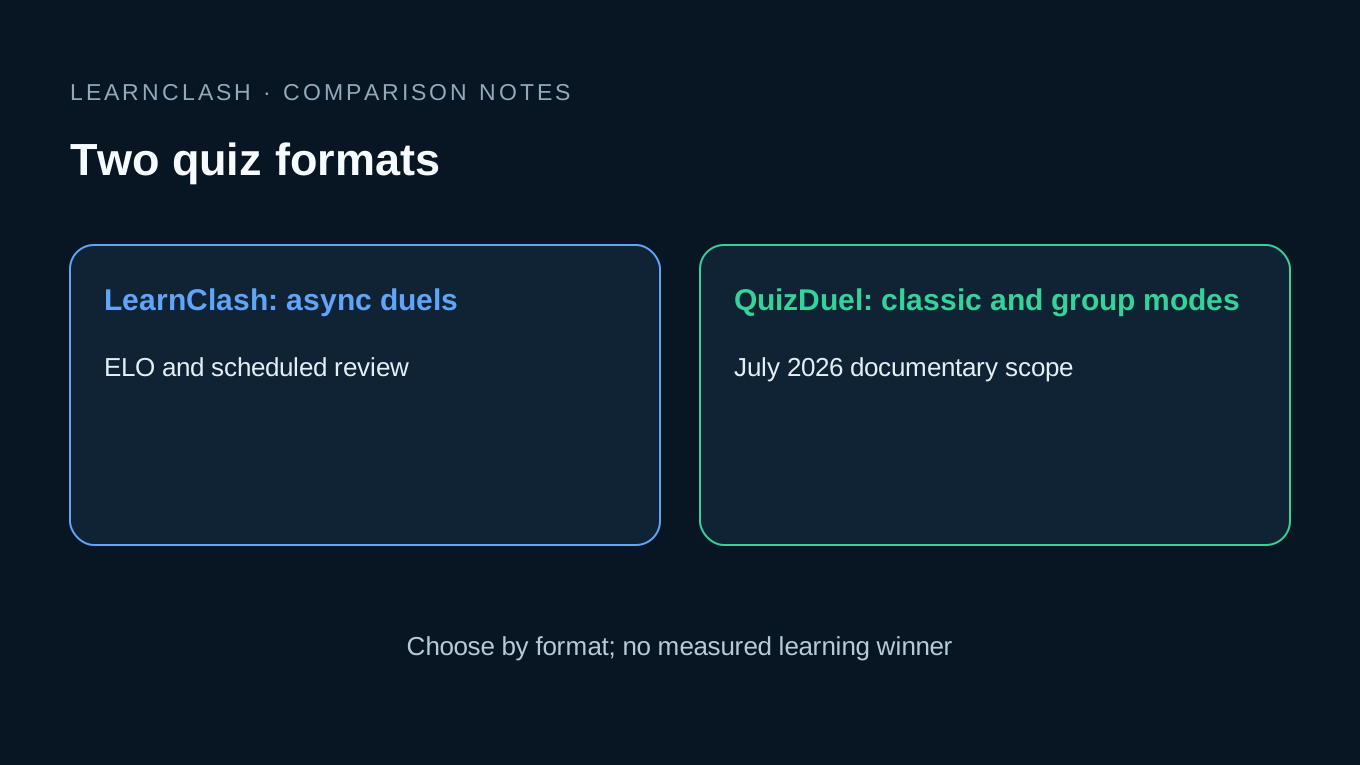
| Dimension | LearnClash | QuizDuel |
|---|---|---|
| Topic system | AI writes questions on any topic you name; 34,157 in the pool across 655 topics | About 20 fixed categories (US listing says 20+ categories; the German listing counts 19 Sonderkategorien), 400,000+ curated questions |
| Round structure | 18 questions over 6 rounds, 45s each | 18 questions over 6 rounds, ~20s each |
| Ranking | eight-tier ELO ladder (Iron to Phoenix) | Leagues and leaderboards, no published skill rating |
| Free tier | Daily duels and one Solo session per local day, no ads | Ad-supported (“Contains ads” label on Google Play) |
| Premium | $7.99/mo or $59.99/yr, 7-day trial on yearly | VIP $5.99/mo US, €3.99/mo DE, 3-day trial |
| Publisher | Pluxia GmbH (Switzerland) | MAG Interactive (Stockholm, Nasdaq First North) |
| Launched | February 2026 | 2012 franchise (FEO Media); current app is MAG’s 2020 relaunch |
QuizDuel’s installed-base edge is real: MAG’s game page counts 100M+ downloads since 2012, and the German-language version alone counts 44M+ players as of June 2025. The everyday picture is narrower than the lifetime headline, though. MAG’s whole portfolio counted 2.2M monthly active users in the Sep-Nov 2025 quarter, and the relaunched app sits in Google Play’s 10M+ download band.
Question Quality and Topic Flexibility
Two numbers frame this section: 400,000+ and 34,157. QuizDuel’s official page claims 400,000+ human-curated questions across its fixed categories. LearnClash’s pool held 34,157 validated questions across 655 topics in a database export from July 21, 2026, which is obviously the smaller figure.
The raw counts hide the part that matters: what happens when your topic is missing. If QuizDuel’s listed categories do not cover what you want to play, LearnClash lets you name a topic and request questions for it, subject to the shared topic and creation limits; that does not mean every generated question is correct.
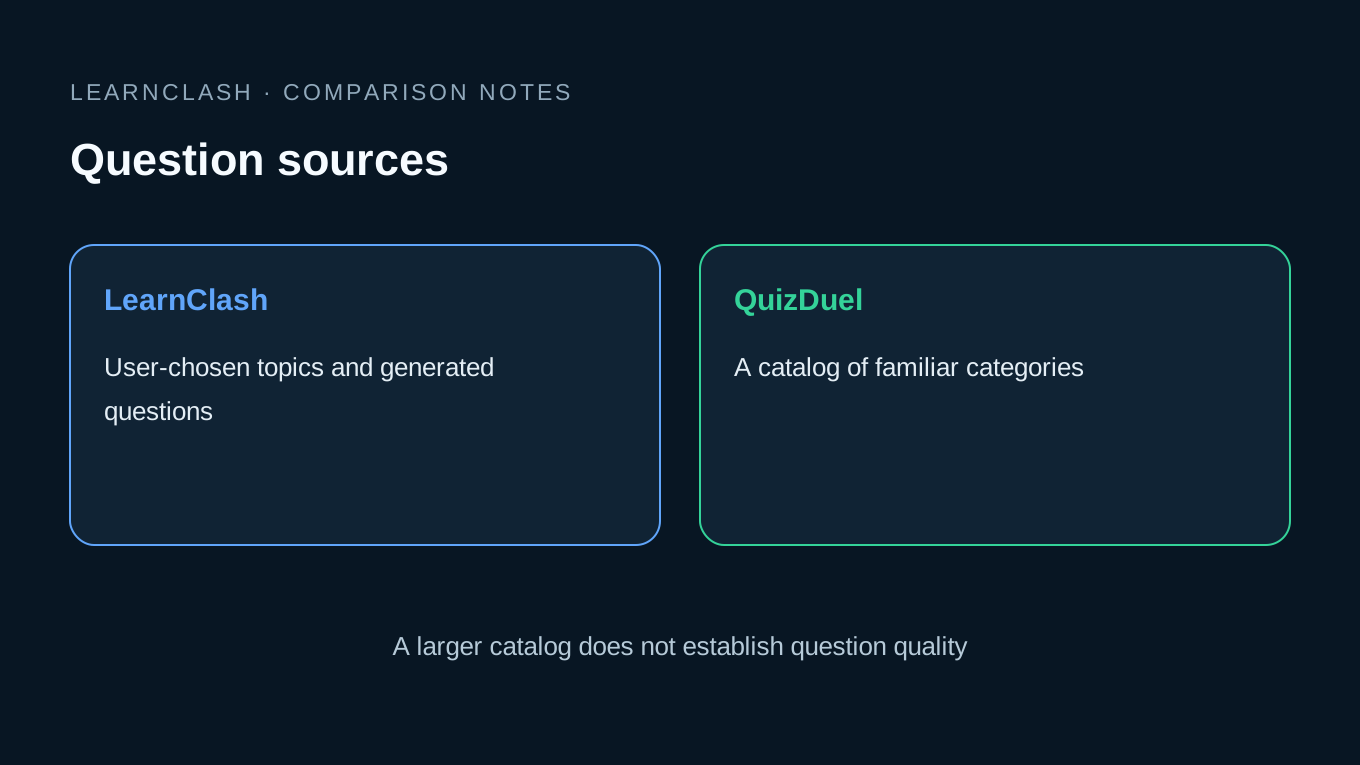
The quality question cuts both ways, and QuizDuel earns its half of it. A large catalog offers familiar categories and a broad choice of questions. This review does not measure which catalog has fewer errors. LearnClash validates generated questions and accepts problem reports. That process does not guarantee that every question is correct or that quality improves each week. Whether the trade favors you comes down to whether the topics you care about already sit on QuizDuel’s roster.
Round Timing and Cognitive Load
Both apps deal 18 questions across six rounds, and the clock is the difference. LearnClash gives you 45 seconds per question; QuizDuel gives you roughly 20. Per round that is 135 seconds against 60, a 2.25x gap. Across a full duel, those limits allow up to 13.5 minutes of answer time against 6.
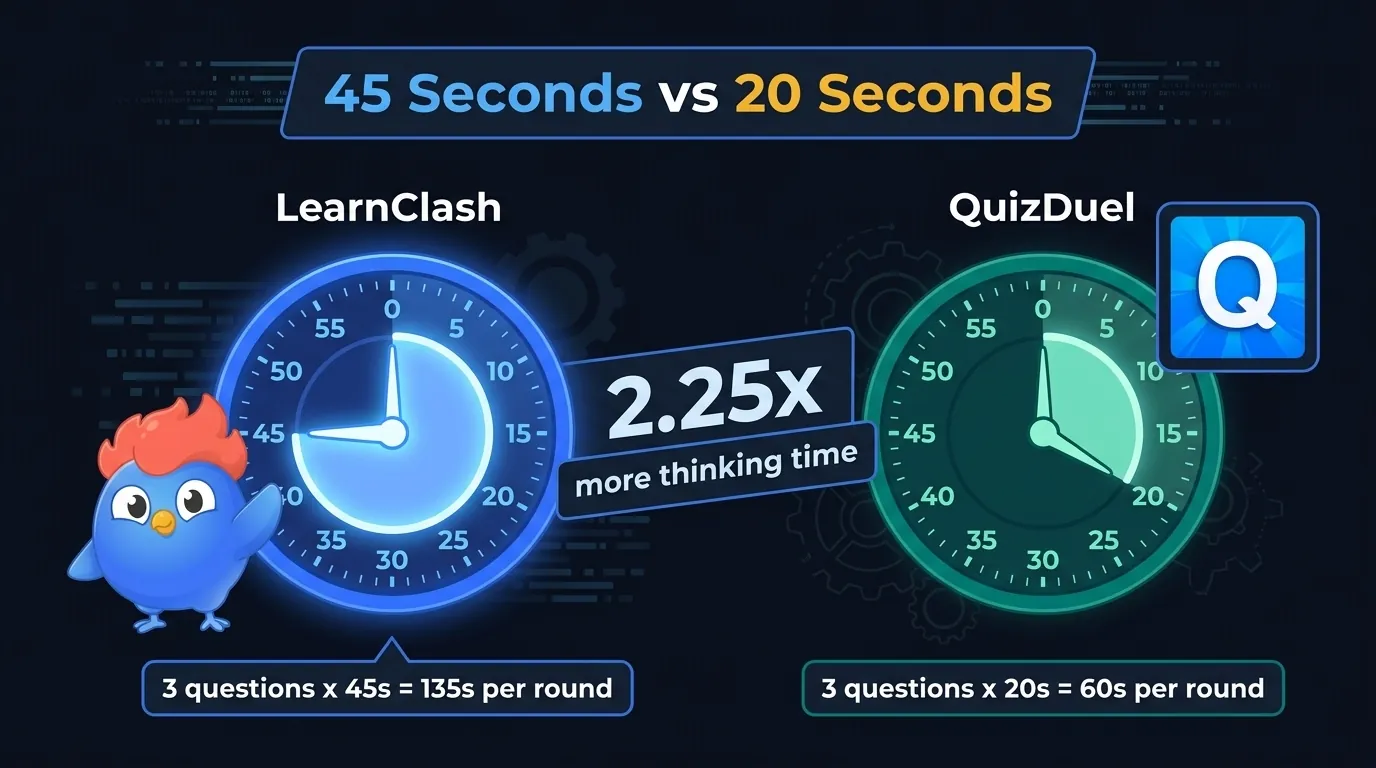
The timer totals are arithmetic limits, not measured completion times or learning results. A longer window gives more time to read, but it does not prove better reasoning. The retrieval-practice research studies retrieval itself; it does not establish that these two app timers cause different learning outcomes.
Ranking System: Where LearnClash Separates
LearnClash runs an 8-tier ladder: Iron (100 to 599), Bronze, Silver, Gold, Platinum, Emerald, Diamond, and Phoenix (2400+). Every player starts at 1300 in Gold II, and the app shows that number as ELO; each match can move it, with more room for change while a new account has few results. The number is a starting point. A fixed number of matches does not guarantee a settled tier, and point changes are not a fixed reward.
QuizDuel channels progression into leagues and leaderboards, including Question Streak Leagues, but as of July 2026 we found no published skill rating, Elo, Glicko, or otherwise, in its store listings, official game page, or MAG’s reports. Matchmaking pairs you with friends or random opponents. This does not establish how QuizDuel internally selects an opponent, so its undisclosed matching logic should remain unknown.
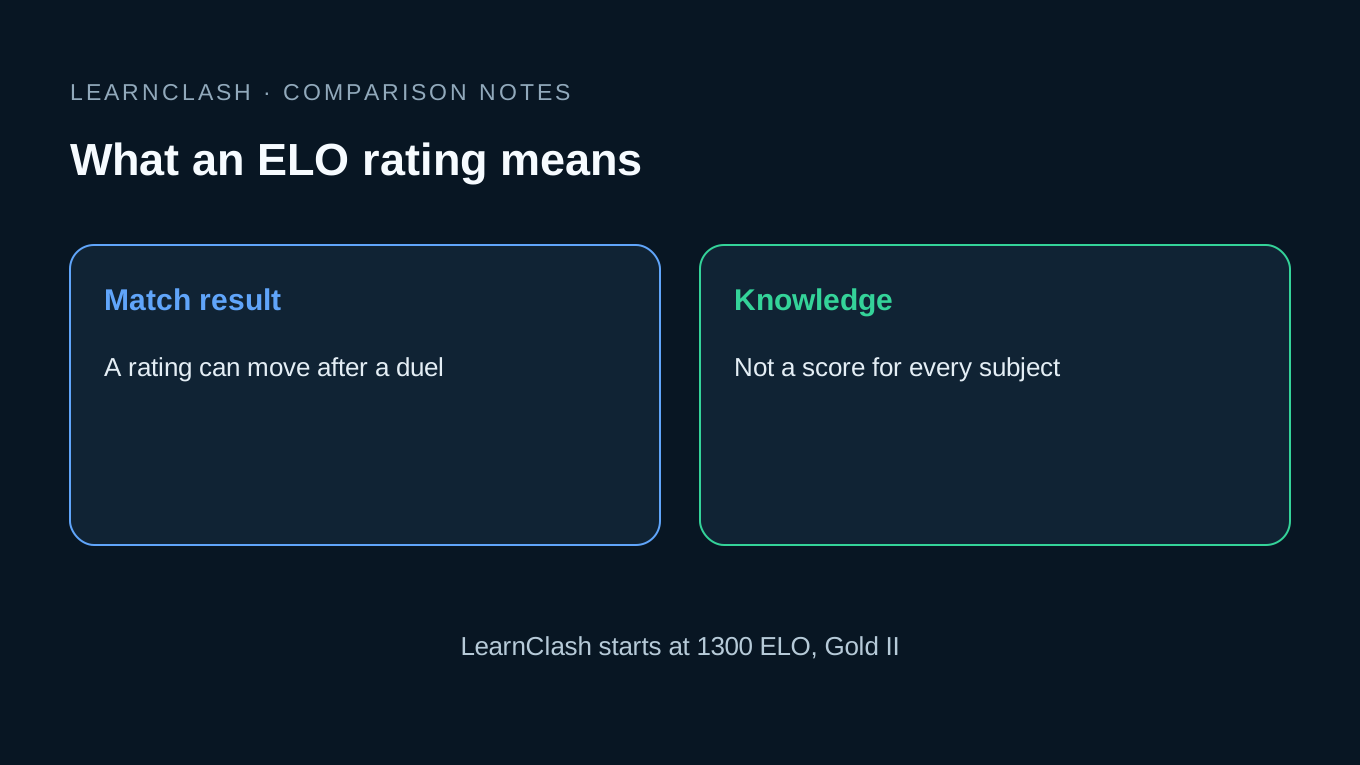
LearnClash makes the rating visible as a competitive progress signal. It is not a test score or a promise that one player knows more on every topic. Full mechanics are in our ELO rating system explainer.
What Gets Reviewed After a Duel
Both apps now have a mode called Solo, which is confusing, because the two modes do completely different jobs. QuizDuel’s Solo Quests is quest-and-boss progression: chapters, streaks, a Boss battle. LearnClash’s Solo mode and duels feed a shared three-stage question history. The dated QuizDuel sources did not establish a recurring per-question scheduler. We checked the US and German store listings, Google Play, MAG’s game page, and the two most recent interim reports, all as of July 31, 2026. None of them documents a mechanism that brings a missed question back.
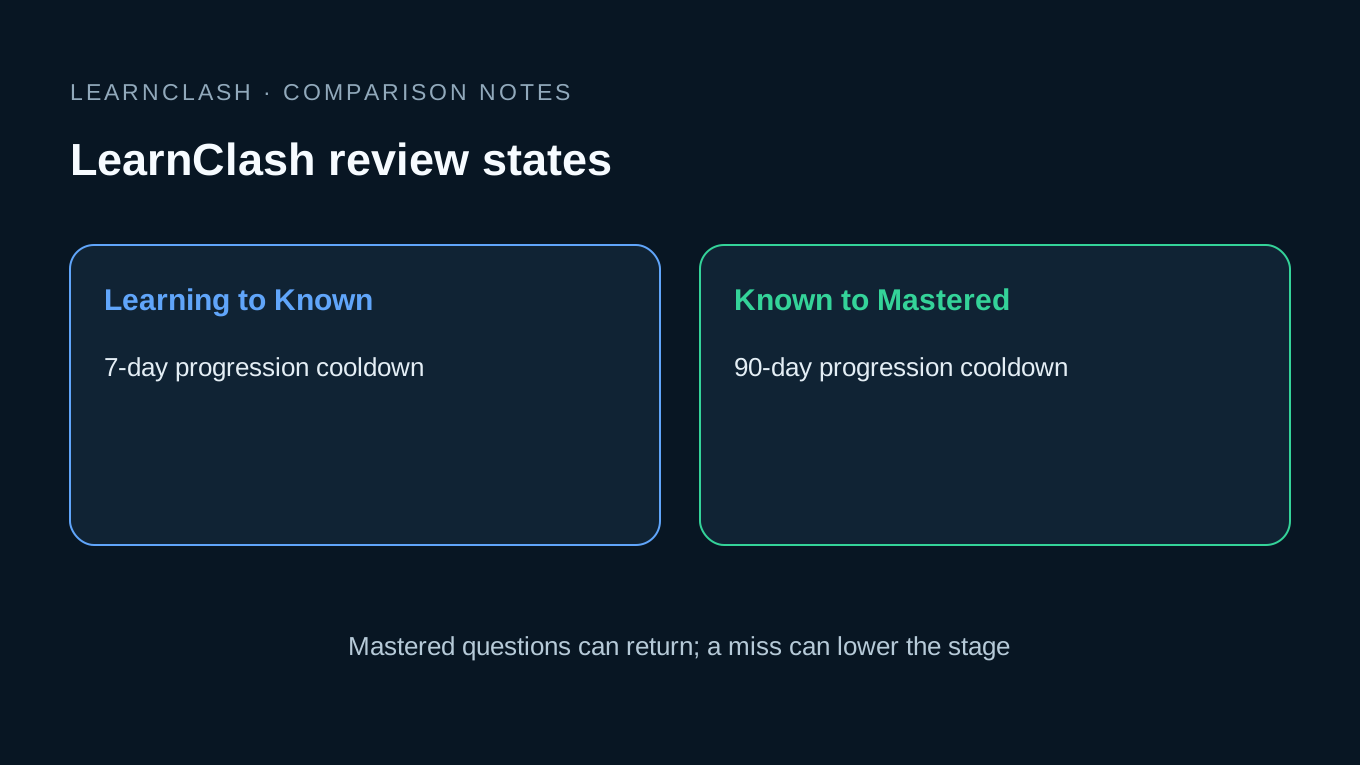
What the three states look like in practice:
- Learning: the question is new or you missed it recently, so it cycles back soon
- Known: after the first successful stage progression, the next progression has a 90-day cooldown
- Mastered: after the later successful checkpoint, the question is deprioritized; it can return when fresh or due content runs out
Questions advance from Learning to Known to Mastered as you answer correctly across spaced reviews, and drop back a stage when you miss. The testing effect explains research on recall practice. It does not prove that this app outperforms another game.
If recurring review is your priority, inspect what the app actually schedules. Quizlet now documents web Flashcards spacing, and Anki offers scheduler controls; our current Quizlet review guide separates these routes. No documented QuizDuel scheduler was found in the July check. That limited finding is more precise than claiming the game cannot support any learning.
Multiplayer Formats
LearnClash duels are 1v1. They are turn-based, with a 72-hour turn window. Both players can take their turns close together, but this is not a separate synchronous real-time mode. Three duel types sit on top: open duels (match me with anyone at my ELO), closed duels (invite a specific player), and onboarding duels (low-stakes first plays for new accounts).
QuizDuel Classic is async turn-based against friends or random opponents: six rounds, three questions each, four answer options, with the category pick alternating between players (the chooser picks one of three). Around Classic, QuizDuel runs Arena, a real-time-style battle against up to four other players, plus Teams (Germany November 2025, worldwide December 2025) and Quinder, a true-or-false swipe format.
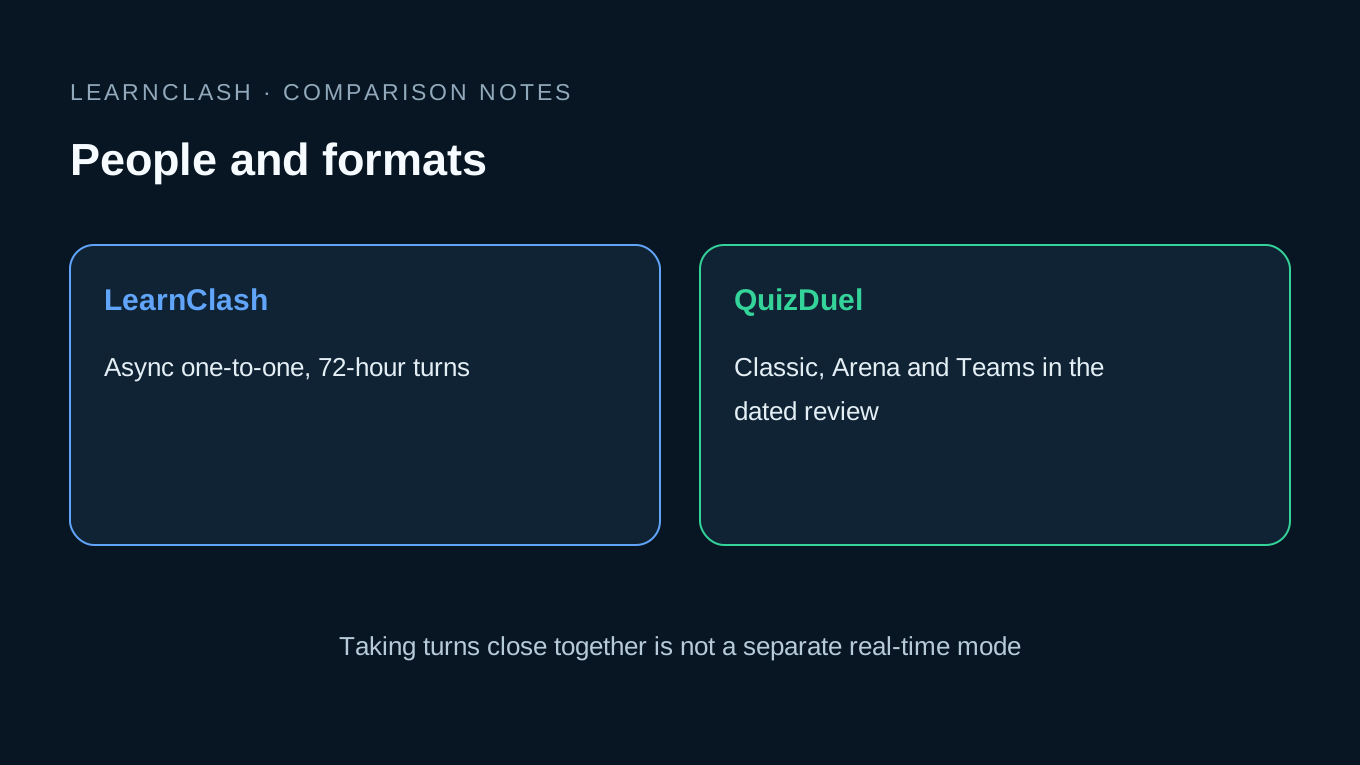
The async spine is what makes this category work for adults. You pick up a match on your commute and finish it at lunch, while your opponent can answer within the turn window. If you want a live host quizzing a room instead, that is a different kind of app entirely; see our Kahoot vs Gimkit comparison.
QuizDuel offers more group formats here: Teams and Arena let you play with more people at once. LearnClash offers ELO-based pairing for its one-to-one format; this comparison does not measure match quality between the apps.
QuizDuel Modes Documented in July 2026: Arena, Solo Quests, Teams, and Quinder
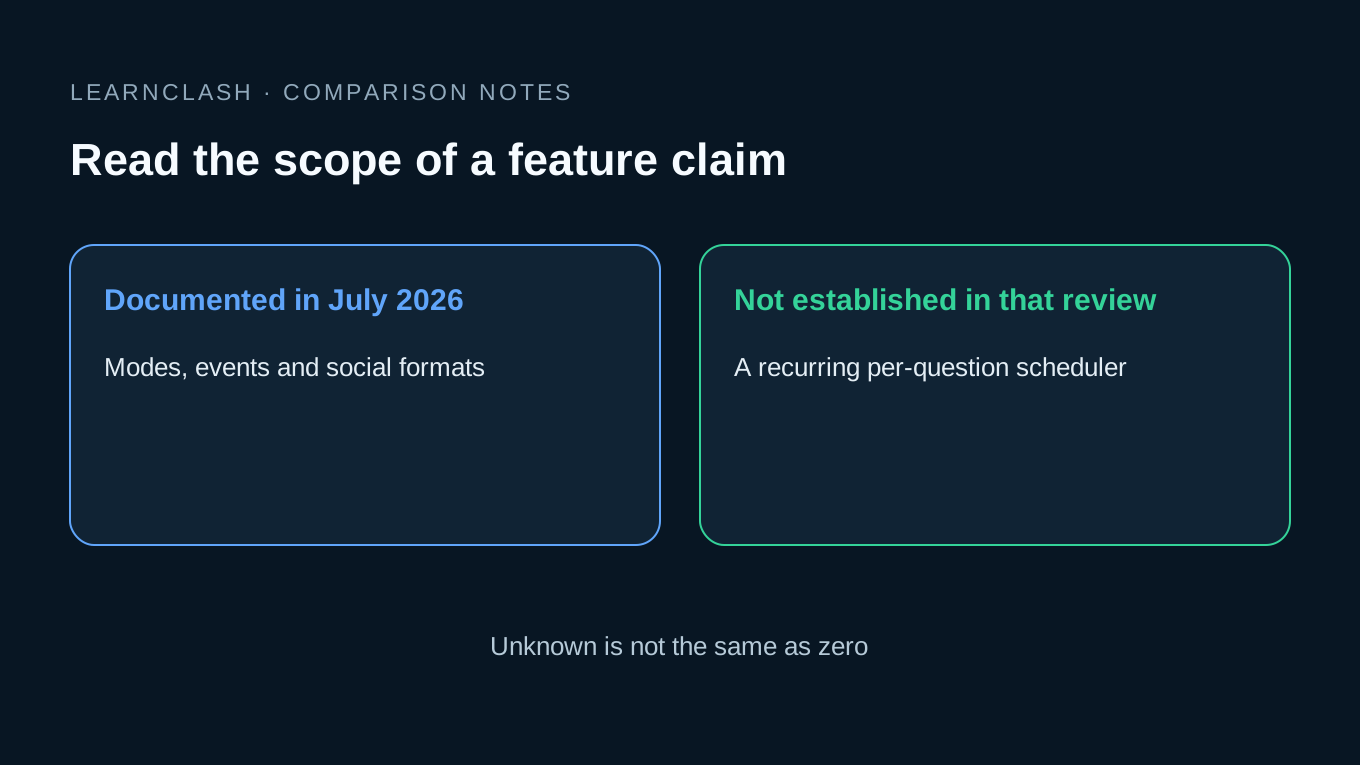
The July review found several ways to play: Arena puts you up against up to four other players, Solo Quests adds chapters and Boss battles, and Teams lets you play with a group following its late-2025 launch. There are also weekly and monthly events, streak leagues, and Quinder’s true-or-false rounds. What we could not find anywhere in it, as of July 2026, is a scheduled-review loop.
A map of what each mode does and does not do:
| QuizDuel mode | What it adds | Review capability in the dated sources |
|---|---|---|
| Arena | Real-time-style battles vs up to 4 other players | Not established by the checked materials |
| Solo Quests + Boss battles | Single-player progression with boss stages | Not established by the checked materials |
| Special Events | Weekly and monthly themed quizzes | Not established by the checked materials |
| Question Streak Leagues | Streak-based league climbing | Not established by the checked materials |
| Quinder | True-or-false swipe rounds | Not established by the checked materials |
| Teams (Nov/Dec 2025) | Collaborative team mode and team events | Not established by the checked materials |
One pipeline note for completeness. MAG’s Q1 FY2025/26 report said two new puzzle game cores were in testing, targeted to go live in its biggest games in early 2026. The Q3 report, published June 24, 2026, confirms major product updates shipped in the period without naming them, so treat the puzzle cores as unconfirmed for QuizDuel specifically.
These modes give a group more ways to play. A mode list alone does not tell you what happens to a missed question a week later. The same split runs through our LearnClash vs Trivia Crack refresh. QuizDuel keeps delivering more ways to play casually; the checked materials do not establish scheduled repetition of missed questions.
AI Strategy: Curated Categories vs Any-Topic Generation
LearnClash and QuizDuel made opposite content bets. QuizDuel ships a curated catalog of 400,000+ questions across roughly 20 categories, refreshed through Events and seasonal quizzes. LearnClash uses AI to generate questions on demand for any user-named topic, validated before each duel, plus a Clash Chat tutor that explains wrong answers in plain language.
What that looks like across the loop:
| Stage | QuizDuel | LearnClash |
|---|---|---|
| Question authoring | Human-written catalog, refreshed by Events | AI-generated on demand, any topic, validated before serving |
| Difficulty matching | No difficulty tiers in the store materials | Easy / Medium / Hard |
| Wrong-answer handling | No scheduled-review route established in the dated check | Question explanations and optional Clash Chat |
| Tutor follow-up | Not established in the checked materials | Clash Chat, subject to the account’s message allowance |
| Retention engine | None found in checked sources | 3-stage spaced repetition, 7-day and 90-day intervals |
If a wrong answer leaves you unsure, you can open Clash Chat and ask about the explanation or follow up on the point you missed, as long as your account has messages left in its allowance. That is a feature description. We did not measure how often players use it.
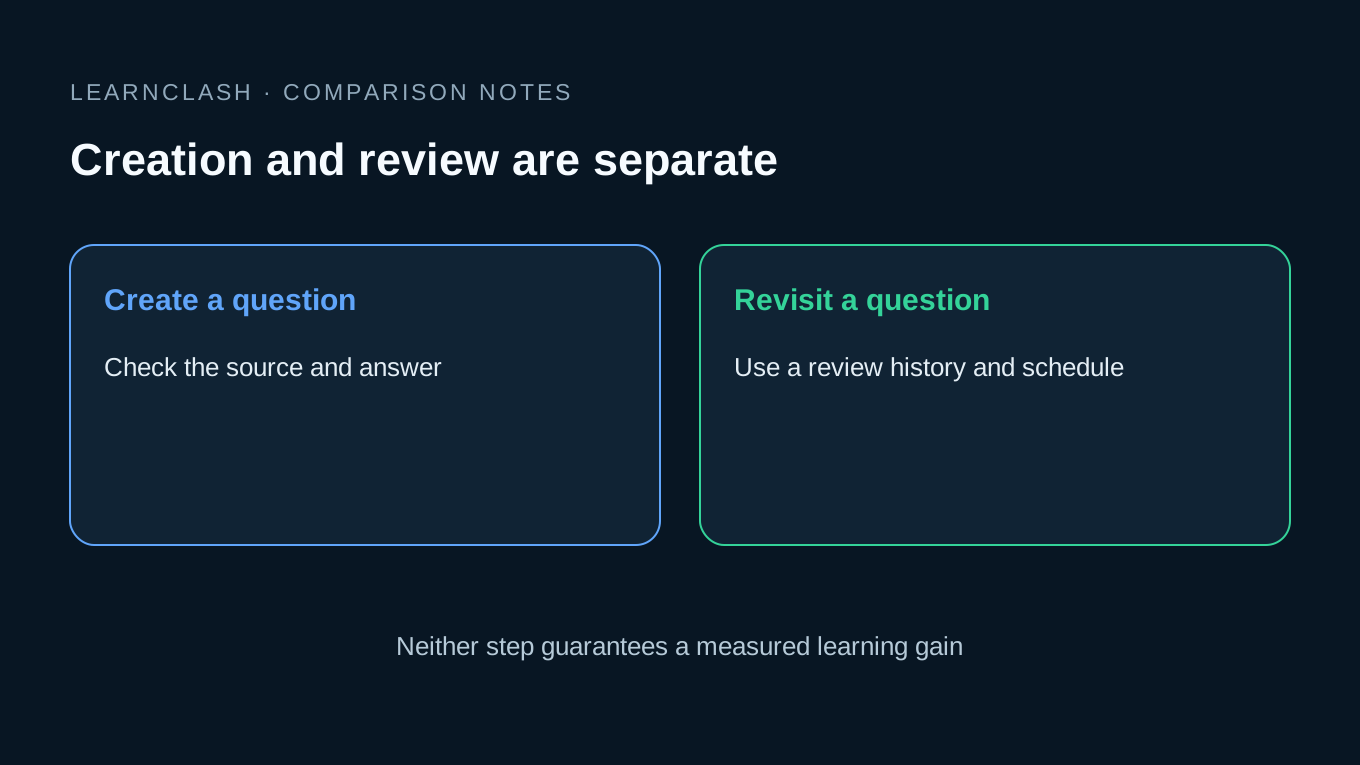
The two apps also add questions in different ways. QuizDuel offers themed events around its catalog. LearnClash adds checked new questions to a shared pool. The 3-stage SRS handles a separate task from the generator: creating a question and deciding when to revisit it are separate tasks. Our SRS retention curve walks through how the 7-day and 90-day intervals work.
The Ad Model: How MAG Monetizes QuizDuel
Advertising is roughly half of MAG Interactive’s business: 35.4 MSEK from ads against 35.3 MSEK from in-app purchases in the Sep-Nov 2025 quarter. And the model is working. QuizDuel set a daily revenue record for its relaunched app in December 2025. MAG then called Q2 FY2025/26 a record revenue quarter for the game. Its Q3 report, dated June 24, 2026, described another strong quarter. QuizDuel and Wordzee were the group’s two largest sources of revenue. Nobody should read this section as “QuizDuel is struggling”; the question worth asking is what funds the run, and who sits through it.
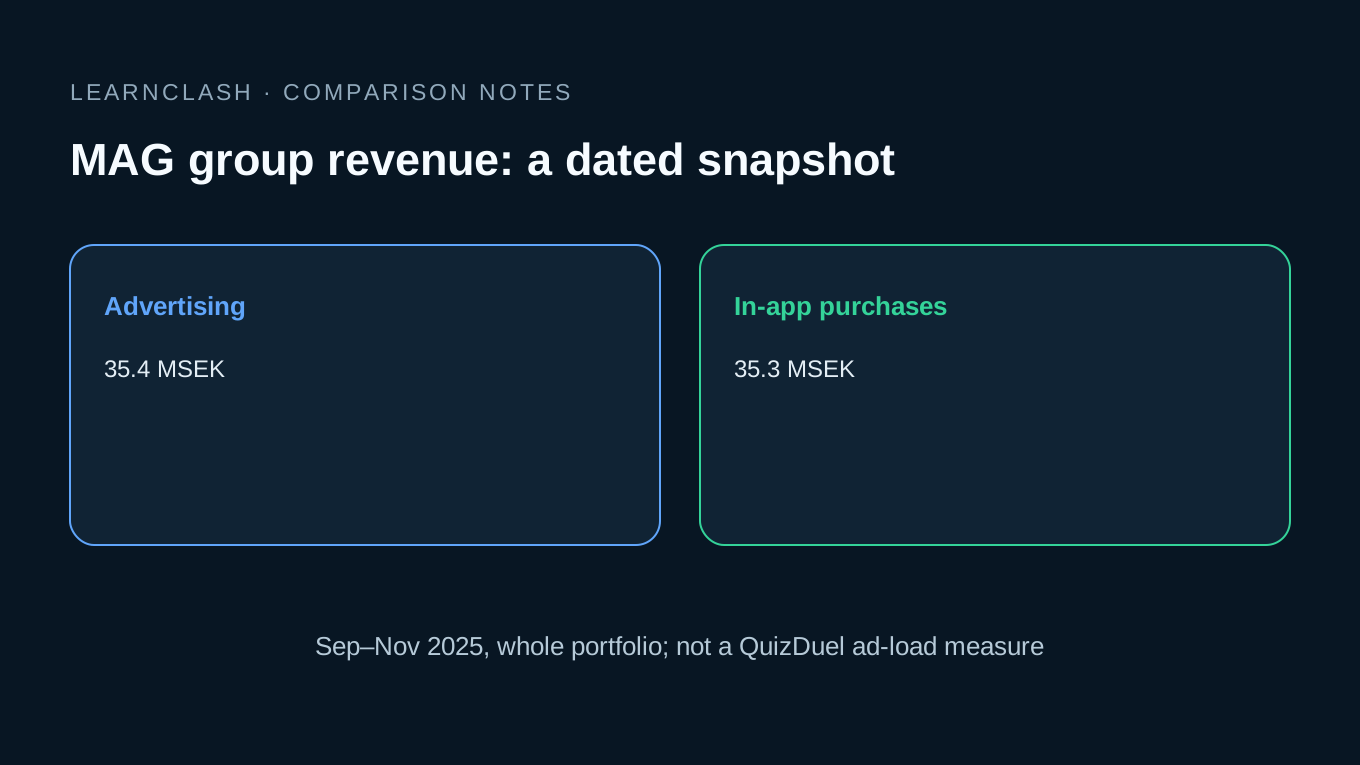
The group-level numbers, from MAG’s Q1 FY2025/26 interim report:
| MAG group metric (Sep-Nov 2025) | Value | Note |
|---|---|---|
| Daily active users | 0.9M | Whole portfolio; MAG publishes no QuizDuel-only DAU |
| Monthly active users | 2.2M | Whole portfolio |
| Monthly unique payers | 44K | About 2% of MAU |
| Revenue per DAU | 9.3 US cents | Portfolio-wide average |
| Advertising vs IAP revenue | 35.4 vs 35.3 MSEK | Roughly 50/50 |
The German store reviews read in July included complaints about ads, but those accounts tell us what the reviewers reported in their own play; they do not tell us how many ads a typical player sees or how long the breaks last. Earlier versions of this page included a timed iPhone-session claim without a traceable retained test artifact; that claim has been removed. The free store listing’s ad label and the VIP description are sufficient to explain the plan distinction without invented timing.
Pricing and Premium Tiers
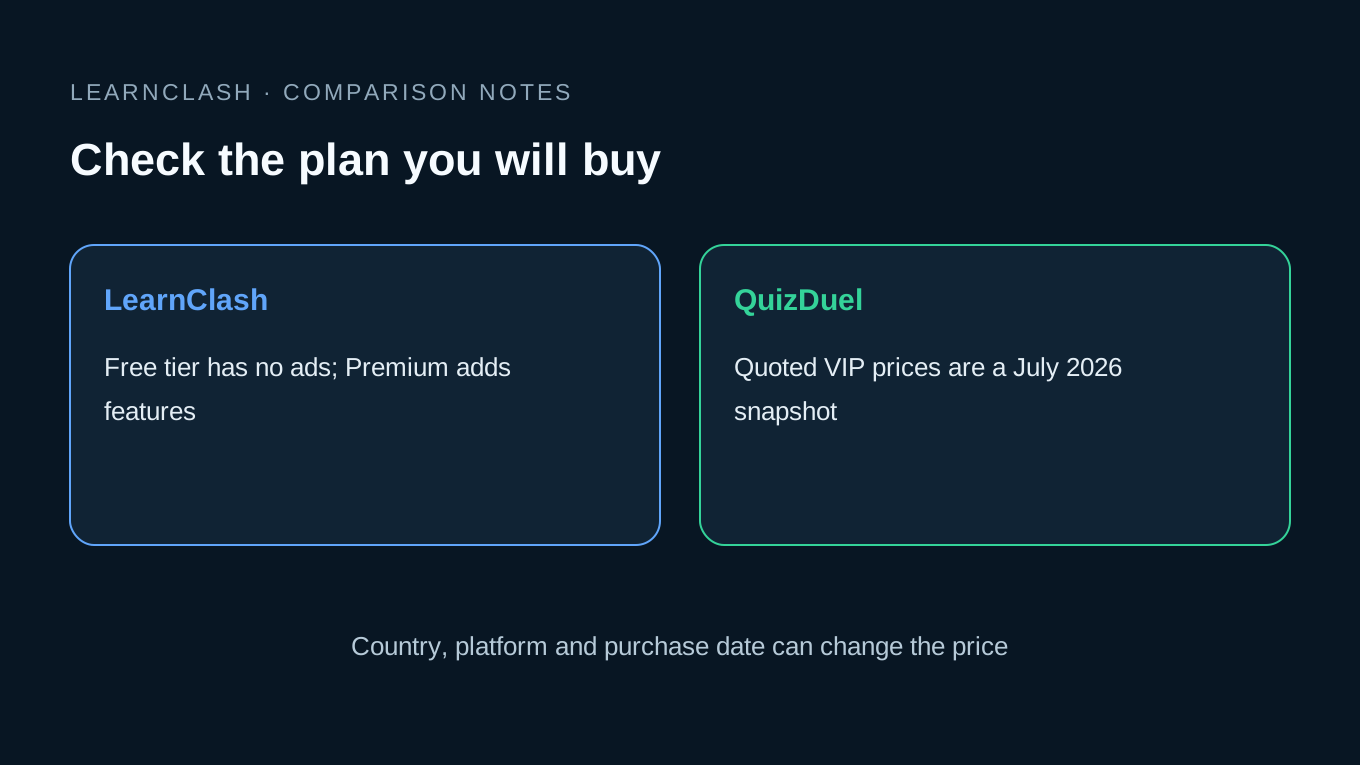
The sticker prices first. On the LearnClash side, Premium runs $7.99 monthly or $59.99 yearly, and the yearly plan opens with a 7-day free trial. The LearnClash pricing page has the current plan comparison. In the July 31 store snapshot, QuizDuel VIP was $5.99/month in the US and €3.99/month in Germany, with a 3-day free trial. That snapshot also listed a one-off $0.99 purchase that removes ads for 30 days, plus Qoin currency packs from $0.99 to $19.99.
VIP had the lower monthly price in that snapshot. Compare what each plan includes:
| Tier | LearnClash | QuizDuel |
|---|---|---|
| Free | Daily duels and one Solo session per local day, no ads | Play with ad breaks (“Contains ads” on Google Play) |
| Paid | More Solo sessions and chat, advanced stats and other Premium features; topic allowances are shared | Ad removal in classic games, up to 100 simultaneous games, daily bonuses |
| Trial | 7 days, on the yearly plan | 3 days on VIP |
LearnClash has no ads on either plan, and both plans share the same limits for topic collections and creation; Premium adds more Solo sessions and chat use, plus advanced stats and other features you can compare on the pricing page. QuizDuel’s dated VIP description scopes ad removal to classic games. Check the live store purchase screen for the plan, locale and price you will actually buy; July prices are not a September quote.
Community, Scale, and What the Store Ratings Say
The scale gap is real, and it deserves plain numbers. The QuizDuel franchise counts 100M+ downloads since 2012 and 38M in-game friendships, per MAG’s official game page, which calls it “Europe’s leading mobile trivia game.” The German-language version alone counts 44M+ players as of June 2025. Two caveats keep that honest: the current app is the 2020 relaunch, shown in Google Play’s 10M+ band, and MAG’s group-wide active base is 2.2M MAU across all its games.
LearnClash, launched in February 2026 by Pluxia GmbH, is tiny next to any of those figures; our own Google Play listing showed 500+ downloads in the July audit. We publish that number here because leaving it out of our own comparison would be cherry-picking.
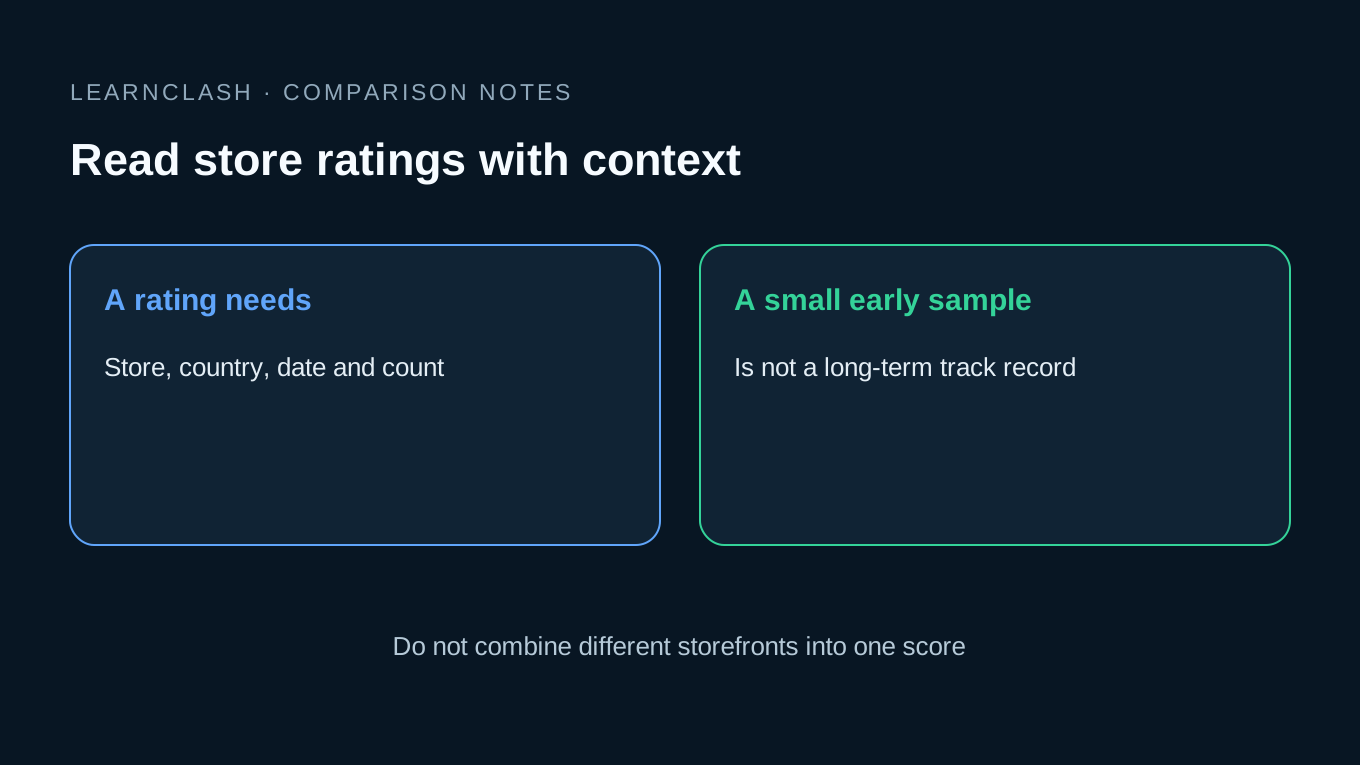
Ratings, read directly from the store pages on July 31, 2026:
| App and store | Rating | Count | Notes |
|---|---|---|---|
| QuizDuel, App Store (US) | 3.6 | 77 | Age rating 4+ |
| QuizDuel, App Store (DE storefront) | 2.3 | 7,377 | Same app ID, German rating pool |
| QuizDuel, Google Play | 3.5 | 116,115 | 10M+ downloads; “Contains ads” label |
| LearnClash, App Store (US) | 5.0 | 7 | No written reviews yet |
| LearnClash, Google Play (DE view) | 4.7 | 11 | US view shows no rating yet |
Read the LearnClash rows with the caveat they deserve: 18 ratings is a start, not a track record. The QuizDuel rows carry more signal, especially the German storefront’s 2.3 from 7,377 ratings. The reviews read in July raised two main concerns. Some long-time buyers disliked the switch from the old paid app to a free app with ads and a paid plan. Others described freezes on launch, lost ranks and repeated questions. These are reports from reviewers, not measured fault rates.
If your mum, your coworkers, and your school group chat are already on QuizDuel, staying with that group can matter more than a feature list. QuizDuel has a much larger documented base, DACH in particular; no ratings table changes that.
Picking a Side
LearnClash is the pick if any of these describe you:
- You want to get better at a specific topic (vocabulary, exam prep, history, coding)
- You care about a ranking that moves, and a ladder where your spot means something
- You refuse to watch mid-round ads, on principle or on time-on-task grounds
- You want to duel on a topic outside QuizDuel’s fixed categories
- You want a review loop that brings weak spots back at spaced intervals
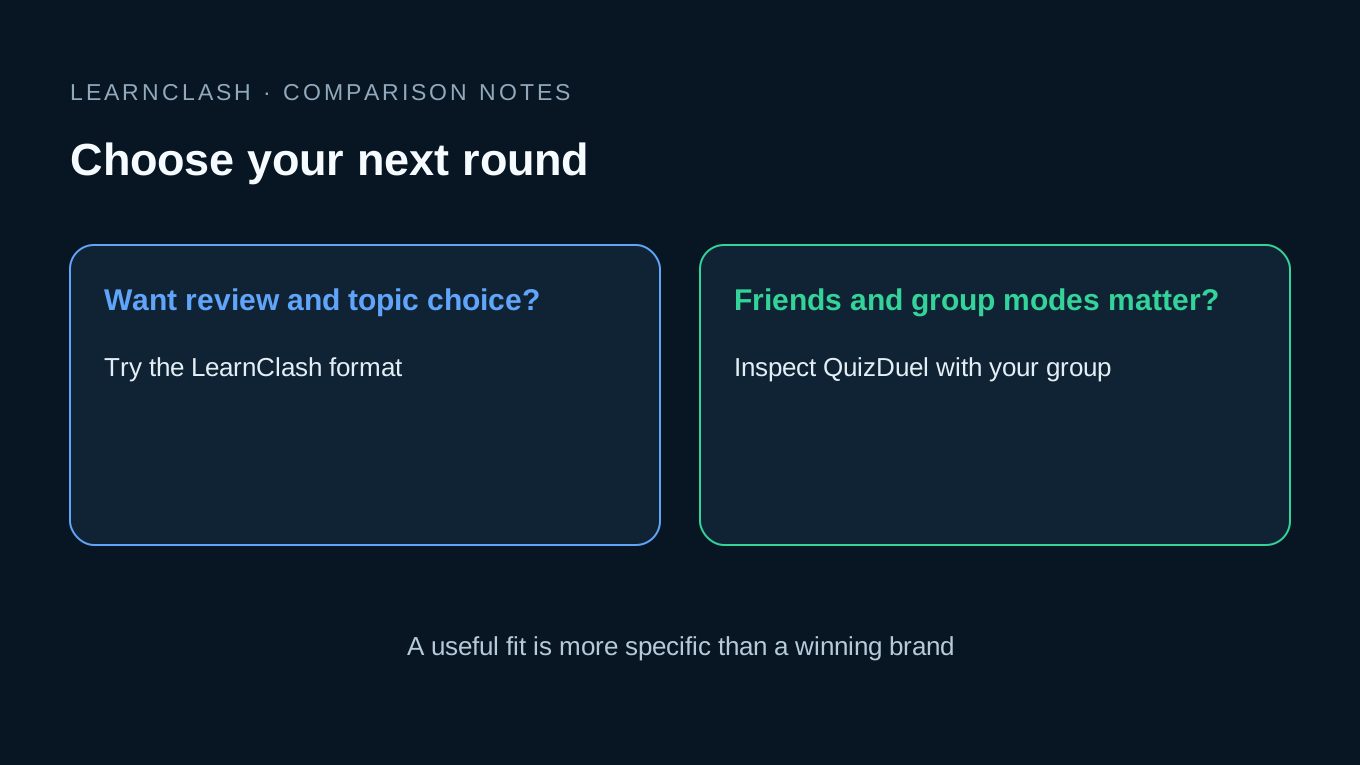
The way I draw the boundary when someone asks me which app to get: LearnClash is designed for topic-based practice with a visible review history. That does not imply that QuizDuel players cannot learn from their games. (For more on the competitive-learning side, our LearnClash vs QuizUp comparison covers the app that defined the genre.)
QuizDuel is the better pick in a few equally real cases:
- Your friends and family are already on it (DACH region in particular)
- You want short social rounds in familiar categories
- Group formats matter to you: Teams events and Arena battles with up to four other players
- You have played the franchise for years and your profile carries real memories
There is nothing wrong with QuizDuel as a game. It is a good one, and the franchise has had 14 years to polish the social-turn loop, even if today’s app is the 2020 relaunch.
One Duel Screen, Two Different Products
LearnClash and QuizDuel offer two ways to use a duel screen. LearnClash lets you choose a topic, play for ELO and revisit questions through its review system. It has no ads. QuizDuel has a much longer history and a large social base. Its cited reports show strong sales, and the July check found the app still being updated. Its free tier has ads.
If you want a visible ELO ladder, questions on the exact topic you care about, and up to 13.5 minutes of answer time per duel with zero ad breaks, LearnClash is one option to try. If you want the game your group chat already plays, QuizDuel earned that spot honestly; and if neither shape fits, our games like Blooket roundup covers the wider field.
Frequently asked questions
Is LearnClash better than QuizDuel for learning?
LearnClash offers scheduled question review. The QuizDuel materials checked in July did not establish an equivalent scheduler. This comparison does not measure a learning advantage between the apps.
Does QuizDuel use ELO?
The July 2026 review did not find a published equivalent in the checked materials. That does not establish all of its internal matching rules. LearnClash displays an ELO rating.
Which formats does QuizDuel offer?
The review documented Classic, Arena, Solo Quests, events, streak leagues, Quinder and Teams. Its social features may matter if you want to keep your existing group.
How much do the subscriptions cost?
LearnClash Premium is $7.99 monthly or $59.99 yearly. The July snapshot showed QuizDuel VIP at $5.99 in the US and €3.99 in Germany. Check your store for its current price.
Is QuizDuel shutting down?
The cited sources do not indicate that. MAG reports described strong QuizDuel results in the reviewed periods. These are dated observations, not a guarantee about the future.